

-

Akhilesh Yadav
-
Assembly
-
Ayodhya
-
Babri Masjid
-
Bharatiya Janata Party
-
CM
-
Congress
-
Corporate
-
Deputy Chief Minister
-
Driver
-
Election
-
Government
-
India
-
Indian
-
Indians
-
local language
-
Mass
-
Mohandas Karamchand Gandhi
-
monday
-
Party
-
police
-
politics
-
Population
-
prasad
-
Prime Minister
-
priyanka
-
Priyanka Gandhi
-
ram mandir
-
ram pothineni
-
Strike
-
temple
-
Uttar Pradesh
-
workers

The Ram Temple donation fraud — with eight arrested and an SIT questioning over 110 people — has handed Congress and the SP a rare weapon: the language of religious betrayal, turned against the party that built its empire on Ayodhya. According to the Times of India, Priyanka Gandhi called it the 'gravest sin,' a phrase deliberately chosen from the BJP's own devotional lexicon, exposing the party's deepest electoral vulnerability.
There is a particular kind of political wound that no amount of spin can stitch shut — the kind inflicted not by your opponents, but by your own mythology turning against you. The Ram Temple in Ayodhya was never merely a structure of sandstone and marble for the BJP. It was a civilisational receipt, proof of a thirty-year promise kept, the single most potent symbol in the party's emotional arsenal. And now, according to the Times of India, eight people have been arrested for allegedly misappropriating donations collected for it. Not from a government scheme. Not from a railway contract. From the donation box of Lord Ram.
That distinction matters more than any FIR number. The Shri Ram Janmabhoomi Teerth Kshetra Trust — the very body entrusted with the temple's construction and finances — is now at the centre of an alleged fraud investigation that has seen an SIT question over 110 individuals, per the Times of India. Earlier reports indicated six people had been booked in initial FIRs; the figure was subsequently updated to eight as the probe widened, according to the Times of India. The arrests are climbing, and the political offensive from the opposition is calibrated with a precision that suggests they have been waiting for exactly this moment.
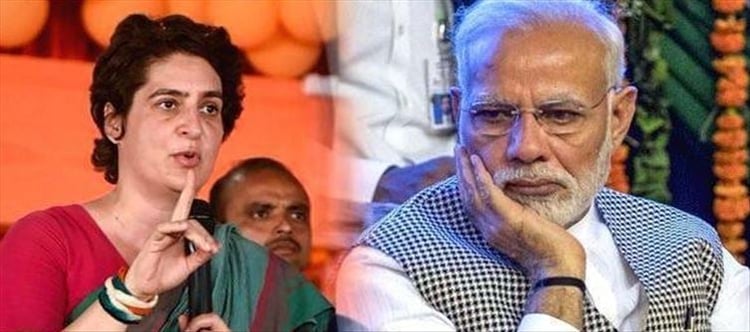
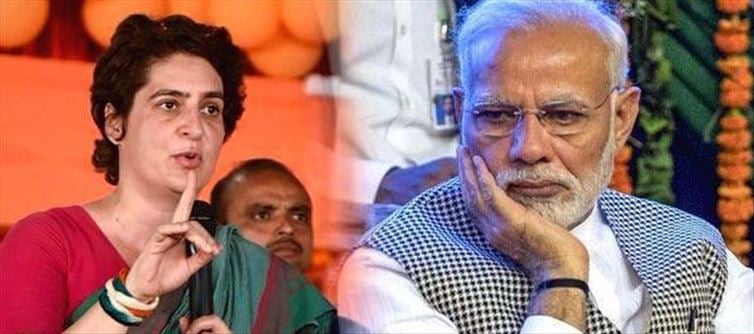
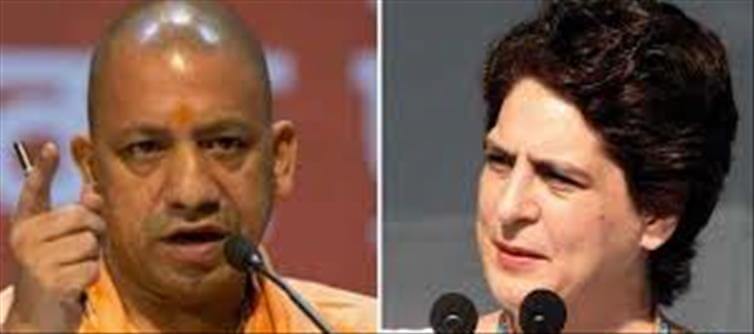
Priyanka Gandhi's intervention is the sharpest tell. According to the Times of India, she described the donation fraud as the "gravest sin" — a phrase that lands with the weight of a temple bell, not a parliamentary debate. This is not the language of fiscal accountability or governance critique. This is the language of dharma, of paap, of a transgression against the divine. It is, unmistakably, the BJP's own rhetorical register — the vocabulary of faith-betrayal that the party weaponised for decades against its opponents — now aimed squarely back at the party that claimed custodianship of Ram's legacy.
The calculation is as precise as it is audacious. Congress has spent years struggling to counter the BJP on the temple question — every attempt to appear pro-temple looked like mimicry, every silence looked like concession. But an alleged donation fraud changes the grammar entirely. You do not need to outpray the BJP if you can prove the BJP failed to protect the prayer itself. Priyanka Gandhi's statement that the fraud has "stunned the entire nation," as reported by the Times of India, is designed to occupy a moral altitude that the BJP's own temple narrative once monopolised.
Akhilesh Yadav, never one to let Congress steal a march, has sharpened the blade further. According to the Times of India, the Samajwadi Party chief declared that the "BJP gang can't evade God's audit" and pointedly alleged that "big fish" are being protected even as the eight arrested accused — described by opposition leaders as lower-level operatives — face the law. The implication is devastating in its simplicity: the people who collected India's faith in coupon books and online transfers allowed that faith to be pilfered, and the real architects, opposition leaders allege, remain untouched.
The BJP's response has been notably limited. UP Deputy Chief Minister Keshav Prasad Maurya attempted a counterattack, asking "what is going on in madrasas" and questioning Babri Masjid donations, as the Times of India reported. Critics and opposition leaders have characterised this as deflection — a pivot to communal counter-questioning rather than a direct address of the allegations against the temple trust. The BJP and the Shri Ram Janmabhoomi Teerth Kshetra Trust had not issued a formal, detailed response to the specific fraud allegations as of publication.
The deeper political danger for the BJP lies not in the headlines but in the donor base. The Ram Temple donation drive was, by any measure, a masterclass in mass mobilisation — crores of ordinary Indians contributing small sums, often with the fervour of a religious offering rather than a charitable donation. These were not corporate cheques routed through foundations. These were ₹100 and ₹500 contributions from autorickshaw drivers in Varanasi, schoolteachers in Gorakhpur, retired clerks in Lucknow. The SIT's questioning of 110 people, reported by the Times of India, suggests an alleged fraud operation that may have extended to the grassroots — the very level where the BJP's organisational network and the temple trust's collection machinery overlap.
This is the tremor beneath the scandal: the panchayat-to-assembly pipeline in Uttar Pradesh runs on exactly the kind of devotional loyalty that the temple donation drive embodied. Every booth-level worker who helped collect donations is now, in principle, a person whose role may face scrutiny — or, worse, a person who feels personally betrayed. The difference between a voter who contributed ₹500 to Ram's temple and discovers it was allegedly stolen, and a voter who reads about a scam in a government scheme, is the difference between rage and cynicism. Rage votes. Rage switches sides. Rage remembers.
What makes this moment structurally distinct from previous BJP corruption controversies — land deals, highway contracts, municipal tenders — is that the Ram Temple was supposed to be the one thing above the grubby calculus of Indian politics. It was the moral high ground made literal, in consecrated stone. The BJP's implicit promise was not just "we will build the temple" but "we are the only ones pure enough to build it." An alleged donation fraud does not merely dent that promise. It inverts it. It transforms, in the opposition's framing, the custodians into those who failed the very sanctum they swore to protect.
Congress and the SP understand this asymmetry instinctively, which is why their language has been calibrated not for courtrooms but for mandirs. Priyanka Gandhi is not filing PILs; she is questioning the role of those who presided over the trust, per the Times of India. Akhilesh Yadav is not demanding a CAG audit; he is invoking "God's audit." Both are speaking to the same voter the BJP spent three decades cultivating — the devout Hindu who gave money not to a political project but to a divine one — and asking that voter a question the BJP cannot easily answer: if they could not protect Ram's money, what exactly were they protecting?
The SIT probe, with all eight accused now arrested according to the Times of India, will follow its procedural course. Courts will determine guilt or innocence. But the political trial is already underway, and its jury is not a bench but the vast, aggrieved constituency of small donors who believed their offering was sacred. The BJP built its dominance in Uttar Pradesh on the conviction that faith and party were indistinguishable. The alleged Ram Temple donation fraud is the first real test of what happens when the faithful discover that the party was, perhaps, all too distinguishable from the faith.
The question that will haunt the BJP through every panchayat, every assembly by-election, every whispered conversation outside every temple in UP is not whether eight men allegedly stole donation money. It is whether the party that promised to guard the gates of Ayodhya was, in the end, guarding only its own.
By the Numbers
- SIT has questioned 110 people so far in the Ram Temple donation fraud probe, according to the Times of India.
- All 8 accused named in the FIR have been arrested, per the Times of India; earlier reports had put the number at 6 before the probe widened.
Key Takeaways
- According to the Times of India, 8 accused have been arrested and an SIT has questioned 110 people in the Ram Temple donation fraud case; earlier reports indicated 6 were initially booked before the figure was updated.
- Priyanka Gandhi called the alleged fraud the 'gravest sin' — deliberately deploying the BJP's own faith-based vocabulary against the party, per the Times of India.
- Akhilesh Yadav alleged 'big fish' are being protected, claiming the arrests so far target only those described by opposition leaders as lower-level operatives, as reported by the Times of India.
- The BJP and the Shri Ram Janmabhoomi Teerth Kshetra Trust had not issued a formal, detailed response to the specific fraud allegations as of publication; UP Deputy CM Maurya's counter-questioning of madrasa and Babri Masjid donations was characterised by critics as deflection.
- The political threat extends beyond headlines: the donation drive mobilised millions of small, devotion-driven contributors whose sense of personal betrayal could, analysts note, destabilise the BJP's grassroots pipeline in UP.
Frequently Asked Questions
What is the Ram Temple donation fraud case?
According to the Times of India, UP Police filed FIRs and arrested 8 people accused of misappropriating donations collected for the Ram Temple in Ayodhya. Earlier reports indicated 6 were initially booked; the figure was updated to 8 as the probe widened. An SIT has questioned over 110 individuals.
What did Priyanka Gandhi say about the Ram Temple donation fraud?
Per the Times of India, Priyanka Gandhi called the alleged fraud the 'gravest sin' and said it has 'stunned the entire nation,' questioning the role of those who oversaw the temple trust.
What is Akhilesh Yadav's response to the Ram Temple donation scandal?
According to the Times of India, Akhilesh Yadav alleged that 'big fish' are being protected and declared that the 'BJP gang can't evade God's audit.'
How many people has the SIT questioned in the Ram Temple donation case?
The SIT has questioned 110 people so far to gather details about the alleged fraud, according to the Times of India.
Why is the Ram Temple donation fraud politically significant for the BJP?
The temple was the BJP's most prominent political symbol, and the donation drive mobilised millions of small, devotion-driven contributors. Analysts observe that an alleged donation fraud — involving money given as devotional offerings — strikes at the party's claim to spiritual custodianship and risks alienating grassroots supporters whose contributions were acts of faith rather than conventional charity.
Has the BJP or the Ram Temple trust responded to the fraud allegations?
UP Deputy Chief Minister Keshav Prasad Maurya raised counter-questions about madrasa and Babri Masjid donations, which critics characterised as deflection. The BJP and the Shri Ram Janmabhoomi Teerth Kshetra Trust had not issued a formal, detailed response to the specific fraud allegations as of publication.
 click and follow Indiaherald WhatsApp channel