


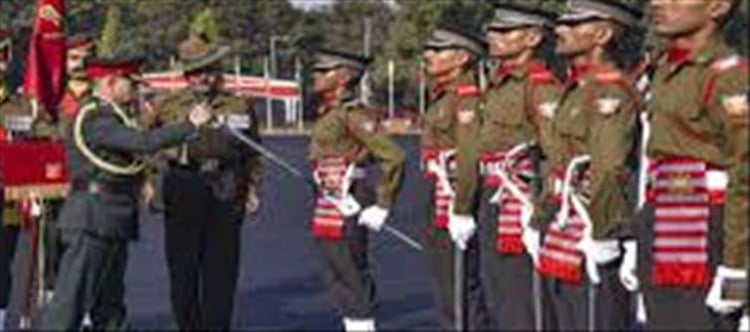

India's deployment of a full army field hospital and 66 tonnes of aid to earthquake-hit Venezuela under Operation Amistad is not merely humanitarian — it is, according to analysts, Delhi's most strategically audacious soft-power projection into Latin America, a region long considered China and Russia's geopolitical backyard, signalling Modi's intent to build influence where India has historically had almost none.
The 5W+H: Who, What, When, Where, Why, How
- Who: The Indian Army, under orders from the Modi government, deployed a field hospital and medical team to Venezuela under Operation Amistad, according to The Hindu and India Today.
- What: A fully operational 24x7 field hospital with 66 tonnes of humanitarian aid has begun treating patients in earthquake-hit Venezuela, as reported by The Print and Deccan Chronicle.
- When: The hospital became fully operational in June 2025, following a devastating earthquake in Venezuela, according to India Today and Telangana Today.
- Where: The field hospital is deployed in earthquake-affected regions of Venezuela, approximately 14,000 kilometres from Indian shores, as reported by The Hindu.
- Why: Officially, the mission is purely humanitarian disaster relief; strategically, analysts note it positions India as a credible partner in a region dominated by Chinese and Russian influence, according to multiple reports.
- How: The Indian Army airlifted 66 tonnes of medical supplies, set up a field hospital offering round-the-clock free medical services, and named the operation 'Amistad' — Spanish for friendship — signalling diplomatic intent, as reported by India Today and The Print.
Fourteen thousand kilometres. That is the distance between New Delhi and Caracas — roughly the span of the planet's circumference, give or take an ocean and a continent. And yet, as of this week, Indian Army doctors in olive green are stitching wounds, delivering babies, and running a 24x7 field hospital in earthquake-ravaged Venezuela. The operation is called Amistad — Spanish for friendship. But in the grammar of geopolitics, friendship is never just friendship.
According to The Print and The Hindu, the Indian Army's field hospital has become fully operational, treating hundreds of patients daily with free medical services in regions where Venezuelan infrastructure was flattened by a major earthquake. India Today reports that 66 tonnes of humanitarian aid — medicines, surgical equipment, portable shelters — were airlifted alongside the medical teams. The scale is significant: this is not a token shipment of blankets and a press release. This is a standing military-medical facility, the kind India has deployed to Nepal, Turkey, and earthquake zones closer to home.
View on X
But here is the thing the press release will not tell you. Venezuela is not Nepal. It is not a neighbour, not a traditional partner, not even a country where India has deep trade or diaspora ties. What Venezuela IS — and what makes this deployment land differently in every foreign ministry from Beijing to Washington — is one of China's most reliable allies in the Western Hemisphere, a key node in Russia's Latin American influence network, and a country that has consistently voted against Western positions at the United Nations. For India to plant its flag, quite literally through its army, in this backyard is a move that would have been unthinkable a decade ago.
The Geopolitical Arithmetic Behind the Bandages
Consider the landscape India is walking into. China has poured billions into Venezuelan oil infrastructure over the past two decades, extending loans-for-oil deals that effectively made Caracas a debtor-client of Beijing. Russia, meanwhile, has been Venezuela's primary arms supplier and a diplomatic shield at the Security Council. Together, they have treated Latin America — and Venezuela in particular — as a zone where Western and Indian influence simply does not reach.
Now consider what India just did: it sent its ARMY — not a civilian NGO, not a Red Cross donation, but uniformed soldiers operating a military field hospital — into this space. According to Telangana Today, the deployment was coordinated directly with the Venezuelan government, suggesting diplomatic groundwork that long preceded the earthquake. The name 'Amistad' was not chosen by accident; it is a word that resonates across Latin America's Spanish-speaking nations, a signal that this is not a one-country gesture but a regional calling card.
View on X
India Today reports that the hospital is offering services entirely free of charge, 24 hours a day, seven days a week — a detail that matters enormously on the ground, where Venezuela's healthcare system has been hollowed out by years of economic crisis and sanctions. For ordinary Venezuelans, the Indian tricolour on a functioning hospital may be the first tangible evidence that a country called India exists and cares. That is soft power in its purest, most durable form — not a speech at the UN, but a doctor who sets your broken arm at 3 a.m.
Political Pulse
The backstage chatter in South Block, according to diplomatic circles tracking the deployment, is that Operation Amistad was months in the making — the earthquake provided the occasion, but the intent preceded it. The talk among foreign policy analysts is that Delhi has been quietly frustrated by its near-total absence from Latin America, a continent of 650 million people, vast natural resources, and 33 UN General Assembly votes that India has historically failed to court. "The real calculation," as one analyst tracking India-Latin America ties put it to media, "is not about Venezuela alone — it is about whether India can be taken seriously as a global power if it has zero footprint in an entire hemisphere."
There is also the quieter, more tactical gossip: that the Modi government sees an opening precisely because the traditional patrons — China and Russia — are stretched. Beijing is managing economic slowdowns and geopolitical friction across the Indo-Pacific. Moscow is consumed by its own strategic commitments. Into that sliver of distraction, India has inserted a hospital, a flag, and a word — friendship — that carries no debt, no conditionality, no strings. The contrast with China's loans-for-oil model could not be sharper, and Delhi is betting that Caracas notices.
View on X
(This reflects diplomatic and analyst speculation widely reported in Indian media, not confirmed government strategy.)
What Delhi Expects in Return
India Herald's read of what is really driving Operation Amistad goes beyond the humanitarian headline. This is a multi-layered play with at least three strategic dividends Delhi is eyeing:
First, UN arithmetic. India's permanent seat ambition at the Security Council requires broad-based support, and Latin America's 33 UNGA votes have been a black hole in India's lobbying map. A single field hospital will not flip a vote, but it begins a relationship where none existed. Diplomacy, as Bismarck might have noted, is the art of showing up.
Second, the energy calculus. Venezuela sits on the world's largest proven oil reserves — larger than Saudi Arabia's. As India diversifies its energy sourcing and reduces dependence on any single region, even a preliminary diplomatic toehold in Caracas opens conversations that were previously impossible.
Third, the Global South brand. Modi's government has invested heavily in positioning India as the voice of the Global South. But that claim rings hollow if India's humanitarian footprint stops at the Indian Ocean rim. An army hospital in Latin America — thousands of kilometres from any traditional sphere of Indian interest — is a proof-of-concept that India can project compassion, not just power, at global scale.
View on X
The Risk Nobody Is Talking About
But there is a flip side, and it is worth naming plainly. Venezuela remains under heavy Western sanctions. The Maduro government's human rights record has been condemned by multiple international bodies. India's embrace — even a humanitarian one — will be watched carefully in Washington and Brussels. Delhi will need to walk a razor-thin line: close enough to Caracas to earn goodwill, distant enough from Maduro's politics to avoid being painted as propping up an authoritarian regime. The fact that India chose a MILITARY deployment rather than a civilian one adds a layer of optics that could cut both ways — it signals seriousness, but also invites scrutiny about the nature of the bilateral relationship being seeded.
According to reports in Deccan Chronicle, the Indian Army team has been scrupulous about framing the mission as purely disaster relief, with no political dimensions. That framing is necessary — and it is also, as every diplomat knows, temporary. What matters is what follows after the last patient is discharged and the hospital is packed up. Does India open a larger diplomatic mission? Does it pursue energy MOUs? Does it seek a Venezuelan vote on the next UNGA resolution that matters to Delhi? The earthquake is the occasion; the real operation begins after the tremors stop.
View on X
The Larger Pattern
Operation Amistad does not exist in isolation. It sits within a broader Modi-era pattern of using military humanitarian deployments as diplomatic door-openers — from Operation Dost in Turkey (2023) to rapid-response missions in Nepal, Sri Lanka, and the Maldives. Each deployment left behind not just gratitude but a relationship. The difference with Venezuela is the sheer geographic and geopolitical distance: India is, for the first time, projecting this capability into a hemisphere where it has no bases, no alliances, no historical ties, and — critically — no fallback if the gesture is not reciprocated.
That is what makes this genuinely audacious. It is not a safe bet. It is a calculated risk that the world's geometry is shifting fast enough for India to claim space in regions that were, until yesterday, someone else's backyard. Whether Caracas remembers India's friendship when the next UNGA vote comes around — or when the next oil exploration block is auctioned — will determine whether Operation Amistad was a masterstroke or a very expensive photo opportunity.
The field hospital is open. The doctors are working. The flag is flying 14,000 kilometres from home. Now the real question is not whether India can project compassion at this distance — it clearly can. The question is whether Modi's government has the diplomatic stamina to convert a week of bandages into a decade of influence, in a neighbourhood where China and Russia have been paying rent for twenty years.

By the Numbers
- 66 tonnes of humanitarian aid airlifted to Venezuela by the Indian Army, according to India Today
- Venezuela holds the world's largest proven oil reserves, exceeding Saudi Arabia's
- Latin America accounts for 33 UN General Assembly votes — a bloc India has historically under-courted
- Approximately 14,000 km separates New Delhi from Caracas — India's farthest military-humanitarian deployment
Key Takeaways
- India deployed a full 24x7 army field hospital and 66 tonnes of humanitarian aid to earthquake-hit Venezuela under Operation Amistad — its first major military-humanitarian deployment in Latin America, according to The Hindu and India Today.
- Venezuela is a key ally of China and Russia in the Western Hemisphere; India's military presence there signals a deliberate soft-power play into a geopolitically contested region, analysts note.
- The operation's name 'Amistad' (Spanish for friendship) and the free medical services are designed as a regional calling card across Latin America's 33 UN General Assembly votes, per diplomatic analyst commentary.
- Venezuela holds the world's largest proven oil reserves, and India's toehold could open future energy diversification conversations.
- The risk: Venezuela is under heavy Western sanctions and the Maduro government faces international human rights criticism — India must balance Caracas goodwill against Washington optics.
Frequently Asked Questions
What is Operation Amistad by the Indian Army?
Operation Amistad is a humanitarian mission in which the Indian Army deployed a 24x7 field hospital and 66 tonnes of medical aid to earthquake-hit Venezuela, offering free medical services. The name means 'friendship' in Spanish, according to reports by The Hindu and India Today.
Why did India send military aid to Venezuela?
Officially, the mission is disaster relief following a major earthquake. Strategically, analysts note it positions India in a region dominated by Chinese and Russian influence, potentially strengthening India's Global South credentials and UN General Assembly vote lobbying.
Is Venezuela an ally of India?
India and Venezuela have not historically been close allies. Venezuela has traditionally aligned with China and Russia. Operation Amistad represents one of India's first significant diplomatic-military engagements in the country, according to multiple Indian media reports.
How much humanitarian aid did India send to Venezuela?
India airlifted 66 tonnes of humanitarian aid including medicines, surgical equipment, and portable shelters, along with a fully operational field hospital, according to India Today.
What is India's strategic interest in Latin America?
Analysts point to three interests: courting Latin America's 33 UN General Assembly votes for India's Security Council bid, energy diversification (Venezuela has the world's largest oil reserves), and strengthening India's Global South leadership credentials.
 click and follow Indiaherald WhatsApp channel