
-

Assembly
-
Audience
-
Balloon
-
court
-
Criminal
-
Delhi
-
Donald Trump
-
Government
-
Governor
-
Gujarat - Gandhinagar
-
Idea
-
India
-
Indian
-
January
-
local language
-
Mass
-
media
-
Mohandas Karamchand Gandhi
-
Office
-
Party
-
Prime Minister
-
raj
-
Rajiv Gandhi
-
Rajya Sabha
-
READ
-
REVIEW
-
School
-
sudhakar
-
Supreme
-
Supreme Court
-
University
-
war
-
white house
-
zero

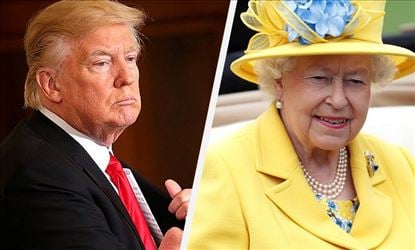
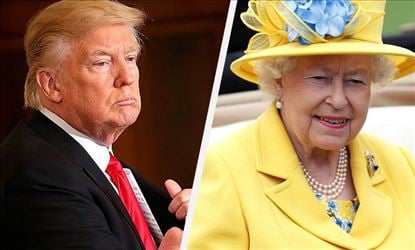
According to News18, Donald Trump has been publicly floating — though not officially confirming — the idea of issuing 250 presidential pardons to mark America's 250th Independence Day on July 4, 2026. The White House has not confirmed or denied the plan as settled policy. India Herald's analysis is that the real audience for this constitutional lesson is New Delhi, where gubernatorial and presidential clemency has become equally contested — from the Bilkis Bano remissions struck down by the Supreme Court to the release of Rajiv Gandhi's assassins.
The 5W+H: Who, What, When, Where, Why, How
- Who: US President Donald Trump, with parallels to Indian governors and the President of India exercising clemency under Articles 72 and 161.
- What: Trump is reportedly floating a plan to issue up to 250 presidential pardons to commemorate the 250th anniversary of American independence, as reported by News18. The plan has not been officially confirmed as final policy.
- When: The pardons are being discussed for around July 4, 2026 — the US semiquincentennial.
- Where: The White House, Washington DC; the constitutional parallels extend to Rashtrapati Bhavan and Raj Bhavans across India.
- Why: Trump frames the pardons as a patriotic celebration; critics see it as executive overreach — a dynamic that mirrors India's own pardon controversies where clemency has been alleged to serve political rather than justice objectives.
- How: Under Article II of the US Constitution, the President holds near-absolute pardon power for federal offences. In India, Articles 72 and 161 vest similar power in the President and Governors respectively, exercisable on the advice of the Council of Ministers.
Key Takeaways
- Donald Trump has been publicly floating — but has not officially confirmed — a plan for 250 presidential pardons to mark America's 250th Independence Day on July 4, 2026, per News18 reporting.
- India's Articles 72 and 161 vest similar near-unreviewable clemency power in the President and Governors; the Bilkis Bano and Rajiv Gandhi assassination cases show the vulnerability is not theoretical.
- The Supreme Court of India's 2024 Bilkis Bano ruling is the strongest judicial firewall against spectacle clemency — but it checks process, not political motive.
- The real danger is the template effect: once mass clemency is normalised as celebration, Indian executives face pressure — and political cover — to replicate it around state anniversaries and elections.
The American Spectacle — What Trump Is Reportedly Considering
Two hundred and fifty pardons for two hundred and fifty years. The number is so perfectly round it could only have been dreamt up by a showman — and according to News18, that is precisely what Donald Trump appears to be floating for America's semiquincentennial on July 4, 2026. One pardon per year of the republic's existence: not justice, but theatre; not mercy, but — in India Herald's editorial assessment — a monument to executive audacity dressed in the Stars and Stripes.
A critical caveat: The News18 source itself frames this as a question — 'Is Donald Trump Issuing 250 Presidential Pardons?' — and no official White House statement has confirmed or denied the plan as settled policy. Trump has been publicly discussing the idea, but it remains, as of this writing, a floated proposal rather than an executive commitment. Readers should treat it accordingly.
But here is the thing India Herald wants Indian readers to sit with: when you strip away the American flags and the Fourth of July fireworks, the constitutional mechanics underneath Trump's clemency pageant are disturbingly familiar. India does not need to look across the Pacific to recognise this play. It has been running its own version — quieter, more fragmented, but no less politically corrosive — for years.
What Trump's Pardon Power Allows — And What He Has Already Done With It
The US Constitution's Article II, Section 2 gives the president near-absolute authority to grant pardons for federal offences. No legislative check, no judicial review of substance — only the political cost of public opinion stands between the Oval Office and the act.
Trump has already stress-tested this power. In his first term, he pardoned political allies, military figures convicted of war crimes, and — most controversially, in January 2025 — individuals charged in the January 6 Capitol breach. The pattern, in India Herald's editorial analysis, was never subtle: clemency deployed as loyalty signal, pardon as political marker. What the reported 250-for-250 plan would do is escalate the logic from transactional to theatrical — turning an individual act of mercy into a mass nationalist spectacle.
The danger, as constitutional law scholars including Mark Tushnet of Harvard Law School and Corey Brettschneider of Brown University have argued in published critiques of presidential pardon overreach, is not any single pardon. It is the normalisation of clemency as performance — divorced from the case-by-case examination of remorse, rehabilitation, and proportionality that the pardon power was designed to serve.
The Indian Mirror — Why New Delhi Should Be Paying Attention
And this is where Indian political corridors should be listening closely. Legal commentators who spoke to India Herald on condition of anonymity — given the political sensitivity of the subject — suggest that Trump's clemency theatrics are being quietly studied in constitutional law circles and policy advisory groups, not as a curiosity, but as a cautionary tale that arrives at exactly the wrong time for India's own pardon debates.
Consider what India has lived through in the last few years:
- Bilkis Bano case (2022-2024): The Gujarat government remitted the sentences of the eleven men convicted in the Bilkis Bano gang-rape case — a decision that the Supreme Court of India struck down in January 2024 as illegal and unconstitutional, ordering the convicts back to prison. The Court's language was searing: remission, it said, cannot be a "political exercise."
- Rajiv Gandhi assassination case (2022): The Tamil Nadu government released the assassins of former Prime Minister Rajiv Gandhi under Article 161, after the Supreme Court itself noted that the Governor had sat on the recommendation for an unconscionable period.
In both cases, the mechanics were Indian — Article 72 (presidential pardon) and Article 161 (gubernatorial clemency) — but the underlying dynamic was identical to what critics allege about Trump's approach: executive power deployed not as a measured act of justice but as a signal to a political constituency.
The talk among legal commentators and former law officers — and India Herald flags this explicitly as unverified corridor speculation, not confirmed government policy — is that several state governments may be observing the US debate for a strategic reason: if mass clemency can be repackaged as a "national celebration" or a "milestone gesture," it provides political cover that individual pardons never could. A governor releasing one controversial convict faces scrutiny. A governor releasing fifty on Republic Day or a state's foundation day? That is a narrative, not a scandal — or so the calculation reportedly goes.
By the Numbers — The Pardon Gap
The scale of the constitutional asymmetry is worth grasping:
- A US president can pardon any federal offence, with no requirement to consult anyone, no time limit, and no cap on numbers.
- India's framework is theoretically more constrained: under Article 72, the President acts on the aid and advice of the Council of Ministers; under Article 161, the Governor acts similarly.
- But the Supreme Court's own jurisprudence — from Kehar Singh (1989) to Epuru Sudhakar (2006) to Bilkis Bano (2024) — confirms that judicial review of pardons is limited to process, not substance. The Court can ask whether proper procedure was followed, whether relevant material was considered. It generally cannot substitute its own judgment on whether the pardon was deserved.
This means the real check on "spectacle clemency" in India, just as in the US, is political, not legal. And political checks work only when the public is watching, when media scrutiny is sustained, and when the opposition has the appetite to make it costly. Trump's strategic instinct — and India Herald uses the term analytically, not admiringly — has been to turn the political cost into a political benefit by wrapping the pardon in nationalist sentiment. The question this analysis poses: can Indian executives attempt the same?
The Constitutional Mirror — What India's Framers Feared
India's Constituent Assembly debated the pardon power with great anxiety. Dr. B.R. Ambedkar defended Articles 72 and 161 as necessary "acts of grace" — a safety valve against the rigidity of criminal law. But members like H.V. Kamath worried openly about misuse. The compromise was the ministerial-advice requirement: the President or Governor would not act alone.
But as the Bilkis Bano case showed, ministerial advice can itself be politically motivated — and the Court's ability to look behind the advice is doctrinally limited.
Trump's reported 250-pardon plan strips even this pretence. There is no ministerial advice in the American system; there is only the president's will and whatever political price the electorate extracts. India's framework is structurally more guarded — but structurally more guarded is not the same as safe.
What This Sets in Motion — India Herald's Forward Read
India Herald's assessment of where this trajectory leads, on both sides:
In the US: The 250-pardon plan — whether it materialises in full, gets trimmed, or remains a trial balloon — will establish mass clemency as a discussed category of presidential action. Future presidents of either party may cite the precedent, or the debate itself, to justify expansive clemency exercises.
In India: The more immediate risk is subtler. The Supreme Court's Bilkis Bano judgment was a firewall — but firewalls hold only as long as the political system respects them. If the global norm shifts toward treating clemency as spectacle, the pressure on Indian governors and the Centre to match the gesture — especially around politically charged anniversaries, elections, or coalition negotiations — will grow.
Watch, in particular, for state-level clemency announcements timed to foundation days and centenary celebrations in the next two years. The pattern Trump is reportedly setting is not just American — it is a template. And templates, once they cross oceans, are very hard to unlearn.
The next time an Indian governor announces a batch of pardons on Republic Day or a state's centenary, ask yourself: is this mercy — or the Trump playbook with a tricolour wrapper?
By the Numbers
- 250 pardons reportedly floated by Trump for America's 250th Independence Day — one per year of the republic, per News18. Not yet confirmed as official policy.
- 11 convicts in the Bilkis Bano case had their remissions struck down as unconstitutional by the Supreme Court of India in January 2024.
- India's pardon power framework rests on Articles 72 (President) and 161 (Governors), with judicial review limited to procedural grounds under Epuru Sudhakar (2006).
Key Takeaways
- Trump has been publicly floating — but has not officially confirmed — a plan for 250 presidential pardons to mark America's 250th Independence Day on July 4, 2026, per News18. The White House has not confirmed or denied the plan.
- India's Articles 72 and 161 vest similar near-unreviewable clemency power in the President and Governors; the Bilkis Bano and Rajiv Gandhi assassination cases show the vulnerability is not theoretical.
- The Supreme Court of India's 2024 Bilkis Bano ruling is the strongest judicial firewall against spectacle clemency — but it checks process, not political motive.
- The real danger is the template effect: once mass clemency is normalised as celebration, Indian executives face pressure — and political cover — to replicate it around state anniversaries and elections.
- Constitutional scholars including Mark Tushnet and Corey Brettschneider have published critiques warning against the normalisation of pardon power as political performance.
Frequently Asked Questions
Is Trump really issuing 250 pardons for July 4, 2026?
According to News18, Trump has been publicly floating the idea of issuing 250 presidential pardons to mark the US semiquincentennial — America's 250th Independence Day. However, the News18 source itself frames this as a question, and the White House has not officially confirmed or denied the plan as settled policy. It remains a reported proposal, not an executive commitment.
Can the Indian President or Governor issue mass pardons like the US President?
Under Articles 72 and 161 of the Indian Constitution, the President and Governors can grant pardons, reprieves, or remissions. Unlike the US, they act on ministerial advice — but the Supreme Court's review power is limited to process, not substance, making mass clemency theoretically possible if the executive chooses.
What was the Bilkis Bano pardon controversy?
In 2022, the Gujarat government remitted the sentences of eleven men convicted in the Bilkis Bano gang-rape case during the 2002 Gujarat riots. The Supreme Court struck down the remission in January 2024, calling it illegal and ordering the convicts back to prison.
How does the US pardon power differ from India's?
The US President has near-absolute pardon power under Article II of the Constitution with no requirement for ministerial advice. India's framework requires the President to act on the Council of Ministers' advice, and judicial review — though limited — exists on procedural grounds.
Has the White House confirmed Trump's 250-pardon plan?
As of this writing, no. The White House has neither officially confirmed nor denied the reported plan. News18's own framing poses it as a question rather than a confirmed policy announcement. Readers should treat the 250-pardon figure as a publicly floated idea, not a finalised executive action.


 click and follow Indiaherald WhatsApp channel