
-

Ahmedabad
-
Bangladesh
-
China
-
CM
-
Congress
-
court
-
Culture
-
Delhi
-
Donald Trump
-
House
-
Hyderabad
-
Idea
-
India
-
Indian
-
Jinping
-
June
-
KCR
-
Minister
-
NRI
-
Office
-
Parents
-
Party
-
politics
-
Population
-
Prime Minister
-
READ
-
Siliguri
-
Strike
-
Supreme
-
Supreme Court
-
Tamil
-
Telangana
-
Telugu
-
temple
-
United States
-
WATCH
-
white house
-
workers
-
zero

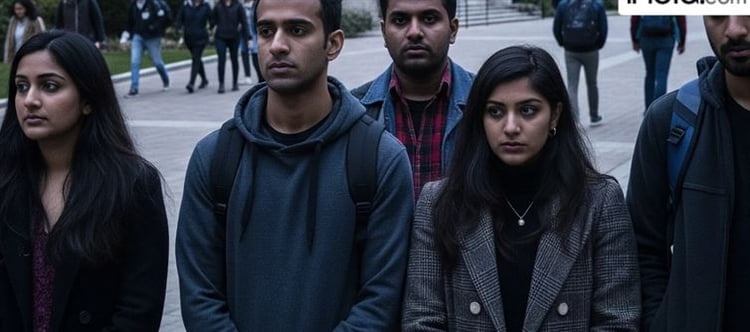
The US Supreme Court upheld birthright citizenship 7-2, blocking Trump's executive order. But Trump has pivoted to urging Congress — where Republicans control both chambers — to legislatively end automatic citizenship for US-born children of non-citizens, a move that could directly threaten an estimated 4-5 lakh Indian-origin children born annually on American soil, according to reports in Telangana Today and The Times of India.
The 5W+H: Who, What, When, Where, Why, How
- Who: US President Donald Trump, the US Supreme Court, the Republican-controlled US Congress, and an estimated 4-5 lakh Indian-origin children born in the US annually to H-1B and other visa-holding parents.
- What: The Supreme Court rejected Trump's executive order to end birthright citizenship by a 7-2 margin; Trump responded by calling the ruling 'too bad for our Country' and urging Congress to pass legislation ending automatic citizenship for US-born children of non-citizens, according to Hindustan Times and The Times of India.
- When: The Supreme Court ruling was delivered in June 2025; Trump's call for Congressional action came immediately after, with the legislative push ongoing into 2026, as reported by India Today and News18.
- Where: Washington, D.C. — the US Supreme Court and the halls of the US Congress — with reverberations felt most acutely in Indian diaspora communities across the United States and in India's diplomatic corridors.
- Why: Trump views birthright citizenship as enabling 'birth tourism' and illegal immigration; his pivot to Congress follows the judicial route's failure and reflects a calculation that Republican majorities in both chambers may offer a viable path to amending or reinterpreting the 14th Amendment, according to The Indian Express and The Wire.
- How: Trump is calling for either a new federal statute reinterpreting the 14th Amendment's 'subject to the jurisdiction thereof' clause or, more ambitiously, a constitutional amendment — both requiring Congressional action. The legislative route demands simple majorities for a statute but two-thirds supermajorities for an amendment, as reported by News18 and Hindustan Times.
Here is the arithmetic of anxiety that no Supreme Court ruling can fully erase: every year, an estimated four to five lakh children are born on American soil to Indian-origin parents holding H-1B visas, L-1 transfers, or other temporary work permits. Each of those children, the moment they draw their first breath in a Houston hospital or a Sunnyvale birthing centre, is — as of today — an American citizen. The 14th Amendment says so. The Supreme Court, by a commanding 7-2 margin, just confirmed it. And yet, within hours of that confirmation, the President of the United States told them not to get too comfortable.
According to Hindustan Times, Donald Trump called the ruling "too bad for our Country" and immediately pivoted to Congress, urging lawmakers to pass legislation that would strip automatic citizenship from children born to non-citizen parents on US soil. "Get it done!" he posted, per The Times of India's reporting — the exclamation mark carrying the force of a man who has lost a battle but believes he has located a different battlefield entirely.
The Supreme Court's 7-2 decision, as reported by The Wire and The Indian Express, was emphatic. It rejected Trump's executive order that had attempted to redefine who qualifies for birthright citizenship by narrowing the 14th Amendment's phrase "subject to the jurisdiction thereof." The Court held, in line with over a century of constitutional precedent dating to the 1898 United States v. Wong Kim Ark ruling, that anyone born on American soil — regardless of their parents' immigration status — is a citizen. Full stop.
But India Herald's read of what is really driving this story forward is not the ruling itself — it is the deliberate, calculated pivot that followed it. Trump did not lick his wounds. He reloaded. And the weapon he reached for — Congress — is one where, unlike in the judiciary, he holds real leverage.
The Congress Gambit: Two Paths, Two Very Different Odds
Trump's call to Congress opens two distinct legislative corridors, and the difference between them matters enormously for Indian families.
Path One: A federal statute. This would attempt to legislatively reinterpret the 14th Amendment's jurisdiction clause without amending the Constitution itself. It would require simple majorities in both the House and Senate — margins Republicans currently hold. According to News18, Trump has floated this as the faster route, and some Republican lawmakers have already signalled willingness to introduce such a bill. The legal reality, however, is brutal: any such statute would face immediate constitutional challenge and almost certainly land back before the same Supreme Court that just ruled 7-2. Legal scholars quoted by The Indian Express have called this route "legislatively possible but constitutionally doomed."
Path Two: A constitutional amendment. This is the nuclear option — rewriting the 14th Amendment itself. It requires two-thirds supermajorities in both chambers of Congress and ratification by three-quarters of state legislatures. As India Today reported, Trump has invoked this possibility, but the arithmetic is forbidding: Republicans would need significant Democratic crossover votes, which, on an issue this politically radioactive, is the definition of a long shot.
The honest assessment: neither path is likely to succeed in the near term. But — and this is the dimension most coverage is missing — the mere pursuit of either path creates a chilling effect that is already reshaping decision-making in Indian diaspora households right now.
Political Pulse
The talk in Telugu and Gujarati NRI WhatsApp groups — the two largest Indian professional communities in the US tech corridor — is not about constitutional law. It is about timing. Specifically: should couples on H-1B visas still plan to have children in the United States?
This is not hypothetical chatter. Immigration attorneys serving the Indian diaspora report, according to Telangana Today, that queries about "citizenship risk for US-born children" have surged since Trump first floated the executive order. The Supreme Court ruling offered a moment of exhaled relief — one attorney quoted by the outlet described it as "removal of a knife from the throat" — but Trump's immediate pivot to Congress has, in the words of community leaders, "put the knife back on the table, just in a different hand."
The whisper in political corridors, both in Washington and in South Block, is that Trump's Congress push is less about actually passing a law and more about electoral signalling — a midterm play designed to energise his nativist base by keeping immigration anxiety at a rolling boil. Trade circles tracking US-India relations speculate that the real leverage play is transactional: immigration anxiety gives Trump a card to play against India in trade negotiations, particularly around H-1B visa caps and the perennial market-access disputes.
(This reflects diaspora community discussion and political speculation, not confirmed strategic intent.)
View on X
The Indian Diplomatic Calculus
For New Delhi, this is not merely an American domestic affair. India is the single largest source country for H-1B visa holders, and the economic pipeline that flows from Hyderabad and Ahmedabad to Silicon Valley and the Research Triangle is a strategic asset worth tens of billions of dollars annually. Any legislative move that makes the US less hospitable to Indian skilled workers — even one that ultimately fails — carries diplomatic and economic consequences.
According to India Today, Indian diplomatic sources have been closely monitoring the birthright citizenship debate, though official statements have been characteristically restrained. The calculation in South Block, analysts suggest, is to avoid public confrontation while quietly reinforcing bilateral channels — a posture that works only as long as the legislative threat remains theoretical.
The deeper concern, rarely stated on the record, is demographic: if a generation of Indian-American children — born, raised, and educated in the United States — were to lose their automatic citizenship, the long-term impact on India's soft-power footprint in American politics, business, and culture would be profound. The Indian-American community's political clout, which has produced vice-presidential candidates and Fortune 500 CEOs, is built on the bedrock assumption that their children are unambiguously American.
View on X
The 14th Amendment Firewall: Strong but Not Indestructible
Constitutional scholars are near-unanimous that the 14th Amendment's birthright citizenship guarantee is among the most robust provisions in American law. The Supreme Court's 7-2 ruling reinforces that strength. But as The Wire noted in its analysis, no constitutional provision is truly beyond the reach of a determined political movement with sufficient popular support and institutional control.
The precedent to watch is not legal but political. The 18th Amendment (Prohibition) was ratified in 1919 and repealed by the 21st Amendment in 1933 — proof that even entrenched constitutional provisions can be undone when political will aligns. The question is whether anti-birthright-citizenship sentiment can build the kind of broad, sustained coalition that Prohibition's opponents assembled. Current polling, as referenced by multiple outlets, suggests it cannot — but polling in the Trump era has been a notoriously unreliable guide to outcomes.
View on X
Trump's Sarcastic Diplomacy: The Xi Jinping Jab
In a move that blended grievance with geopolitical trolling, Trump sarcastically "congratulated" Chinese President Xi Jinping on the ruling, implying that birthright citizenship benefits Chinese nationals engaged in birth tourism. According to India Today and News18, the remark was designed to frame the issue as a national security concern rather than merely an immigration debate — a rhetorical escalation that broadens the political coalition he can assemble against birthright citizenship.
For Indian families, the Xi jab is a reminder that this debate is not really about them — and yet they are squarely in its crosshairs. The overwhelming majority of Indian-origin US-born children are not products of "birth tourism" but of parents on legitimate multi-year work visas who are building careers, paying taxes, and contributing to the American economy. That distinction, however, tends to vanish in the heat of campaign-season rhetoric.
View on X
What Comes Next — And What to Watch For
India Herald's forward assessment: the legislative push will generate heat but is unlikely to produce a law that survives judicial review, let alone a constitutional amendment, within the current Congressional term. The 7-2 margin is simply too wide, the constitutional precedent too deep, and the political coalition required too broad.
But here is what the Indian diaspora — and New Delhi — should be watching with both eyes open:
First, any bill introduced in Congress, even one doomed to fail, creates a legislative record and a political marker. It normalises the idea that birthright citizenship is negotiable. That normalisation is itself a strategic shift, regardless of the bill's fate.
Second, the composition of the Supreme Court is not static. Two justices dissented. Future appointments could narrow the margin. A 5-4 Court reconsidering the question in 2030 or 2035 would face a very different political environment than today's 7-2 bench.
Third, the chilling effect on skilled immigration is already real and measurable. If the US is perceived as a place where even your children's citizenship is contested, the talent pipeline shifts — to Canada, to the UK, to Australia, and increasingly back to India itself, where Hyderabad and Bengaluru are building ecosystems designed to catch exactly these returnees.
View on X
The 14th Amendment held. The firewall is intact. But firewalls are only as permanent as the people who choose not to dismantle them — and the most powerful person in America just told his party to start looking for the tools.
For the four to five lakh Indian families who will welcome a child on American soil this year, the question is no longer whether their baby is a citizen. The Supreme Court answered that. The question now is whether "citizen" will still mean the same thing by the time that child is old enough to vote.
By the Numbers
- An estimated 4-5 lakh (400,000-500,000) Indian-origin children are born annually on US soil to parents on H-1B and other temporary work visas, according to Telangana Today.
- The Supreme Court ruled 7-2 to uphold birthright citizenship, with only two justices dissenting, as reported by The Wire and The Indian Express.
- A constitutional amendment to end birthright citizenship would require two-thirds supermajorities in both chambers of Congress and ratification by three-quarters (38 of 50) of US state legislatures.
- India is the single largest source country for H-1B visa holders in the United States, a pipeline worth tens of billions of dollars annually in economic contribution.
Key Takeaways
- The US Supreme Court upheld birthright citizenship 7-2, blocking Trump's executive order — but Trump immediately pivoted to urging Congress to legislatively end automatic citizenship for US-born children of non-citizens, per Hindustan Times and Times of India.
- An estimated 4-5 lakh Indian-origin children born annually in the US to H-1B and other visa-holding parents are directly in the crosshairs of any legislative change, according to Telangana Today.
- Two Congressional paths exist — a federal statute (simple majority, but constitutionally vulnerable) and a constitutional amendment (requires two-thirds supermajority, politically near-impossible currently) — neither is likely to succeed soon, but the legislative pursuit itself normalises the idea that birthright citizenship is negotiable.
- The chilling effect on Indian skilled immigration is already measurable: immigration attorneys report surging queries about 'citizenship risk for US-born children,' and the talent pipeline may shift toward Canada, UK, Australia, or back to India.
- India's diplomatic calculus is quietly strategic — New Delhi is monitoring closely while avoiding public confrontation, aware that any erosion of birthright citizenship would damage India's long-term soft-power footprint in American politics and business.
Frequently Asked Questions
Can Trump end birthright citizenship through Congress?
Trump can urge Congress to pass a federal statute reinterpreting the 14th Amendment or pursue a constitutional amendment. A statute requires simple majorities but would face immediate Supreme Court challenge; an amendment requires two-thirds supermajorities in both chambers plus ratification by 38 states — a near-impossible threshold currently, according to legal analysts cited by The Indian Express and News18.
Does the Supreme Court ruling protect children of H-1B visa holders born in the US?
Yes. The 7-2 ruling upheld that anyone born on US soil, regardless of parents' immigration status, is automatically a US citizen under the 14th Amendment. This directly protects children of Indian H-1B holders, as confirmed by Telangana Today and The Wire.
How many Indian-origin children are born in the US each year?
An estimated 4-5 lakh (400,000-500,000) children are born annually on US soil to Indian-origin parents on H-1B and other temporary work visas, according to Telangana Today's reporting.
What is India's official position on the US birthright citizenship debate?
India has maintained a characteristically restrained public posture while closely monitoring the debate through diplomatic channels, according to India Today. Analysts suggest New Delhi is avoiding public confrontation while reinforcing bilateral communication.
Could a future Supreme Court overturn the birthright citizenship ruling?
While the current 7-2 margin is robust, future presidential appointments could change the Court's composition. A narrower 5-4 Court reconsidering the question in a different political environment could theoretically revisit the precedent, though constitutional scholars consider this unlikely in the near term.

 click and follow Indiaherald WhatsApp channel