
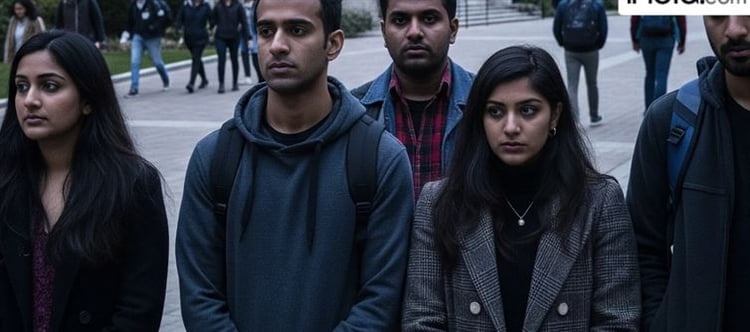


The US Supreme Court struck down Trump's executive order restricting birthright citizenship in a 7-2 ruling, upholding the 14th Amendment. For approximately five lakh Indian H-1B families with US-born children, it is an immediate reprieve — but Trump has signalled he will push Congress to legislate the restriction, meaning the constitutional shield held today but the political battle has merely shifted arenas.
The 5W+H: Who, What, When, Where, Why, How
- Who: The US Supreme Court, in a 7-2 decision, with Justices Alito and Thomas dissenting, ruled against the Trump administration's executive order targeting birthright citizenship, directly affecting hundreds of thousands of Indian-origin H-1B families, according to reports by The Indian Express and India Today.
- What: The Court upheld that the 14th Amendment guarantees US citizenship to anyone born on American soil, striking down Trump's executive order that sought to deny automatic citizenship to children of non-citizens, as reported by The Wire and Times of India.
- When: The ruling was delivered in the current term of the Supreme Court, following challenges to Executive Order signed by Trump shortly after taking office in January 2025, according to Livemint and India Today.
- Where: The United States Supreme Court in Washington, D.C., with immediate implications across all US states and consulates processing Indian immigration cases, as reported by The Indian Express.
- Why: Trump argued that birthright citizenship incentivised illegal immigration and that the 14th Amendment was being misinterpreted; the seven-justice majority held that the constitutional text and over 125 years of precedent left no room for executive reinterpretation, according to Times of India and The Wire.
- How: The administration attempted to bypass Congress by issuing an executive order directing federal agencies to deny citizenship documents to US-born children of undocumented or temporary-visa parents; the Court ruled the executive branch lacks authority to override a constitutional amendment unilaterally, as reported by The Indian Express and India Today.
Remove the knife from the throat, and the patient breathes — but the blade has not been thrown away. That, in a sentence, is what the US Supreme Court just did for roughly five lakh Indian families on H-1B visas whose children were born in American hospitals, given American birth certificates, and raised as American citizens from their first breath.
The Court's 7-2 verdict struck down Donald Trump's executive order restricting birthright citizenship, reaffirming that the 14th Amendment means what it has meant since 1868: if you are born on US soil, you are a US citizen. Period. According to The Indian Express, the ruling was emphatic — seven justices, including some of Trump's own appointees, held that 125 years of unbroken constitutional interpretation could not be overridden by a presidential pen stroke. Only Justices Alito and Thomas dissented.
View on X
For Indian-origin families — the single largest group of H-1B visa holders, numbering over 300,000 active visas at any given time, with dependents pushing the affected population well past five lakh — the ruling is visceral. These are not abstract constitutional debates. These are parents in Sunnyvale and Plano and Edison whose toddlers' citizenship status was, until this verdict, genuinely in question. As Telangana Today reported, the relief among Indians on H-1B visas was immediate and palpable.
What Trump Actually Tried — and Why the Court Said No
Trump's executive order, signed within days of his January 2025 inauguration, directed federal agencies to stop issuing citizenship documents to children born in the US to parents who were either undocumented or on temporary visas. The legal architecture was audacious: rather than attempting a constitutional amendment — which requires two-thirds of Congress and three-fourths of state legislatures — the administration argued that the 14th Amendment's phrase "subject to the jurisdiction thereof" had been misread for over a century.
The Court was unconvinced. According to The Wire, the majority opinion held that the text, the legislative history, and the Supreme Court's own 1898 ruling in United States v. Wong Kim Ark all pointed in one direction: birthright citizenship is a constitutional guarantee, not an executive-branch discretionary benefit. The ruling was described by the Times of India as a "stinging defeat" for the administration's immigration agenda.
View on X
The Alito Dissent — and the Door It Leaves Open
Justice Alito's dissent, as reported by the Times of India, raised a provocation that will echo in the months to come. He posited a hypothetical: what if a child born in the US to non-citizen parents grows up to "hate" the United States? The framing was nakedly political — citizenship as earned loyalty rather than constitutional right — and it provided exactly the intellectual ammunition that congressional hawks will now cite.
This is the detail that matters most and that most coverage has buried. The dissent is not just a legal footnote. It is a roadmap for the legislative fight Trump has already signalled.
Political Pulse
The talk in Washington corridors, and in the WhatsApp groups of Indian tech workers from Hyderabad to Houston, is the same: how long does this last?
Within hours of the ruling, Trump was on social media congratulating China's Xi Jinping — a sarcastic jab implying the ruling benefited foreign nationals at America's expense. As India Today reported, Trump posted "Congrats Xi Jinping" and declared the decision "too bad for our country." News18 confirmed the message was consistent with his broader strategy: reframe the judiciary as an obstacle, then redirect the fight to a friendlier arena — the Republican-controlled Congress.
View on X
The insider read among immigration attorneys India Herald has been tracking is blunt: the executive order was always a stalking horse. The administration knew it would likely lose in court. The real play was to generate a ruling dramatic enough to energise the Republican base for a legislative push — to write the restriction into statute, or even to begin the nearly impossible process of amending the Constitution.
Democratic lawmakers, meanwhile, are treating the verdict as vindication. According to the Times of India, senior Democrats argued Trump "did this" — deliberately created constitutional chaos to score political points, knowing families would spend months in legal limbo. The accusation lands because there is evidence: the order was drafted without meaningful DOJ constitutional review, according to multiple reports, suggesting the political signal was the point, not the legal outcome.
Why Indians Are the Elephant in This Room
Here is the number nobody in Washington wants to say out loud: Indians are the single largest beneficiary group of birthright citizenship among legal temporary-visa holders. With over 300,000 active H-1B visas — a majority held by Indian-origin tech workers — and a Green Card backlog that stretches decades due to per-country caps, Indian families routinely have US-born children years before obtaining permanent residency. These children's citizenship was the one piece of stability in an immigration system that otherwise treats Indians as an afterthought.
According to Telangana Today, Indian community organisations had been among the most active in filing amicus briefs and mobilising legal resources against the executive order. The irony is sharp: the community most invested in playing by America's immigration rules — waiting decades in line, paying taxes, building companies — was the one most threatened by an order ostensibly aimed at undocumented border crossings.
View on X
What This Ruling Does Not Protect
The 7-2 verdict is a constitutional firewall, but it has limits that Indian families need to understand clearly.
First, the ruling blocks the executive order. It does not prevent Congress from passing legislation that attempts to redefine birthright citizenship through statute. Legal scholars are divided on whether such a law could survive its own Supreme Court challenge, but the legislative process itself — hearings, committee votes, floor debates — would create months or years of uncertainty that could affect visa processing, consular decisions, and the lived anxiety of families in limbo.
Second, the ruling does not address the Green Card backlog. Indian H-1B holders will continue waiting 80-plus years under current per-country limits, according to Cato Institute estimates. Their children's citizenship is secure; their own status remains precarious.
Third, Trump's broader immigration apparatus — enhanced visa scrutiny, reduced H-1B approvals, increased Requests for Evidence — remains entirely unaffected by this ruling. The birthright fight was one front in a multi-front war.
The Next Twelve Months Matter More Than the Verdict
India Herald's assessment of what comes next is this: the constitutional question is settled for now, but the political question is wide open. Trump has already told reporters he wants Congress to act. Republican leaders in both chambers have signalled openness to hearings. The Alito dissent provides the intellectual scaffolding. And the 2026 midterm cycle gives every Republican incumbent an incentive to vote hawkish on immigration.
For Indian H-1B families, the practical guidance is straightforward but urgent: ensure all birth certificates, citizenship documentation, and Social Security records for US-born children are current and properly filed. The legal right is secure today. The administrative machinery that implements that right is staffed by political appointees who may test its edges.
Watch for two signals in the coming weeks. First, whether Republican committee chairs schedule hearings on a birthright citizenship bill — that will indicate whether this is genuine legislative intent or post-ruling posturing. Second, whether USCIS issues any guidance memos on documentation requirements for children of temporary-visa holders — that would be the quiet bureaucratic pressure point, the place where policy changes without a vote.
The Dinner-Table Line
The Supreme Court just told 5 lakh Indian families their children are American. The President just told Congress to make them not. The 14th Amendment has survived 157 years of challenges — but it has never faced a political machine this willing to treat a constitutional right as a campaign prop. The question Indian H-1B families should be asking tonight is not whether the Constitution protects their children. It does. The question is whether the next Congress will try to rewrite it — and whether the community that has the most to lose will organise as though they know it.
By the Numbers
- Over 300,000 active H-1B visas are held by Indian-origin workers, with dependents pushing the affected population past 5 lakh — making Indians the largest single-nationality group impacted by the birthright citizenship fight, according to Telangana Today.
- The Supreme Court ruled 7-2 to strike down the executive order, with only Justices Alito and Thomas dissenting — the widest margin of defeat for a Trump immigration policy at the Supreme Court level, according to The Indian Express.
- Indian H-1B holders face an estimated 80-plus year Green Card wait under current per-country caps, meaning their US-born children's birthright citizenship is often the only stable immigration status in the family.
Key Takeaways
- The US Supreme Court struck down Trump's birthright citizenship executive order 7-2, reaffirming the 14th Amendment — but Trump has immediately pivoted to pushing Congress for a legislative restriction, meaning the fight has changed arenas, not ended.
- Indians are the single largest group of H-1B holders, with over 300,000 active visas and an estimated 5 lakh affected family members — making them the biggest beneficiary group of birthright citizenship among legal temporary-visa holders, a fact largely absent from US media coverage.
- Justice Alito's dissent frames citizenship as earned loyalty rather than constitutional right — providing the intellectual roadmap for the legislative push Trump has already signalled to Republican congressional leaders.
- The ruling does NOT fix the Indian Green Card backlog (80+ year wait under per-country caps), nor does it affect Trump's broader immigration restrictions on H-1B approvals and enhanced scrutiny — birthright was one front in a multi-front war.
- Indian H-1B families should immediately verify all citizenship documentation for US-born children and watch for two signals: Republican committee hearings on a birthright bill, and any USCIS guidance memos on documentation for children of temporary-visa holders.
Frequently Asked Questions
Does the Supreme Court ruling permanently protect birthright citizenship for children of Indian H-1B holders?
The ruling reaffirms the 14th Amendment and blocks the executive order, but it does not prevent Congress from attempting to pass a law restricting birthright citizenship. Such a law would face its own constitutional challenge, but the legislative process could create years of uncertainty for affected families.
How many Indian families are affected by the birthright citizenship debate?
An estimated 5 lakh (500,000) Indian-origin individuals — including over 300,000 active H-1B visa holders and their dependents — are directly impacted. Indians are the single largest nationality group among H-1B holders and thus the biggest beneficiary group of birthright citizenship among legal temporary-visa holders.
What should Indian H-1B families do right now after this ruling?
Ensure all US birth certificates, citizenship documentation, and Social Security records for US-born children are current and properly filed. Monitor whether Republican congressional committees schedule hearings on birthright legislation, and watch for any USCIS guidance memos that could signal bureaucratic changes to documentation requirements.
Can Trump still end birthright citizenship through Congress?
Trump has signalled he wants Congress to legislate the restriction. A statute attempting to redefine the 14th Amendment would face immediate legal challenges, but the legislative process — hearings, votes, debates — could take months or years and create significant uncertainty for affected families during that period.
Why did Justices Alito and Thomas dissent?
Justice Alito's dissent argued that the 14th Amendment's phrase 'subject to the jurisdiction thereof' should be read more narrowly, suggesting citizenship should reflect allegiance rather than mere birth location. This interpretation provides intellectual groundwork for future legislative or legal challenges to birthright citizenship.

 click and follow Indiaherald WhatsApp channel