
-

advertisement
-
Application
-
Arrest
-
Assembly
-
Chennai
-
CM
-
court
-
Criminal
-
District
-
Episode
-
Government
-
Governor
-
High court
-
history
-
India
-
Indian
-
Jayalalithaa
-
Kanimozhi
-
Leader
-
Mamata Benerjee
-
Minister
-
MLA
-
MP
-
News
-
Party
-
police
-
politics
-
Population
-
READ
-
Shield
-
social media
-
Stalin
-
Tamil
-
Telangana Chief Minister
-
udhayanidhi stalin
-
war

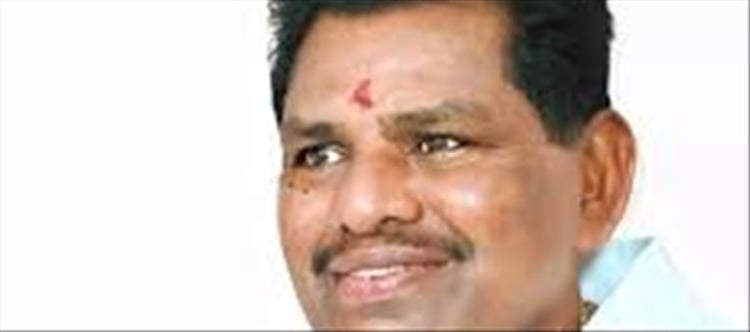
CM Vijay's Tamil Nadu government arrested former DMK minister and sitting MLA Anitha R. Radhakrishnan over alleged defamatory remarks, days after the Madras High Court denied him anticipatory bail. This marks the second senior DMK leader arrested in quick succession, raising pointed questions about whether the crackdown reflects genuine governance or calculated political consolidation.
The 5W+H: Who, What, When, Where, Why, How
- Who: Anitha R. Radhakrishnan, former DMK minister and sitting MLA from Tiruchendur, arrested by Tamil Nadu police, according to The Hindu and The Indian Express.
- What: Arrested on charges of making defamatory and objectionable remarks against Chief Minister Vijay, after the Madras High Court denied his anticipatory bail plea, as reported by ThePrint.
- When: Arrested in 2026, the second DMK veteran to face action in recent weeks, according to India Today and Times of India.
- Where: Tamil Nadu; the arrest follows a High Court proceeding in Madras, per The Indian Express.
- Why: The government contends the remarks were defamatory and violated law; critics allege the arrests are part of a political pattern to weaken DMK's experienced leadership, as reported across Indian Express, The Hindu, and India Today.
- How: Police acted after the Madras High Court declined Radhakrishnan's anticipatory bail application, clearing the legal path for his arrest, according to ThePrint and The News Minute.
Here is what every DMK functionary in Tamil Nadu is quietly calculating right now: not whether the charges against Anitha R. Radhakrishnan are legitimate, but whether they are next. According to The Hindu and The Indian Express, the former DMK minister and sitting MLA from Tiruchendur was arrested over alleged defamatory remarks against Chief Minister Vijay — and the timing could not be louder if it tried.
This is the second senior DMK leader to be arrested in a matter of weeks. The Madras High Court denied Radhakrishnan anticipatory bail, clearing the path for police to act, as reported by ThePrint. On the surface, this is a straightforward legal consequence: a legislator made remarks the state considers defamatory, a court declined to shield him, and the law took its course. But politics is never surface, and in Tamil Nadu, it is barely even subtext.
What Did Radhakrishnan Actually Say?
The specifics of the alleged remarks have been reported by India Today and The News Minute as "defamatory" and "derogatory" statements directed at CM Vijay. The exact content, while circulating in Tamil political circles, is significant less for its words than for its target: a sitting Chief Minister who transitioned from one of India's biggest film careers into the state's top chair. Radhakrishnan, a six-time MLA and former minister for fisheries and ports under DMK governments, is not a backbencher throwing stones — he is a party patriarch with decades of electoral credibility in southern Tamil Nadu.
That distinction matters. When a government arrests a random social media troll for online abuse, it barely registers. When it arrests a veteran legislator from the principal opposition, the arithmetic changes entirely.
Political Pulse
The whisper in DMK circles — and it is more than a whisper now — is that CM Vijay's government is not simply enforcing the law but methodically clipping the wings of every DMK heavyweight who dares test the new order's authority. The talk in Chennai's political corridors, as India Herald's read of the situation suggests, is that the pattern is too neat to be coincidental: two veterans, both with deep grassroots networks, both arrested within weeks of each other, both on charges that stem from public remarks critical of the Chief Minister.
Consider the optics from the DMK's internal war room. Radhakrishnan is not a lightweight — according to Times of India, he is a former state minister who has represented Tiruchendur through multiple terms and commands real loyalty in the fishing communities along the Tuticorin coast. Neutralising him does not just remove one critic; it sends a signal to every DMK district president and block-level leader: cross the Chief Minister, and the state machinery will find a way to your doorstep.
(This reflects political corridor chatter and informed speculation, not confirmed strategic intent.)
The High Court's Role — Shield Denied
The legal mechanics here deserve attention. According to ThePrint and The Indian Express, Radhakrishnan sought anticipatory bail from the Madras High Court — a routine protective measure for a political figure facing charges that carry arrest. The court declined. That refusal is the critical gate: without it, the arrest could not have proceeded as smoothly.
Now, courts are independent institutions, and a bail denial is a judicial assessment of the merits, not a political verdict. But the DMK's position — articulated through its cadre if not yet formally by its leadership — is that the legal process is being weaponised. The complaint was filed, the investigation was swift, and the judicial timeline was brisk. For a party that governed Tamil Nadu for the previous term and is accustomed to being the one deploying state machinery, the reversal stings doubly.
Here is the number that frames the scale of what is at stake: Radhakrishnan has won six consecutive assembly elections from Tiruchendur. Six. That is not a politician you arrest lightly — that is a politician you arrest deliberately.
Vijay's Calculus — Governor or Gladiator?
India Herald's read of what is really driving this is straightforward, and it is the dimension most coverage is missing: CM Vijay is not governing like a man who inherited power — he is governing like a man who seized it and knows it can be seized back.
The transition from superstar to Chief Minister was, by any measure, one of the most dramatic political reinventions in modern Indian history. But star power wins elections; it does not, by itself, run a state. Vijay's challenge from day one has been to establish that his authority is institutional, not merely charismatic. And the fastest way to establish institutional authority, as every political operator from Jayalalithaa to Mamata Banerjee has understood, is to demonstrate that consequences exist for those who challenge it.
The DMK is not just any opposition in Tamil Nadu — it is the party that built the Dravidian political grammar Vijay himself now speaks. Its veterans are not merely opponents; they are the people who know where every administrative body is buried, who control cadre networks in districts Vijay's own party is still learning to map. Removing them from the active board — even temporarily, through the disruption of arrest and trial — accomplishes something no policy announcement can: it makes the new government the only adult in the room.
Stalin's Silence — Strategy or Surrender?
The most telling detail in this entire episode may be what has not happened. DMK president M.K. Stalin's response to the sequential arrests of his party's senior leaders has been, by the standards of Tamil Nadu's traditionally combative opposition politics, strikingly muted.
The talk among party insiders, as reported in political analysis circles, is that Stalin faces a genuine strategic dilemma. A full-throated defence of the arrested leaders risks two things: first, it elevates the charges by giving them national oxygen; second, it locks Stalin into defending specific remarks that may not play well with the broader electorate. But silence carries its own cost — it signals to the party's rank and file that the leadership cannot or will not protect its own.
Watch for the next DMK working committee meeting. If Stalin frames these arrests as part of a broader "authoritarian" narrative — linking them to governance failures, economic issues, or democratic backsliding — it means the party has decided to fight on institutional grounds. If the silence continues, it suggests something more troubling for the DMK: that the old guard is being quietly sacrificed to preserve whatever strategic relationship the leadership believes it can maintain with the new dispensation.
The Larger Pattern — What History Teaches
Tamil Nadu is no stranger to governments that use the machinery of state against political opponents. The AIADMK under Jayalalithaa was accused of precisely this playbook — selective prosecution, timed arrests, judicial manoeuvrings that conveniently coincided with political necessity. The DMK itself, during its terms in power, was not above deploying similar tools. What makes the current moment distinctive is the speed and the target selection: not fringe figures or expendable allies, but core veterans with real electoral heft.
According to India Today, the arrest has already sent ripples through Tamil Nadu's political class, with opposition leaders questioning the pattern. The Indian Express reports that the charges centre on specific public statements, not financial corruption or criminal conduct — a distinction that makes the political reading harder to dismiss.
If CM Vijay's government were prosecuting DMK leaders over land scams or financial irregularities, the "anti-corruption" framing would at least carry surface plausibility. But when the charge sheet is built on speech — on words spoken at rallies and in public forums — the line between law enforcement and political suppression becomes uncomfortably thin.
What Comes Next
Where this goes next, in India Herald's assessment, depends on one question: does the DMK mobilise, or does it absorb? If the party chooses street mobilisation — protests, bandhs, a concerted "democracy under threat" campaign — it risks playing into Vijay's hands by looking like a party that cannot accept the new political reality. If it absorbs the blows and waits for the legal process to vindicate its leaders, it risks looking passive at precisely the moment its cadre needs to see fight.
The more likely scenario, based on the pattern of Tamil Nadu politics, is a middle path: legal battles pursued aggressively in court, selective public statements that frame the narrative without escalating the confrontation, and a quiet effort to rally other opposition parties nationally around the "misuse of state power" theme.
For CM Vijay, the risk calculus is equally delicate. Every arrest of a DMK veteran consolidates his authority in the short term — it demonstrates consequences, it demoralises the opposition bench, it signals to his own party that the boss means business. But each arrest also adds a brick to a narrative the DMK will eventually deploy: that Tamil Nadu's newest leader is not a reformer but an autocrat in the making, a man who learned the wrong lessons from the Dravidian playbook he inherited.
Six-time MLAs do not stay silent forever. The question is not whether the DMK's old guard will respond, but how — and whether CM Vijay will have built enough institutional credibility by then to make the response irrelevant.
The dinner-table line, for now, is this: Tamil Nadu has a Chief Minister who governs like a man who knows his critics remember him as an actor — and who has decided the fastest way to make them forget is to give them something more immediate to worry about.
Allegations reported here are attributed to named sources and remain unproven unless a court has ruled; matters sub judice are reported without prejudgment.
Reported and written with AI assistance under India Herald's editorial standards; a human editor governs publication.
By the Numbers
- Radhakrishnan has won six consecutive assembly elections from Tiruchendur, making him one of DMK's most electorally durable leaders — per Times of India.
- This is the second senior DMK leader arrested in a matter of weeks under CM Vijay's government, according to India Today and The Indian Express.
Key Takeaways
- Former DMK minister Anitha R. Radhakrishnan, a six-time MLA, was arrested after the Madras High Court denied his anticipatory bail over alleged defamatory remarks against CM Vijay, per The Hindu and ThePrint.
- This is the second senior DMK veteran arrested in weeks, establishing a pattern that opposition leaders say looks more like political consolidation than law enforcement, according to India Today.
- The charges are based on speech, not financial corruption — a distinction that makes the 'anti-corruption governance' defence harder to sustain and the 'political suppression' reading harder to dismiss.
- DMK president Stalin's muted response suggests a genuine strategic dilemma: defending the arrested risks amplifying the charges, but silence signals the leadership cannot protect its own.
- CM Vijay's calculus mirrors the Jayalalithaa-era playbook of establishing institutional authority through demonstrated consequences — effective short-term, but it builds a counter-narrative the opposition will eventually weaponise.
Frequently Asked Questions
Why was DMK MLA Anitha R. Radhakrishnan arrested?
According to The Hindu and The Indian Express, Radhakrishnan was arrested over alleged defamatory and derogatory remarks made against Tamil Nadu Chief Minister Vijay. The Madras High Court had earlier denied his anticipatory bail plea, clearing the way for the arrest.
Is this the first DMK leader arrested under CM Vijay's government?
No. According to India Today, Radhakrishnan is the second senior DMK veteran to be arrested in a matter of weeks, establishing a pattern that opposition leaders have questioned as politically motivated.
What did Radhakrishnan say about CM Vijay?
The remarks have been described as 'defamatory' and 'derogatory' by multiple outlets including India Today and The News Minute. The specific content relates to public statements made about the Chief Minister, though the exact words remain a matter of legal proceedings.
Why did the Madras High Court deny anticipatory bail?
According to ThePrint, the High Court declined Radhakrishnan's anticipatory bail application after hearing the case, a judicial decision that cleared the legal path for police to proceed with the arrest.
How has the DMK responded to the arrests?
DMK president M.K. Stalin's response has been notably muted so far. Political analysts note the party faces a strategic dilemma between full-throated defence that risks amplifying the charges and silence that signals an inability to protect its veterans.
 click and follow Indiaherald WhatsApp channel