
-

Arrest
-
Bharatiya Janata Party
-
Car
-
Chennai
-
Cheque
-
CM
-
court
-
Crush
-
Culture
-
Delhi
-
DNA
-
Election
-
Event
-
Government
-
Husband
-
India
-
Indian
-
Iran
-
Joseph Vijay
-
June
-
Karnataka
-
marriage
-
media
-
Minister
-
oil
-
Parents
-
Party
-
petitioner
-
politics
-
Population
-
Pune
-
READ
-
social media
-
Stalin
-
Supreme
-
Supreme Court
-
Tamil
-
Telangana Chief Minister
-
temple
-
udhayanidhi stalin

The Supreme Court rejected DMK's plea to restrain TVK leaders from commenting on the Karur stampede, asking pointedly whether the court should regulate the Chief Minister's visits. According to India Today and Times of India, the rebuke exposes a deeper pattern — DMK's cadre-mobilisation culture routinely prioritises political optics over crowd safety, and the judiciary has now publicly named it.
Seven words from the Supreme Court bench, and the entire edifice of DMK's event-management politics wobbled visibly: 'You want us to regulate the CM?'
That question — exasperated, incredulous, almost amused — was not really about Chief Minister Vijay or TVK or even the Karur stampede. It was about something far more damaging: the admission, extracted in open court, that the ruling DMK cannot control the consequences of its own political spectacles. According to India Today, the Supreme Court refused to entertain a plea filed by DMK organising secretary R.S. Bharathi seeking to restrain TVK leaders and CM C. Joseph Vijay from commenting on the Karur stampede. The plea alleged that TVK ministers were 'influencing' witnesses — but the bench was unimpressed.
Let that scene settle. A ruling party — not the opposition, not a beleaguered petitioner — running to the highest court asking judges to muzzle elected leaders from speaking about a tragedy that happened on its own watch. The court's response was not merely a legal rejection. It was a governance indictment dressed in judicial restraint.
The Karur Pattern — Spectacle First, Safety Never
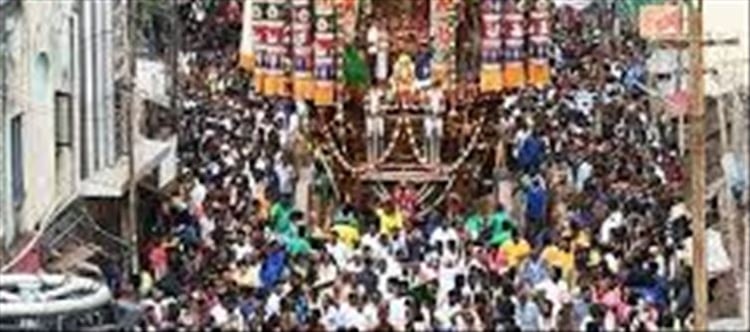
The Karur stampede did not happen in a vacuum. Tamil Nadu under successive DMK administrations has perfected a model India Herald's read identifies as freebies-as-spectacle: massive public events — distribution drives, political rallies, temple festivals — designed to maximise visual turnout and media optics. The crowd is the product. The problem is that nobody engineers the crowd's exit.
As reported by the Times of India, the plea before the Supreme Court also alleged witness tampering by TVK ministers — a serious charge that the court nonetheless found unpersuasive enough to dismiss outright. But the underlying reality is starker: Karur joins a queue. The Kallakurichi hooch tragedy, recurring temple stampedes across the state, the periodic crush injuries at government distribution events — the common thread is a state machinery that mobilises thousands but treats crowd management as an afterthought.
The DMK's cadre-driven mobilisation model is not a bug. It is a feature — the party's organisational DNA since Karunanidhi's era. Massive turnouts signal political strength, validate welfare schemes, and generate the drone-shot visuals that dominate Tamil Nadu's media cycles. But when those crowds turn fatal, the same model becomes a liability, and the instinct — as Karur demonstrates — is to blame whoever is speaking about it rather than whoever failed to manage it.
Political Pulse
Here is what the political corridors in Chennai are quietly processing, even if no party spokesperson will say it aloud: the Supreme Court's question has handed the BJP a ready-made Tamil Nadu frame.
The talk in BJP's Tamil Nadu circles, according to party watchers, is that Karur is the 'governance deficit' exhibit they have been searching for — not a communal issue, not a Hindi-imposition row (both of which die on arrival in TN), but a simple, devastating question: Can DMK keep its own people safe at its own events? The BJP has struggled for a credible Tamil Nadu narrative for years; a governance-failure frame bypasses the cultural resistance that usually shields Dravidian parties from national-party attacks.
Meanwhile, TVK's CM Vijay and his ministers are the immediate beneficiaries. The Supreme Court's rejection of DMK's plea is being read, especially in pro-TVK social media circles, as a moral vindication. As one prominent political commentator noted on X, it was a 'big setback' for DMK and a 'victory' for TVK.
But the deeper gossip — the kind that circulates among DMK's own second-rung leaders in the districts — is about something more uncomfortable: the growing sense that the party's reflex to litigate its way out of political embarrassments is becoming a pattern. Filing in the Supreme Court to silence criticism of a stampede rather than announcing a compensation-and-accountability framework is a choice that tells you where the priorities sit.
The Structural Problem Stalin Cannot Fix Without Breaking His Own Machine
India Herald's assessment of what is really driving this crisis runs deeper than one stampede or one courtroom rebuke. The DMK's event-management model — massive public welfare distributions, leader-centric rallies, cadre-mobilised temple events — is structurally incompatible with modern crowd-safety protocols. Those protocols require restricting entry, capping attendance, creating buffer zones, and deploying trained marshals. Every one of those measures reduces the visual spectacle that is the entire political point of the event.
This is the bind: Stalin cannot overhaul crowd-safety without shrinking the optics, and he cannot shrink the optics without weakening the cadre's belief in the party's mobilisation power. It is not a policy problem. It is an identity problem.
The judiciary has now said, on record and with unmistakable irritation, that it will not do the executive's job. The forward projection is clear: if another crowd event turns fatal — and given the frequency, it is a matter of when — the court's patience will have been publicly exhausted already. The next bench will not ask a rhetorical question. It will issue directions. And those directions will constrain not just one event but the entire mobilisation model that DMK runs on.
Watch, specifically, for two things in the coming weeks. First, whether Stalin quietly issues an internal circular on event-management protocols — not for safety, but for legal cover, so the next time a bench asks, there is paperwork to wave. Second, whether the BJP's Tamil Nadu unit begins running 'governance deficit' as a sustained campaign theme rather than a one-day social-media burst. If they do, it means they have read the Supreme Court's question the same way India Herald has: not as a legal footnote, but as a political opening that someone in saffron intends to walk through.
Seven words from the bench. The question is whether anyone in the DMK heard more than the embarrassment — whether they heard the warning.
(This Political Pulse section reflects political corridor chatter and informed speculation, not confirmed fact.)
Disclaimer: Allegations reported here are attributed to named sources and remain unproven unless a court has ruled; matters sub judice are reported without prejudgment.
Reported and written with AI assistance under India Herald's editorial standards; a human editor governs publication.
More from India Herald


Key Takeaways
- The Supreme Court rejected DMK's plea to restrain TVK leaders from commenting on the Karur stampede, asking pointedly whether it should 'regulate the CM' — a rebuke that doubles as a governance indictment, per India Today.
- DMK's cadre-mobilisation model treats massive crowds as political assets but systematically under-invests in crowd safety — Karur joins Kallakurichi hooch and recurring temple stampedes in a pattern of spectacle-over-safety.
- The BJP now has a rare Tamil Nadu frame — 'governance deficit' — that bypasses cultural resistance to national parties; whether they sustain it as a campaign theme will signal their 2026 TN strategy.
- Stalin faces a structural bind: modern crowd-safety protocols require capping attendance and restricting visuals — the exact opposite of what DMK's mobilisation culture demands.
- The Supreme Court's patience is now publicly on record as exhausted; the next crowd-event fatality in Tamil Nadu risks judicial directions that could constrain DMK's entire event-management model.
By the Numbers
- The Supreme Court dismissed DMK organising secretary R.S. Bharathi's plea and asked 'You want us to regulate the CM?' — marking one of the sharpest judicial rebukes to a ruling party's crowd-management failure in recent Tamil Nadu political history, per India Today.
The 5W+H: Who, What, When, Where, Why, How
- Who: The Supreme Court, DMK organising secretary R.S. Bharathi, TVK (Tamilaga Vettri Kazhagam) leaders, and Tamil Nadu CM M.K. Stalin — according to India Today and Times of India.
- What: The Supreme Court refused to entertain DMK's plea seeking to restrain TVK ministers and CM C. Joseph Vijay from speaking publicly about the Karur stampede; DMK subsequently withdrew the plea — as reported by India Today.
- When: The hearing took place in the Supreme Court in June 2026, as reported by ANI and India Today.
- Where: Supreme Court of India, New Delhi; the stampede occurred in Karur, Tamil Nadu — per India Today.
- Why: DMK alleged TVK ministers were influencing witnesses in the Karur stampede case, but the court found the plea untenable and questioned whether it should regulate a Chief Minister's movements — according to Times of India.
- How: DMK's R.S. Bharathi filed a plea in the Supreme Court alleging witness interference by TVK leaders; the bench rejected the petition, asking sarcastically whether the judiciary should regulate the CM, after which DMK withdrew the plea — per India Today and Bar and Bench.
Frequently Asked Questions
What did the Supreme Court say about the Karur stampede case?
The Supreme Court refused to entertain DMK's plea to restrain TVK leaders from commenting on the Karur stampede, asking sarcastically whether the court should regulate the Chief Minister's visits. DMK subsequently withdrew the plea, according to India Today and Bar and Bench.
Why did DMK file a plea in the Supreme Court over the Karur stampede?
DMK organising secretary R.S. Bharathi alleged that TVK ministers were influencing witnesses in the Karur stampede case and sought to restrain them from speaking publicly about the incident, as reported by the Times of India.
What does the Supreme Court ruling mean for DMK's governance image?
The ruling exposes DMK's pattern of prioritising political spectacle over crowd safety. The court's pointed question — 'You want us to regulate the CM?' — has been widely read as a judicial indictment of the party's event-management governance model, potentially giving the BJP a 'governance deficit' attack frame in Tamil Nadu.
Could the BJP use the Karur stampede politically in Tamil Nadu?
Political observers note that the Supreme Court's rebuke gives BJP a rare, culturally viable Tamil Nadu frame focused on governance failure rather than communal or linguistic issues — though whether they sustain it as a campaign theme remains to be seen.
 click and follow Indiaherald WhatsApp channel