
-

Agra
-
Assembly
-
August
-
Bharatiya Janata Party
-
Bike
-
bus
-
Capital
-
Conductor
-
Crash
-
Cycle
-
Dargah Sharif
-
Digital Wallet Platform
-
Government
-
House
-
India
-
local language
-
Lucknow
-
Maharashtra
-
Minister
-
MLA
-
Panchayati
-
Party
-
Population
-
READ
-
Research and Analysis Wing
-
Service
-
thursday
-
Vaishno Devi
-
vehicles
-
village
-
WATCH
-
Yogi Adityanath
-
zero

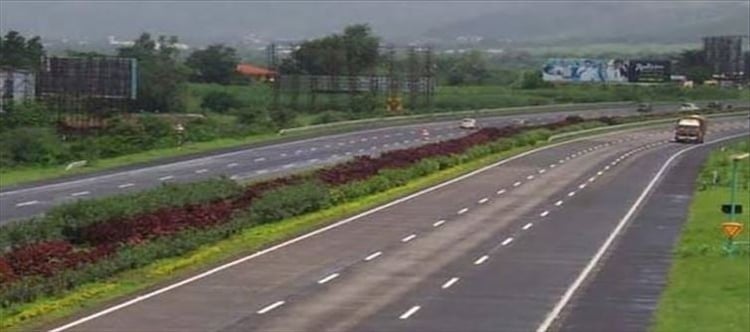
Villagers near Agra forced a halt to NHAI's metal railing work on National Highway 19, according to Live Hindustan, arguing the barriers would permanently cut off access to their farmland and livelihoods. The protest lays bare a structural flaw in India's highway expansion — rural communities are treated as obstacles to traffic flow, not stakeholders in infrastructure they never asked for.
Picture this: you have farmed the same plot of land for three generations. One morning, a contractor shows up and begins welding a steel wall between your home and your field. No one asked you. No one told you. The highway that already split your village in two is about to become impassable — permanently.
That is exactly what villagers along National Highway 19 near Agra say happened to them. According to Live Hindustan, residents physically blocked NHAI contractors from installing metal crash railings on the highway, triggering a hungama — an uproar — that brought work to a grinding halt. The grievance is brutally simple: these railings, engineered to stop vehicles from crossing the median at high speed, would also stop farmers from reaching their own fields.
NH-19, the storied Delhi-Kolkata corridor that once was the Grand Trunk Road, is no country lane. It is one of India's busiest freight arteries, and NHAI has been upgrading it into an access-controlled expressway for years. The logic is sound on paper: higher speeds demand physical barriers to prevent deadly crossovers. But the logic assumes the highway exists in a vacuum — that the land on either side is empty, that no one needs to cross.
In rural Uttar Pradesh, that assumption is a cruel fiction.
The Wall Nobody Voted For
What the Agra protest reveals is not a one-off construction dispute. It is the structural blueprint of India's highway expansion colliding, violently, with the reality of rural life. When NHAI designs a high-speed corridor, the engineering manual calls for continuous median barriers and edge railings. The manual does not call for asking the village sarpanch whether farmers can still reach the other side.
The result, according to residents quoted by Live Hindustan, is that communities are effectively bisected. A farmer whose house is on one side and whose field is on the other must now travel kilometres to the nearest underpass — if an underpass exists at all. In many stretches of upgraded national highways across UP, underpasses and service roads remain incomplete, delayed, or never sanctioned in the first place. The railing goes up first. The alternative access, if it comes, comes later. Sometimes years later.
India's National Highways Authority has built or upgraded over 60,000 kilometres of highways in the last decade, according to Ministry of Road Transport and Highways data. That is a staggering achievement in raw engineering terms. But the communities that live alongside these corridors — overwhelmingly agricultural, overwhelmingly voiceless in policy design — have been treated as collateral geometry: shapes on a map to be routed around, not people to be consulted.
Political Pulse
Here is what no official statement will say out loud, but the talk along the GT Road belt is unmistakable: these protests are becoming a low-grade political headache for the IHG in western UP. The party's rural base — the same small and marginal farmers who cheered the promise of world-class roads — are now discovering that world-class roads come with world-class walls. The whisper in local IHG circles, according to ground-level political observers familiar with the Agra region, is that highway access complaints are beginning to surface in every MLA's weekly janata darbar. One local functionary is understood to have remarked that "we promised connectivity, and what they got was a barricade."
The irony is pointed. The Yogi Adityanath government has staked enormous political capital on infrastructure as electoral proof of governance. Expressways, highways, and flyovers are the literal billboards of the double-engine sarkar's promise. But when a farmer in Agra cannot cross the road to water his crop, the billboard reads differently.
(This reflects political corridor chatter and local observation, not confirmed party positions.)
The Design Flaw That Keeps Repeating
The NH-19 protest is not an isolated incident. Similar confrontations have erupted along upgraded highway stretches in Unnao, Kannauj, and Sultanpur in recent years, each following the same grim script: railing goes up, access vanishes, residents protest, work pauses, a local MLA intervenes, a partial solution is promised, the next stretch repeats the cycle. The problem is upstream — in the project design itself.
India Herald's read of what is really driving this crisis is structural, not administrative. NHAI's Detailed Project Reports (DPRs) for highway upgrades are drafted with traffic throughput and safety metrics as primary variables. Community access — the number of crossing points, the adequacy of service roads, the location of underpasses relative to actual settlement patterns — is secondary at best, an afterthought bolted on during the public hearing stage, which most affected villagers either do not know about or cannot meaningfully participate in.
The result is a national highway system that is, by design, hostile to the people who live next to it. This is not a bug in the system. It is the system.
Compare this with highway access standards in Germany's Autobahn network or Japan's expressway system, where community connectivity is engineered into the original design — not retrofitted after a protest. India builds highways to move goods from port to factory. The farmer in between is, quite literally, not in the blueprint.
What Comes Next — and What to Watch
The immediate likelihood, based on the pattern of previous such protests in UP, is a local compromise: NHAI will promise to install a few additional crossing points or expedite a delayed underpass, work will resume, and the structural problem will remain unresolved until the next village down the road erupts. The deeper question — whether NHAI's DPR process will ever mandate genuine community access planning before railing work begins — remains unanswered and, in the current political climate, unasked.
What the reader should watch for is whether this protest, and others like it, coalesce into a broader political demand ahead of the 2027 UP Assembly elections. Highway access is not a headline-grabbing issue — it does not trend on X, it does not fill prime-time panels. But it is a daily, grinding, deeply personal grievance for millions of farming households along India's expanding highway network. The party that figures out how to address it — or the one that fails to — may find that the road to rural UP runs through the fields it just walled off.
The last line of the farmer's complaint, as reported by Live Hindustan, is the one that should keep NHAI planners up at night: they did not object to the highway. They objected to being erased from it.
Allegations and claims reported here are attributed to named sources and remain unverified unless independently confirmed; matters involving government agencies are reported without prejudgment.
Reported and written with AI assistance under India Herald's editorial standards; a human editor governs publication.
More from India Herald


Key Takeaways
- Villagers near Agra physically halted NHAI's metal crash railing installation on NH-19, arguing the barriers would permanently sever their access to farmland on the other side of the highway, per Live Hindustan.
- The protest exposes a systemic flaw in India's highway design: NHAI's Detailed Project Reports prioritise traffic throughput and safety metrics but treat community access — underpasses, service roads, crossing points — as an afterthought, often incomplete or delayed for years.
- Similar confrontations have erupted along upgraded highway stretches in Unnao, Kannauj, and Sultanpur, following the same cycle of railing installation, access loss, protest, and partial local fixes that leave the structural problem intact.
- With 60,000+ km of highways built or upgraded in the last decade (Ministry of Road Transport data), millions of farming households along these corridors face the same daily crisis — infrastructure designed for the vehicle that speeds through, not the community that lives beside it.
- The political stakes are rising: highway access complaints are surfacing in MLA janta darbars across western UP, creating a quiet but growing headache for the ruling party ahead of the 2027 Assembly elections.
By the Numbers
- India's NHAI has built or upgraded over 60,000 km of national highways in the last decade, according to Ministry of Road Transport and Highways data.
- NH-19 (formerly NH-2, the historic Grand Trunk Road) is the Delhi-Kolkata corridor, one of India's busiest freight arteries.
The 5W+H: Who, What, When, Where, Why, How
- Who: Villagers from communities along National Highway 19 near Agra, Uttar Pradesh, confronted NHAI contractors, as reported by Live Hindustan.
- What: Residents physically halted the installation of metal crash railings on NH-19, creating a hungama (uproar) that stopped construction work, according to Live Hindustan.
- When: The protest took place in July 2026, as reported by Live Hindustan.
- Where: National Highway 19 (the Delhi-Kolkata artery, formerly NH-2/Grand Trunk Road) near Agra, Uttar Pradesh.
- Why: Villagers say the railings, designed to prevent vehicle crossovers on the high-speed corridor, would block their only access points to agricultural fields on the other side of the highway, effectively severing them from their livelihoods, per Live Hindustan.
- How: Residents gathered at the construction site, stopped the railing installation work by confrontation and protest, and demanded that NHAI provide adequate underpasses or service roads before erecting barriers, according to Live Hindustan.
Frequently Asked Questions
Why are villagers protesting on NH-19 near Agra?
According to Live Hindustan, residents blocked NHAI's crash railing installation because the metal barriers would cut off their only access to agricultural fields on the other side of the highway, threatening their livelihoods.
What is NHAI's rationale for installing railings on national highways?
Crash railings are a standard safety feature on high-speed corridors, designed to prevent vehicles from crossing the median and causing head-on collisions. However, in rural stretches, they also block pedestrian and farm-vehicle crossings if adequate underpasses and service roads are not built first.
Is the Agra NH-19 protest an isolated incident?
No. Similar protests have occurred along upgraded highway stretches in Unnao, Kannauj, Sultanpur, and other parts of Uttar Pradesh, following the same pattern of railing installation cutting off community access before alternative routes are completed.
What could NHAI do to prevent such protests?
Experts and affected communities have consistently demanded that adequate underpasses, service roads, and designated crossing points be completed before — not after — railing and barrier work begins. This would require restructuring the DPR process to mandate community access planning upfront.
 click and follow Indiaherald WhatsApp channel