



The Dune 3 trailer, confirmed by The Hollywood Reporter, reunites Timothée Chalamet and Zendaya in Denis Villeneuve's epic conclusion. While the franchise's global pull is undeniable, its Indian theatrical footprint remains modest — Dune: Part Two earned an estimated ₹45–55 crore domestically, per trade reports. Cracking ₹200 crore in India would require a fundamentally different release and marketing playbook.
Two of the most famous faces on the planet stand on a desert ridge, ready to tear each other apart. The Dune 3 trailer — confirmed and broken down by The Hollywood Reporter — gives us Timothée Chalamet's Paul Atreides in full messianic, terrifying bloom, and Zendaya's Chani as the resistance he never saw coming. It is spectacular, brooding, unmistakably Villeneuve. And it will almost certainly dominate global conversation for weeks.
But here is the question nobody in Hollywood is asking loudly enough: can this franchise, for all its prestige and its Oscar-magnet visuals, actually translate into a genuine box-office force in the world's most populated cinema market?
The India-Shaped Hole in a Global Juggernaut
Let the numbers do the talking first. Dune: Part Two, by most trade estimates reported in outlets like Box Office India and Sacnilk, earned roughly ₹45–55 crore in its Indian theatrical run in early 2024. For a film that crossed $700 million worldwide, according to box-office trackers, that Indian share is startlingly thin — less than 2% of its global haul. Compare that to the Marvel or Fast & Furious franchises, which have routinely crossed the ₹100–200 crore mark in India, per Box Office India data. The gap is not about quality. It is about cultural circuitry.
Indian audiences have historically rewarded sci-fi that is either spectacle-first (the Avengers model) or carries a deeply emotional, family-driven core (Interstellar being the notable Nolan exception that proved the rule, earning over ₹60 crore in India, according to trade reports). Dune's brand of slow-burn, lore-heavy, politically allegorical science fiction — magnificent as it is — hits a different nerve. It demands patience. Indian theatrical audiences, especially outside metros, often demand payoff sooner.
Inside Talk
The chatter in distribution circles, according to trade sources familiar with Warner Bros.' India strategy, is that the studio is acutely aware of this ceiling. The talk is that for Dune 3, there will be a significantly expanded Hindi-dubbed release — possibly the widest vernacular push the franchise has ever received in India. Speculation in trade circles suggests Warner Bros. may explore regional-language dubs beyond Hindi, potentially Tamil and Telugu, to tap into the South Indian market that has proven receptive to epic, world-building cinema (the RRR and Baahubali audience, in other words).
There is also buzz — unverified but persistent in Film Nagar and Mumbai trade corridors — that Warner Bros. India may time the release to avoid a direct collision with any major Bollywood or Tollywood tentpole, a lesson reportedly learned from Dune: Part Two's somewhat crowded window. Whether this translates to a shifted India release date remains to be seen; Warner Bros. India has not commented publicly on release strategy as of this writing.
(This reflects industry chatter and unverified speculation, not confirmed fact.)
Zendaya: Hollywood's Most Over-Leveraged Star?
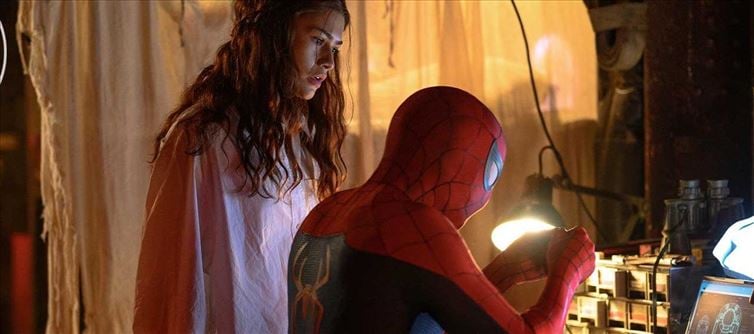
And then there is the Zendaya question — the one that makes this story bigger than one franchise. She is simultaneously committed to Christopher Nolan's The Odyssey, where she is reportedly playing Athena alongside Matt Damon and Tom Holland, according to reports in Deadline and Variety. She is anchoring the Dune trilogy's emotional core. She remains the face of the Spider-Man franchise alongside Holland. No actress in the current generation is spread across this many $200-million-plus tentpoles simultaneously.
The industry term for this is 'franchise fatigue risk,' and it applies to the star, not just the audience. Trade analysts at Variety have noted the increasing difficulty of scheduling overlapping blockbuster commitments. If any one of these productions slips — and mega-productions always slip — the dominoes hit every other franchise she is attached to. For Dune 3 specifically, the question is whether her Chani arc gets the screen time and emotional depth Villeneuve clearly intends, or whether the physics of her schedule compresses it.
Chalamet, by contrast, has made a shrewder bet. His post-Wonka, post-Bob Dylan pivot back to Paul Atreides is essentially a coronation: he is now, by commercial metrics tracked by The Numbers and Deadline, the highest-grossing actor under 30 in science fiction history. Dune is his franchise to carry, and he has not diluted the hold by spreading across four simultaneous mega-properties.
India Herald's Read: The Real ₹200 Crore Question
India Herald's assessment is that ₹200 crore remains a steep ask for Dune 3 in India — not impossible, but requiring at least three things the previous films did not deliver domestically: a vernacular release strategy that treats India as a primary market rather than an afterthought; a marketing campaign that sells the emotional, human stakes (Chani vs. Paul, love vs. power) rather than the lore; and a release window with genuine breathing room from Indian tentpoles.
The global trailer is built to thrill the converted. The India campaign, if Warner Bros. is serious about cracking the ceiling, will need to be built separately — to convert the curious. That is the difference between ₹55 crore and ₹150 crore, let alone ₹200 crore.
What Villeneuve has built is extraordinary cinema. But extraordinary cinema and extraordinary Indian box office have never been the same conversation — and until a studio treats the Indian audience as something more than a rounding error in a global P&L, that ceiling holds. The trailer is a promise. The ticket sales will be the test of whether anyone bothered to deliver it in the right language, at the right time, to the right audience.
More from India Herald



Key Takeaways
- Dune: Part Two earned an estimated ₹45–55 crore in India — less than 2% of its $700M+ global haul, per trade trackers, exposing a significant gap between the franchise's prestige and its Indian commercial muscle.
- Zendaya is now attached to at least three simultaneous mega-franchises (Dune, Nolan's Odyssey, Spider-Man), making her arguably the most over-leveraged star in Hollywood, per Deadline and Variety reports.
- Timothée Chalamet is, by box-office metrics, the highest-grossing actor under 30 in sci-fi history — a position Dune 3 is set to cement further.
- Trade chatter suggests Warner Bros. India may pursue wider Hindi and possibly regional-language dubs for Dune 3, a strategic shift aimed at breaking the franchise's Indian ceiling.
- India Herald's read: ₹200 crore in India requires a fundamentally different release, marketing, and dubbing strategy — the global trailer alone will not convert Indian audiences outside metros.
By the Numbers
- Dune: Part Two earned an estimated ₹45–55 crore domestically in India, per trade reports from Box Office India and Sacnilk.
- The film crossed $700 million globally, according to box-office trackers — making India's share less than 2% of the worldwide total.
- Zendaya is attached to at least three active mega-franchise properties simultaneously, per reports in Deadline and Variety.
 click and follow Indiaherald WhatsApp channel