
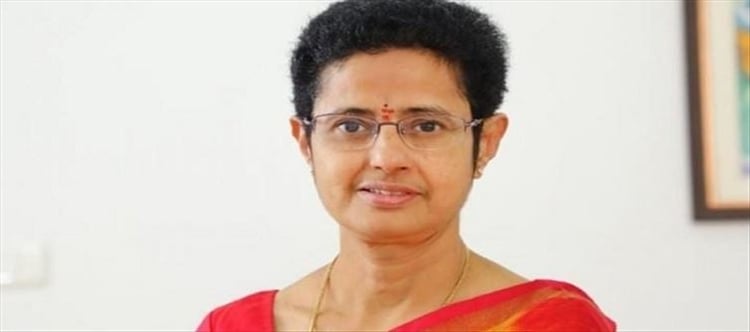


Three former TMC Rajya Sabha MPs — Sushmita Dev, Sukhendu Sekhar Ray, and Prakash Chik Baraik — resigned and joined BJP in Kolkata, receiving Rajya Sabha bypoll tickets within hours. According to The Indian Express, this coordinated defection rewrites upper house arithmetic and signals a calculated BJP offensive to weaken Mamata Banerjee's national opposition leverage ahead of the 2026 Bengal assembly elections.
Here is what a political party does when it wants to win a war without firing a visible shot: it picks three locks from the inside. On a single day in Kolkata, three sitting Rajya Sabha members — Sushmita Dev, Sukhendu Sekhar Ray, and Prakash Chik Baraik — walked out of Trinamool Congress, walked into BJP, and walked straight onto BJP's bypoll ticket list. According to The Indian Express, the nominations were filed within hours of the defections. Not days. Not weeks. Hours. The speed alone tells you this was no spontaneous rebellion — it was a surgical extraction, timed, negotiated, and sealed long before the cameras rolled.
The arithmetic is brutally simple: TMC loses three upper house seats; BJP gains the nominees to fill them. According to The Hindu, this is the single largest same-day poach-and-field operation targeting any regional party's Rajya Sabha contingent in recent Indian parliamentary history. And it lands squarely in the lap of Mamata Banerjee at the worst possible moment — eighteen months or less before Bengal goes to the polls again.
The Three Names — and Why Each One Hurts TMC Differently
Sushmita Dev is the headline catch. A former president of the All India Mahila Congress who defected to TMC in 2021, she brought national visibility and a cross-party Rolodex. According to India Today, Dev's departure strips TMC of its most prominent female voice in the upper house — a face Mamata had deployed to project national feminist credibility. Losing Dev is not a numbers problem; it is a branding wound.
Sukhendu Sekhar Ray is the institutional blow. A veteran Bengal politician and a TMC original, Ray's exit signals that even party loyalists who predate Mamata's dominance now see the ceiling. According to Times of India, Ray's defection is being read inside TMC's Kolkata circles as evidence that the 'inner ring' no longer holds.
Prakash Chik Baraik is the quietest but perhaps the most strategically devastating loss. A tribal leader from Bengal's tea-belt region, Baraik's switch hands BJP a ready-made tribal face in a state where Adivasi constituencies have been quietly shifting. As NDTV reported, Baraik's move gives BJP a foothold in demographics TMC had assumed were locked.
Political Pulse
The whisper in Delhi's political corridors — and it is loud enough that several political analysts are now saying it on record — is that these defections did not begin last week. The talk among those tracking BJP's Bengal operations is that Amit Shah's team had been working these three for months, possibly since the last Rajya Sabha session, using a mix of political incentive and pointed reminders about the investigative agencies that tend to take an interest in TMC-linked finances. None of this is confirmed, and TMC has not publicly alleged coercion — but the silence itself is instructive. When Mamata Banerjee, who has never hesitated to cry foul, says nothing about the mechanism of the departures, it suggests she either cannot prove it or does not want the conversation to go where the proof might lead.
The mood inside TMC, according to multiple reports in The Hindu and News18, is one of controlled panic. If three Rajya Sabha MPs could be extracted this cleanly, the question reverberating through the party's Kolkata headquarters is: who is next? The answer matters more than the question, because in Indian coalition politics, the fear of further defection is itself a destabilising force — it makes every remaining MP a suspect and every internal disagreement a potential exit interview.
The Rajya Sabha Math — What Actually Changed
India Herald's read of the underlying arithmetic is this: BJP, which has been steadily expanding its upper house numbers through a combination of direct wins and strategic crossovers, now gains three additional seats from a state where it has never won a Rajya Sabha election on its own strength. According to The Indian Express, the bypoll route — resign, join, get fielded for the vacancy you yourself created — is perfectly legal but devastatingly efficient. It bypasses the usual wait for a biennial election cycle and converts a rival's parliamentary presence into your own, immediately.
For TMC, the loss is not merely three seats. It is the erosion of Mamata Banerjee's claim to be a credible national opposition anchor. A party that cannot hold its own Rajya Sabha MPs cannot credibly claim to hold the line against BJP in Parliament. According to News18, this is precisely the narrative BJP wants to set before 2026: Mamata is weakening, her people are leaving, and the fortress is not as formidable as the legend suggests.
The 2026 Shadow — What This Really Sets Up
Strip away the Rajya Sabha procedural details and the real story emerges: this is a psychological operation aimed at Bengal 2026. Every TMC MLA watching Sushmita Dev get a Rajya Sabha ticket within hours of switching knows exactly what that offer looks like — and what the alternative (staying loyal to a party losing its upper house grip) costs. According to India Today, BJP's Bengal unit has been instructed to treat each defection as a recruitment advertisement: the message is less about ideology and more about career survival.
The forward read, in India Herald's assessment, is that this is not the last extraction. The same-day pipeline — resign, join, get nominated — has now been stress-tested and proven. If BJP can repeat this even once more before Bengal's assembly elections, the cumulative effect on TMC's morale and internal discipline could be catastrophic. Watch for more Rajya Sabha or even Lok Sabha members being quietly approached in the coming months. The question for Mamata Banerjee is not whether she can replace these three — she probably can — but whether she can stop the next three from asking themselves the same question Dev, Ray, and Baraik clearly asked: what is left for me here?
The deeper irony is that Mamata built TMC on exactly this playbook — absorbing Congress and Left defectors to build her own fortress. She knows, better than anyone in Indian politics, how a party hollows out from the inside once the exodus begins. The question she faces now is whether she is watching the early frames of a film she herself once directed, this time from the other side of the screen.
(The Political Pulse section reflects political corridor chatter and analyst speculation, not confirmed fact.)
Allegations reported here are attributed to named sources and remain unproven unless a court has ruled; matters sub judice are reported without prejudgment.
Reported and written with AI assistance under India Herald's editorial standards; a human editor governs publication.
More from India Herald
Key Takeaways
- Three TMC Rajya Sabha MPs — Sushmita Dev, Sukhendu Sekhar Ray, and Prakash Chik Baraik — joined BJP and received bypoll tickets within hours, per The Indian Express, marking the largest same-day poach-and-field operation against a regional party's upper house contingent.
- The defections strip TMC of national visibility (Dev), institutional loyalty (Ray), and tribal demographic reach (Baraik), each loss targeting a different structural pillar of Mamata Banerjee's party.
- India Herald's assessment: this is a stress-tested extraction pipeline aimed at psychologically destabilising TMC ahead of the 2026 Bengal assembly elections — and the next round of approaches is likely already underway.
By the Numbers
- 3 TMC Rajya Sabha MPs defected and received BJP bypoll nominations within hours on the same day — per The Indian Express and Times of India
- Sushmita Dev was TMC's most prominent female upper house voice and a former All India Mahila Congress president, according to India Today
- BJP gains 3 Rajya Sabha seats from West Bengal without winning a single Rajya Sabha election in the state on its own, per The Hindu
The 5W+H: Who, What, When, Where, Why, How
- Who: Former TMC Rajya Sabha MPs Sushmita Dev, Sukhendu Sekhar Ray, and Prakash Chik Baraik, according to The Hindu and NDTV.
- What: Resigned from TMC and joined BJP in Kolkata, receiving BJP's Rajya Sabha bypoll nominations within hours, as reported by The Indian Express and Times of India.
- When: June 2026, with nominations filed the same day as the defections, per India Today.
- Where: Kolkata, West Bengal — the defections were formalised at a BJP event in the city, according to NDTV.
- Why: The coordinated move strengthens BJP's Rajya Sabha numbers and weakens TMC's upper house footprint ahead of Bengal's 2026 assembly elections, per News18 and The Hindu.
- How: The three MPs resigned from the Rajya Sabha, formally joined BJP at a Kolkata event, and were immediately fielded as BJP candidates for the resultant bypoll vacancies — a same-day absorption pipeline, according to The Indian Express and Times of India.
Frequently Asked Questions
Who are the three TMC MPs who joined BJP?
Sushmita Dev, Sukhendu Sekhar Ray, and Prakash Chik Baraik — all former TMC Rajya Sabha members who resigned and joined BJP in Kolkata, receiving bypoll nominations within hours, according to The Indian Express and The Hindu.
How does this affect Rajya Sabha numbers?
TMC loses three upper house seats, and BJP gains the nominees to contest the resulting bypoll vacancies, effectively converting TMC's parliamentary presence into BJP's own, per Times of India and News18.
Why does this matter for Bengal 2026 elections?
The defections signal BJP's ability to extract TMC lawmakers with instant incentives, creating a psychological pressure on remaining TMC legislators and undermining Mamata Banerjee's claim as a credible opposition anchor ahead of the state assembly elections, according to India Today and NDTV.
Is the resign-and-rejoin-for-bypoll route legal?
Yes. Resigning from the Rajya Sabha and then contesting the resulting bypoll on another party's ticket is procedurally legal under Indian parliamentary rules, though critics call it a manipulation of the system, as noted by The Indian Express.
 click and follow Indiaherald WhatsApp channel