
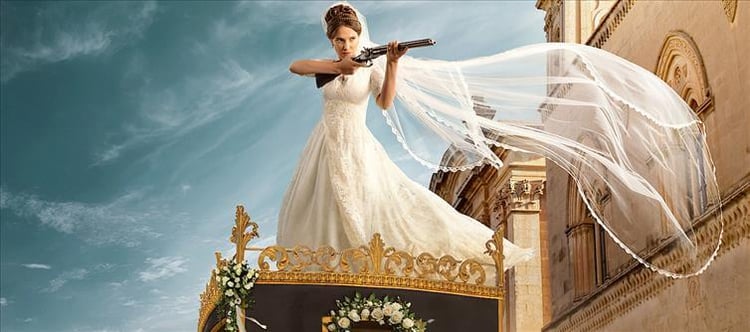


Netflix introduced Moriarty in Enola Holmes 3 not merely as a plot antagonist but as the connective tissue for a larger Sherlock Holmes cinematic universe. According to reports in Inverse and coverage across entertainment outlets, the villain's reveal in the climax is structured less as a case conclusion and more as a franchise launchpad — one that positions Henry Cavill's Sherlock for a potential standalone series or film.
Here is what most viewers missed while watching the credits roll on Enola Holmes 3: the film they just watched was not really an ending. It was an audition tape — not for Millie Bobby Brown, who hardly needs one, but for an entire cinematic universe Netflix has not officially announced but has spent three films quietly assembling.
The Moriarty reveal in the climax of Enola Holmes 3 is, on its surface, a perfectly serviceable plot twist. A shadowy puppet-master pulling strings behind a seemingly local mystery — a Victorian whodunit staple as old as gaslight itself. But according to Inverse's detailed ending breakdown, the way Netflix chose to stage this reveal tells a very different story than the one on screen. Moriarty does not arrive as Enola's antagonist. He arrives as Sherlock's. And that distinction is worth every rupee of franchise speculation it invites.
The Ending, Decoded: What Moriarty's Scheme Actually Was
The film's central case involves an elaborate conspiracy that Enola initially believes she has cracked — until the final act peels back one more layer. As detailed in Inverse's explainer, the true mastermind is revealed to be none other than Professor James Moriarty, Arthur Conan Doyle's most enduring creation after Holmes himself. The scheme itself — a web of industrial sabotage and political manipulation set in Victorian London — is almost secondary. What matters is how the film frames the reveal: not through Enola's eyes, but through Sherlock's.
Henry Cavill's Sherlock, who has played a warm but largely supporting role across all three films, steps into the foreground in the final fifteen minutes. According to coverage by entertainment analysts, his reaction to the Moriarty reveal is not surprise — it is recognition. He has been tracking this adversary off-screen, in a storyline the audience has never seen. The film does not resolve this thread. It opens it, deliberately, like a door left ajar in a dark hallway.
Inside Talk
The chatter in streaming industry circles is hard to ignore. Trade analysts have been speculating for months that Netflix views Henry Cavill's Sherlock not as a supporting character in someone else's franchise, but as a standalone intellectual property waiting for the right moment to launch. The Moriarty introduction, according to this read, is not fan service — it is infrastructure.
Consider the timing. Cavill's departure from other major franchises left him without a tentpole role, and speculation has been rife across entertainment forums and trade publications that Netflix moved quickly to lock him into a longer-term deal. The talk in streaming circles, as reported by multiple entertainment commentators, is that a Cavill-led Sherlock project — whether a limited series or a film — has been in some stage of development, with the Enola Holmes films serving as the proof-of-concept phase.
(This reflects industry chatter and unverified speculation, not confirmed fact.)
What makes this plausible rather than wishful is the architecture of the reveal itself. Moriarty is not introduced and defeated in the same film — the classic standalone villain treatment. He is introduced and preserved, which is the classic franchise villain treatment. The difference is everything. One closes a story; the other opens a universe.
Netflix's Quiet Cinematic Universe Playbook
India Herald's read of what Netflix is really engineering here is structural, not speculative. The streamer has historically struggled to build cinematic universes the way Disney and Warner Bros. have with Marvel and the DC Extended Universe. Its attempts — from Bright to The Old Guard — have produced sequels but never a genuinely interlocking franchise where characters cross over and storylines compound.
The Enola Holmes series, almost by accident, may have given Netflix its cleanest path. The Sherlock Holmes intellectual property, much of which sits in the public domain thanks to expired Conan Doyle copyrights, is one of the most recognisable in global entertainment. A universe built around it — Enola's detective adventures for one audience, Sherlock's darker confrontations with Moriarty for another, perhaps a Mycroft political thriller for a third — does not require origin stories or complicated rights negotiations. It requires only what the third film just provided: a shared villain who connects them all.
The numbers make the case. According to Netflix's own reported viewership data for the first two Enola Holmes films, the franchise has consistently ranked among the platform's top-performing original films globally. Cavill's presence is widely credited by trade analysts as a significant draw for audiences who might not otherwise watch a young-adult mystery. Losing him from the franchise — or worse, underusing him — would be a strategic error Netflix appears determined to avoid.
Why Cavill's Leverage Has Never Been Higher
There is a detail most analyses of this ending overlook, and it is the one that matters most for what comes next. Henry Cavill is not merely available for a Sherlock spin-off — he is, in the current landscape, uniquely motivated for one. His post-Superman career has been defined by strategic choices: The Ministry of Ungentlemanly Warfare, Argylle, a deliberate pivot toward roles where he is the unambiguous lead rather than a cog in someone else's machine.
A Sherlock-versus-Moriarty project on Netflix would give Cavill something rare in 2026: a franchise he anchors from day one, built on IP that cannot be taken away from him by a studio regime change. For Netflix, it solves the reverse problem — a star-driven franchise with a built-in audience and a villain the entire English-speaking world already knows by name. The leverage, in India Herald's assessment, runs both ways, which is precisely why a deal may actually happen.
The question the ending of Enola Holmes 3 really asks is not "who is Moriarty?" — every literate viewer already knows. The question is: does Netflix have the conviction to build outward from this moment, or will it do what it has done before — greenlight a sequel, play it safe, and let the universe die in a boardroom?
If the answer is the former, this quiet little franchise about a teenage detective may turn out to be the most consequential IP play Netflix has made in years. And the Indian audience — which has made the Enola Holmes films consistently popular on the platform domestically — will have a front-row seat to find out whether Cavill's Sherlock gets the stage he has been circling for three films.
The game, as a certain detective would say, is very much afoot. The only question is whether Netflix knows how to play it.
Reported and written with AI assistance under India Herald's editorial standards; a human editor governs publication.
More from India Herald


Key Takeaways
- Enola Holmes 3's climactic Moriarty reveal is structured as a franchise launchpad, not a case conclusion — the villain is introduced but deliberately undefeated, keeping the thread open for future projects.
- Henry Cavill's Sherlock steps into the foreground in the final act, with the film hinting at an off-screen history with Moriarty that audiences have never seen — a classic setup for a spin-off.
- Netflix's Sherlock Holmes IP sits largely in the public domain, giving the streamer a rare opportunity to build an interlocking cinematic universe without the complex rights negotiations that plague competitors.
- Trade speculation suggests a Cavill-led Sherlock project may be in early development, with the Enola Holmes trilogy serving as a proof-of-concept phase for audience appetite.
- For Indian audiences, the Enola Holmes franchise has been a consistent performer on Netflix domestically, meaning any expanded universe would likely receive significant promotion in the Indian market.
By the Numbers
- The Enola Holmes franchise has consistently ranked among Netflix's top-performing original films globally across its first two instalments, according to Netflix's reported viewership data.
- Much of the Sherlock Holmes intellectual property sits in the public domain due to expired Arthur Conan Doyle copyrights, lowering the barrier for Netflix to expand the universe.
 click and follow Indiaherald WhatsApp channel