

-

Amaravati
-
Andhra Pradesh
-
Assembly
-
Australia
-
BEAUTY
-
Cabinet
-
CBN
-
CM
-
Congress
-
court
-
Digital Wallet Platform
-
Election
-
Gift
-
Government
-
Hyderabad
-
India
-
Indian
-
Jagan
-
Janasena
-
Kamma
-
Leader
-
Minister
-
National Democratic Alliance
-
Party
-
politics
-
Rayalaseema
-
READ
-
Reddy
-
Research and Analysis Wing
-
TDP
-
Telangana Chief Minister
-
WATCH
-
Y. S. Rajasekhara Reddy

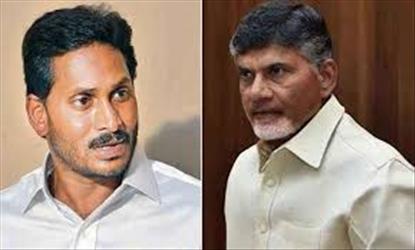
Chandrababu Naidu's 'Mee Bhoomi–Mee Hakku' mega meet is not merely an infrastructure blueprint — it is a political architecture designed to dismantle Jagan Mohan Reddy's controversial Land Titling Act, consolidate the rural landholder vote, and lock in the TDP's dominance across Andhra Pradesh's agrarian heartland well ahead of the 2029 elections.
Every government in India announces infrastructure. Most of it stays on paper long enough to yellow at the edges. But when Chandrababu Naidu rolls out a programme and names it after the land beneath a farmer's feet — 'Mee Bhoomi–Mee Hakku,' literally 'Your Land, Your Right' — the infrastructure is not really the product. The voter's sense of ownership is.
According to The Hans India, the mega meet outlined a sweeping rural infrastructure blueprint spanning road connectivity, irrigation modernisation, and — most critically — a restructured land-records framework across Andhra Pradesh. The numbers being floated are staggering: officials at the district-level meetings referenced cumulative project outlays running into tens of thousands of crores, with some estimates in political circles placing the aggregate ambition north of ₹2 lakh crore. The scale is deliberately theatrical. It is meant to be felt, not just heard.
But peel back the PowerPoint slides and the drone shots of future highways, and the sharper political calculus emerges. This programme is built on the grave of one specific predecessor policy: Jagan Mohan Reddy's Land Titling Act of 2022.
The Land Titling Act: Why Naidu Needed It Dead
Jagan's Land Titling Act was, depending on whom you asked, either a revolutionary step toward guaranteed state-backed land titles or an existential threat to every small landholder in the state. The Act proposed shifting the burden of land-title proof from the individual to the state — a model borrowed from Torrens systems used in Australia and parts of Southeast Asia. On paper, progressive. On the ground, terrifying to millions of farmers whose land records are tangled in generations of informal inheritance, disputed boundaries, and revenue-office dysfunction.
The uproar was enormous. According to reports in The Hindu, farmer associations across Rayalaseema and coastal Andhra warned that the Act would effectively allow the state to re-adjudicate ownership — opening the door to dispossession under the guise of modernisation. The TDP, then in opposition, seized the discontent like a lifeline. Naidu personally led rallies framing the Act as 'Jagan's land grab.' Political analysts noted at the time that the land-titling backlash was among the top three issues — alongside welfare delivery failures and the Amaravati reversal — that powered the TDP-JSP-BJP alliance's sweep in the 2024 general and assembly elections.
Now in power, Naidu has not merely shelved the Act. He has built an entire counter-narrative on its ruins.
Political Pulse
The talk in Amaravati's corridors — and this is the part no official briefing will spell out — is that 'Mee Bhoomi–Mee Hakku' is less a governance programme than a voter-registration drive dressed in cement and asphalt. The choice of name is itself a masterstroke of political branding: 'Mee Bhoomi' was the original TDP-era digital land records portal launched during Naidu's previous tenure (2014–2019), widely remembered by rural Andhra as the first time they could check their land records on a phone. By resurrecting the name and welding it to 'Mee Hakku' — your right — Naidu is performing a double act: reclaiming credit for a digital innovation Jagan's government quietly continued using, and framing land rights as a gift only TDP can guarantee.
The whisper in Kamma and Kapu heartland constituencies, according to sources familiar with party strategy discussions, is blunter: every beneficiary of the new land-documentation drive becomes a data point in the TDP's 2029 micro-targeting machine. A farmer whose land record is re-validated under a programme personally branded by Naidu is unlikely to forget who 'gave' him his title — even if the land was his all along. It is the oldest trick in democratic retail politics, executed at industrial scale.
(This reflects political corridor chatter and unverified speculation, not confirmed fact.)
India Herald's read of what is really driving this is a three-layered strategy that operates simultaneously on governance, narrative, and electoral arithmetic. Layer one: deliver tangible rural infrastructure that Jagan's government — consumed by welfare cash transfers — visibly neglected, particularly farm-to-market roads and minor irrigation. Layer two: erase the YSRCP's policy footprint so completely that by 2029, no rural voter associates Jagan with any positive land reform. Layer three: build a landholder-loyalty database that functions as a parallel voter list, segmented by caste, mandal, and land-holding size — the raw material for the kind of hyper-targeted constituency management that won Naidu his reputation as India's original technocrat-politician.
The Vote-Bank Arithmetic No One Is Saying Aloud
Here is the number that matters more than any infrastructure outlay: according to the 2019-20 Agriculture Census data cited by the Ministry of Agriculture, Andhra Pradesh has approximately 87 lakh operational land holdings, with over 80% classified as small and marginal (below 2 hectares). That is roughly 70 lakh families whose primary identity — social, economic, political — is defined by the patch of earth they farm.
Jagan's welfare model — Rythu Bharosa cash transfers, Amma Vodi, Jagananna Vasathi Deevena — was designed to make these families loyal through direct benefit. Naidu's counter-model, now crystallising through 'Mee Bhoomi–Mee Hakku,' targets something deeper than the wallet: it targets the deed. The psychological difference is immense. A cash transfer can be matched or outbid by the next government. A land record bearing the imprimatur of a programme you associate with one leader is harder to dislodge from memory.
This is the play that political strategists in Hyderabad — speaking on background — describe as 'ownership politics versus dependency politics.' Naidu is betting that a farmer who feels his land title is secure will vote to protect that security, whereas a farmer who receives a monthly transfer will vote for whoever offers a higher one. In a state where YSRCP's welfare architecture remains popular among landless labourers, Naidu is carving out the landed rural vote as TDP's structural base — a firewall Jagan cannot breach with cash alone.
What Comes Next — And What to Watch
The forward dimension is where this gets genuinely consequential. If 'Mee Bhoomi–Mee Hakku' proceeds on its current trajectory, expect three developments before 2028. First, the TDP government will almost certainly push a formal legislative repeal of the Land Titling Act in an upcoming Assembly session — transforming what has been an administrative shelving into a permanent statutory burial, giving Naidu a campaign-ready soundbite: 'We didn't just stop Jagan's land grab — we made sure no future government can attempt it.' Second, watch for district-level 'Mee Bhoomi' cells being quietly integrated with the TDP's booth-level party machinery — the line between government programme and party organisation will blur, as it always does in Indian states where one leader dominates both. Third, Jagan Mohan Reddy will be forced to respond, and the nature of that response will reveal whether YSRCP's 2029 strategy remains welfare-centric or pivots to a counter-land-rights narrative of its own. As of this reporting, YSRCP's leadership had not issued a formal response to the mega meet.
The deeper question — the one that will linger well past the next election cycle — is whether 'ownership politics' can survive contact with reality. Land records in Andhra Pradesh remain a bureaucratic catastrophe: disputed mutations, unupdated successions, encroachment by the politically connected. If 'Mee Bhoomi–Mee Hakku' actually cleans up the records, it will be a genuine governance achievement wrapped in electoral strategy. If it merely relabels the mess with a new logo, the farmer will know. He always does. The land remembers who worked it, even when the records do not.
Allegations reported here are attributed to named sources and remain unproven unless a court has ruled; matters sub judice are reported without prejudgment.
Reported and written with AI assistance under India Herald's editorial standards; a human editor governs publication.
More from India Herald



Key Takeaways
- Naidu's 'Mee Bhoomi–Mee Hakku' is engineered to permanently replace Jagan's Land Titling Act with a TDP-branded land-rights framework, erasing YSRCP's policy footprint before 2029.
- With over 70 lakh small and marginal landholder families in AP, the programme targets landed rural voters through 'ownership politics' — a psychological strategy deeper than cash transfers.
- Political corridor talk suggests the programme doubles as a voter micro-targeting database, segmented by caste, mandal, and holding size.
- A formal legislative repeal of the Land Titling Act is likely in an upcoming Assembly session, giving Naidu a permanent campaign narrative.
- YSRCP has not yet issued a formal response — their counter-strategy will reveal whether 2029 remains a welfare-vs-ownership battle.
By the Numbers
- Andhra Pradesh has approximately 87 lakh operational land holdings, with over 80% classified as small and marginal (below 2 hectares), per the 2019-20 Agriculture Census cited by the Ministry of Agriculture.
- Infrastructure project outlays referenced at the mega meet are estimated in political circles at over ₹2 lakh crore in aggregate ambition.
The 5W+H: Who, What, When, Where, Why, How
- Who: Andhra Pradesh Chief Minister N. Chandrababu Naidu and the TDP-led NDA government, according to The Hans India.
- What: Launched the 'Mee Bhoomi–Mee Hakku' mega meet outlining a massive rural infrastructure and land-rights programme, as reported by The Hans India.
- When: The mega meet was announced and convened in 2026, during the mid-term of Naidu's current tenure, per The Hans India.
- Where: Across Andhra Pradesh, targeting rural and semi-urban constituencies, according to The Hans India.
- Why: To replace Jagan Mohan Reddy's Land Titling Act with a TDP-branded land-rights framework, consolidating rural landholder loyalty ahead of 2029, per political analysts and The Hans India reporting.
- How: Through district-level mega meetings combining infrastructure project announcements with a new land-documentation framework that restores the older 'Mee Bhoomi' digital land records system, according to The Hans India.
Frequently Asked Questions
What is the Mee Bhoomi Mee Hakku programme in Andhra Pradesh?
It is a TDP-led initiative combining rural infrastructure development with a restructured land-records framework, effectively replacing the previous YSRCP government's Land Titling Act with a programme branded around secure land documentation for farmers, according to The Hans India.
Why did Jagan Mohan Reddy's Land Titling Act face opposition?
The Act proposed shifting the burden of land-title proof from individuals to the state, which farmer associations across Rayalaseema and coastal Andhra feared could enable re-adjudication of ownership and potential dispossession, according to reports in The Hindu.
How does Mee Bhoomi Mee Hakku affect the 2029 Andhra Pradesh elections?
Political analysts suggest the programme is designed to consolidate the landed rural vote for TDP by creating a psychological association between land-title security and Naidu's leadership — a strategy described in political circles as 'ownership politics versus dependency politics.'
 click and follow Indiaherald WhatsApp channel