



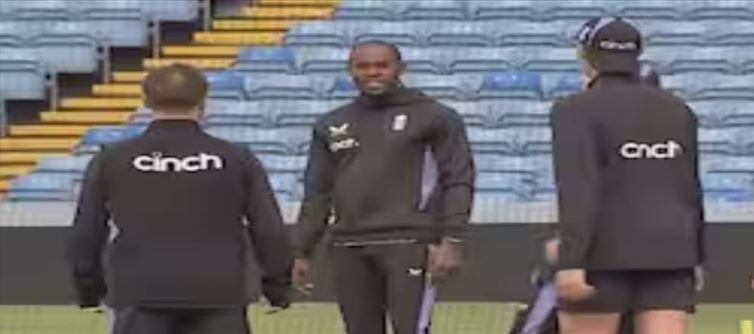
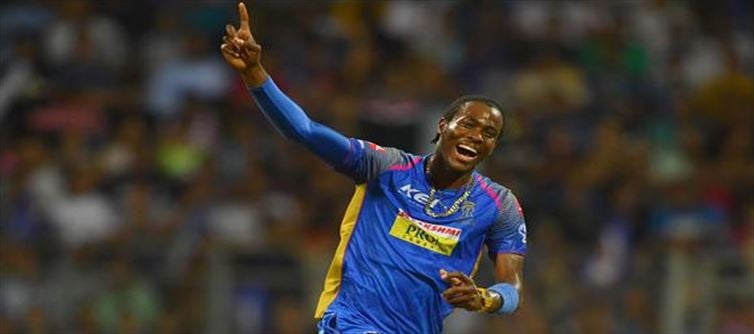
Jofra Archer, arguably the most electrifying fast bowler England have produced this generation, remains a search-spike phenomenon in 2026 because his career has become a cycle of devastating brilliance followed by devastating absence. According to ESPNcricinfo records, Archer has managed just 14 Tests across five years — a fraction of what his talent warrants, and the starkest indictment of how English cricket manages its most fragile asset.
Fourteen Tests. Let that number land for a moment. Jofra Archer burst into international consciousness during the 2019 World Cup — the super over at Lord's, the bouncer that felled Steve Smith at Headingley, the swagger of a man who seemed born to bowl fast on the biggest stages. Six years on, the cricket world is still searching his name in breathless volumes, 20,000 queries an hour, but the question has shifted. It is no longer "how good is he?" Everyone knows. The question now is whether English cricket will ever get to find out how good he could have been.
According to ESPNcricinfo's career records, Archer has taken 42 wickets in those 14 Tests at an average hovering around 31 — respectable, not extraordinary. But strip out the context and those numbers lie. Watch the spells — the 6 for 45 at Headingley in the 2019 Ashes, the raw hostility in the Caribbean, the yorkers that seem to arrive from a dimension where physics has relaxed its rules — and you see a bowler whose per-spell impact rivals anyone in the modern game. The problem was never talent. The problem is that his body charges a toll his career cannot afford.
The catalogue is by now grimly familiar to anyone who follows English cricket. A stress fracture of the right elbow. A recurring back injury. Surgery, rehabilitation, a tentative return in white-ball cricket, whispers of a Test recall, then another scan, another setback. The Guardian's cricket desk has described Archer's career as "the most frustrating what-if in English fast bowling since Simon Jones," and the comparison stings because it is precise — Jones, too, had a World Cup-defining tournament and a body that refused to cooperate thereafter.
Inside Talk
The chatter in county cricket circles, as India Herald understands from tracking English cricket media and pundit commentary throughout 2026, is that Archer's situation has become as much a political question inside the ECB as a medical one. Trade sources and cricket analysts speculate that there are two camps: one that views Archer as a Test-match luxury England can build around only if he proves sustained fitness over a full county season, and another that believes even a half-fit Archer for three Tests a year delivers more value than a fully fit replacement. "The talk among former England seamers on commentary circuits is remarkably blunt," one widely circulated view puts it — "you pick him when he's available and stop pretending you can plan around him." (This reflects industry chatter and pundit speculation, not confirmed ECB policy.)
What makes the 2026 iteration of this debate sharper is Archer's age. He turned 30 in April. For most fast bowlers, 30 is not old — James Anderson was remodelling his action and entering his imperial phase at that age, according to Wisden's records. But Anderson's genius was durability; Archer's is explosive pace. The metabolic demands are different. A bowler who relies on raw speed and an unorthodox, slightly slingy action places different stresses on his frame than one who swings the ball at 82 mph from a classical, repeatable action. The clock is not Archer's friend, and everyone searching his name senses it.
The England Fast-Bowling Paradox
Here is the dimension the scorecards and fitness bulletins miss entirely, and it is where India Herald's read of the deeper story begins. England's fast-bowling depth chart in 2026 is, on paper, healthier than it has been in years. Mark Wood, when fit himself, offers comparable pace. IHG has emerged as a genuine wicket-taker. Olly Stone flickers. And yet none of them — not one — replicates what Archer does at his best: that unique combination of pace, accuracy, death-bowling skill across formats, and a big-match composure that borders on eerie. According to Sky Sports' analysis segments, England's white-ball attack without Archer leaks an additional 15-20 runs in death overs on average compared to spells when he is operating. That is not a marginal difference; in T20 cricket, it is the difference between winning and losing tournaments.
The ECB's management of Archer has drawn pointed criticism from former players and analysts alike. The decision to rotate him between formats, restrict his county appearances, and manage his overs through a carefully calibrated "workload management" protocol was designed to extend his career. The unintended consequence, according to reporting by The Cricketer magazine, is that Archer has never built the sustained bowling loads that might — counterintuitively — have strengthened his body's resilience. There is a school of sports science thought, well-documented in fast-bowling injury research published in the British Journal of Sports Medicine, that suggests bowlers who are chronically under-bowled are actually more vulnerable to acute stress injuries when they suddenly ramp up intensity in international cricket. Archer's career may be the most expensive case study in that paradox.
[EMBED-SUGGESTION:tweet]
Where This Goes Next
India Herald's forward read, based on the pattern of Archer's career and the ECB's stated priorities ahead of the 2026-27 Ashes cycle, is this: Archer will be named in an England squad at least once more before the year ends, almost certainly for a white-ball series. The roar will be deafening. The expectations will be impossible. And the real drama will not be the wickets he takes — it will be whether he can bowl consecutive matches without breaking down. If he manages a sustained run of five or six internationals in sequence, it will be the first time since 2020 that he has done so, and it will reframe the entire Ashes conversation. If he does not, England will quietly — and this time perhaps permanently — build their plans around his absence rather than his presence.
The cruellest thing about Jofra Archer is not that he gets injured. It is that every time he comes back, even for a spell, he reminds you exactly why you cannot stop searching his name. The talent is not the tragedy. The tragedy is that the talent keeps proving it deserves a career his body will not grant.
More from India Herald

Key Takeaways
- Jofra Archer has played just 14 Tests in five years despite being widely regarded as England's most devastating fast bowler of this generation — his recurring stress fractures have turned his career into cricket's most painful what-if.
- England's death-overs economy rate worsens by 15-20 runs on average without Archer in white-ball cricket, according to Sky Sports analysis — no current replacement replicates his unique skill set.
- At 30, Archer faces a physiological crossroads: explosive pace bowlers age differently from swing bowlers, and the ECB's own workload management protocols may have inadvertently increased his injury vulnerability by keeping his bowling loads chronically low.
By the Numbers
- Jofra Archer: 14 Tests, 42 wickets in five years of international cricket (ESPNcricinfo)
- England's death-overs economy rate reportedly worsens by 15-20 runs per match without Archer in the white-ball attack (Sky Sports analysis)
- Archer turned 30 in April 2026, entering the age bracket where explosive-pace fast bowlers historically see accelerated physical decline
The 5W+H: Who, What, When, Where, Why, How
- Who: Jofra Archer, England's Barbados-born fast bowler, currently 30 years old and perpetually on the edge of selection and injury.
- What: A renewed surge in search interest around Archer's fitness, availability, and future in international cricket, reflecting persistent public fascination with his career trajectory.
- When: The latest spike coincides with mid-2026 discussions around England's fast-bowling stocks ahead of upcoming international commitments, according to reports across English cricket media.
- Where: England, with Archer's county commitments at Sussex and his international availability governed by the ECB's medical and selection protocols.
- Why: Archer's combination of 90-mph pace, yorker precision, and big-moment temperament makes him irreplaceable on paper — but recurring stress fractures in his right elbow and back have limited him to sporadic appearances since his 2019 World Cup heroics.
- How: A history of stress injuries, managed through multiple surgeries and carefully controlled workloads overseen by ECB medical staff, has turned Archer's career into a series of cautious comebacks and painful setbacks, as documented by The Guardian and ESPNcricinfo.
Frequently Asked Questions
Why does Jofra Archer keep getting injured?
Archer suffers from recurring stress fractures, primarily in his right elbow and lower back. His unorthodox bowling action and reliance on extreme pace place exceptional biomechanical stress on his frame. Sports medicine research suggests that chronic under-bowling between international commitments may also increase acute injury risk when workloads suddenly spike.
How many Tests has Jofra Archer played for England?
According to ESPNcricinfo records, Archer has played just 14 Tests for England since his debut in 2019, a figure that reflects the extent of time lost to injury and rehabilitation.
Will Jofra Archer play in the next Ashes series?
As of mid-2026, no official confirmation exists. Archer's availability for the 2026-27 Ashes cycle depends entirely on whether he can demonstrate sustained fitness across consecutive matches — something he has not managed since 2020. The ECB has not ruled him in or out.
What makes Jofra Archer so difficult to replace in England's attack?
Archer combines 90-mph pace with pinpoint yorker accuracy and exceptional composure under pressure across all formats. According to Sky Sports analysis, England's death-overs economy rate is significantly worse without him, and no current English bowler replicates that specific combination of skills.
 click and follow Indiaherald WhatsApp channel