
-

ajay
-
Assembly
-
Bharatiya Janata Party
-
Cabinet
-
Calcutta
-
CBI
-
Congress
-
court
-
Delhi
-
Election
-
Election Commission
-
Elections
-
Episode
-
Faizabad
-
Government
-
House
-
India
-
Indian
-
Leader
-
Loksabha
-
lotus
-
Mamata Benerjee
-
Mass
-
MP
-
National Democratic Alliance
-
Office
-
Om Birla
-
Parliament
-
Party
-
Press
-
Punjab
-
ram mandir
-
ram pothineni
-
READ
-
Shiv Sena
-
shiv sena party
-
Strike
-
Supreme Court
-
temple
-
Uttar Pradesh
-
Uttarakhand
-
war
-
West Bengal - Kolkata
-
yogi

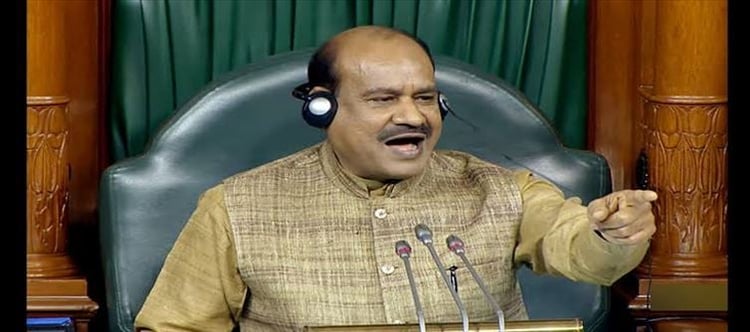
Lok Sabha Speaker Om Birla is expected to decide before the Monsoon Session whether to recognise the merger of 20 rebel TMC MPs with the National Congress Party (India), according to The Times of India. If approved, the move would legitimise the first major split from TMC since 2024, shrink opposition bench strength, and potentially make NCPI the second-largest NDA partner in the Lok Sabha.
Twenty MPs do not just walk out of Mamata Banerjee's Trinamool Congress. Not quietly. Not together. And certainly not into the arms of a party that happens to sit in the NDA's lap. Yet that is precisely what has happened — and the only thing standing between this rebel column and full parliamentary legitimacy is one man's signature: Lok Sabha Speaker Om Birla's.
According to The Times of India, Birla is expected to decide before the Monsoon Session whether to recognise the merger of 20 rebel TMC MPs with the National Congress Party (India). If he does, NCPI instantly becomes the second-largest NDA partner in the Lok Sabha — a fact that should make every opposition strategist in New Delhi lose sleep tonight.
The arithmetic is brutal. TMC sent 29 MPs to the Lok Sabha. Lose 20, and the party's bench strength drops to single digits — a parliamentary rump where Mamata Banerjee's voice, already competing against a supermajority NDA, would be reduced to near-irrelevance in floor proceedings. Committee seats, speaking time, the informal heft that comes from being a double-digit opposition bloc — all of it evaporates.
The Anti-Defection Escape Hatch
India's Tenth Schedule was designed to stop exactly this: legislators switching sides for patronage or power. But it contains a carefully worded exception. A merger — defined as two-thirds of a legislative party merging with another — is not defection. It is, legally, a legitimate political realignment. The 20 rebels, if Birla counts them against TMC's total Lok Sabha strength of 29, comfortably clear that two-thirds threshold. The law, ironically crafted to prevent horse-trading, becomes the very vehicle enabling it.
The Times of India reports that the Speaker must also simultaneously adjudicate merger claims involving the Shiv Sena factions — a parallel headache that, politically, gives Birla cover. Ruling on multiple merger petitions at once makes the TMC decision look procedural rather than targeted. That framing is no accident.
Political Pulse
Here is what the press releases will not say. The corridors of Parliament are buzzing with a question no BJP spokesperson will answer on camera: was this an organic rebellion, or a meticulously managed extraction?
The talk in political circles, as India Herald's read of the situation lays out plainly, is that this bears every hallmark of what opposition parties have long called 'Operation Lotus' — the BJP's alleged playbook of inducing defections from rival parties through a mix of central investigation pressure, patronage promises, and ideological window-dressing. Twenty MPs do not coordinate a synchronised departure into a single NDA-allied vehicle without infrastructure. The logistics alone — legal counsel for the merger petition, a receiving party ready with paperwork, the timing calibrated to the Monsoon Session — suggest planning that goes well beyond disgruntled backbenchers finding each other over chai.
TMC insiders, speaking on background, have reportedly described the rebels as MPs who were already sidelined within the party or facing investigation-related pressures. The whisper in Kolkata's political drawing rooms is pointed: some of these MPs were given a choice between CBI summons and NDA membership cards. TMC's official leadership has not issued a formal public response to the merger petition as of this writing — a silence that itself speaks volumes. Mamata Banerjee's instinct has always been to fight loudly and publicly; the quiet suggests either a legal counter-strategy being assembled behind closed doors, or a calculation that the battle is already lost in Parliament and must be fought on Bengal's streets instead.
The Calcutta High Court has already entered the frame. According to The Times of India, the HC has questioned whether a civil court can override the Election Commission to recognise a rebel faction — a jurisdictional tangle that could delay formal party-symbol recognition even if Birla grants the parliamentary merger. The legal and political tracks, in other words, are running on separate clocks.
What This Really Means for Opposition Unity
Zoom out from the TMC-specific drama and the structural damage becomes clearer. If Birla's ruling legitimises the merger, it does not just hurt Mamata — it sends a signal to every opposition party with internal fault lines. The Congress in Rajasthan, the DMK's smaller allies, regional parties where a two-thirds legislative split is arithmetically feasible — all now know that the merger exception is a live weapon, not a dusty constitutional footnote.
The BJP's genius, if this is indeed orchestrated, is that it achieves through procedure what it could not through elections. The NDA did not win these 20 seats at the ballot box. It acquired them through a parliamentary mechanism that technically violates no law. The optics are democratic; the substance is acquisitive. And unlike governor-driven government toppling in state assemblies, a Speaker's merger ruling in the Lok Sabha carries a finality that is extraordinarily difficult to challenge — the Supreme Court has historically been reluctant to interfere with Speaker's decisions on anti-defection matters, citing parliamentary sovereignty.
Mamata's 2026 Calculus
For Mamata Banerjee, the timing is particularly vicious. With Bengal municipal elections and potential assembly bypolls on the horizon, a hollowed-out parliamentary presence weakens her national bargaining position precisely when she needs it most. TMC's leverage in any future opposition coalition — already diminished after the 2024 general election — drops further if the party cannot even maintain a credible Lok Sabha bloc.
The smarter reading, though, is that Mamata may not fight this inside Parliament at all. Her track record suggests she will convert the split into a narrative of BJP aggression against Bengal's mandate — the outsider devouring the insider — and weaponise it for state-level mobilisation. Every defecting MP becomes a traitor in her telling; every NDA gain becomes proof that Delhi is at war with Bengal. It is a playbook she has used before, and it works on home turf even when it fails in the capital.
But there is a limit to that alchemy. If the NCPI-merged rebels start delivering central funds to their constituencies — schemes, projects, the tangible patronage that an NDA alliance unlocks — the betrayal narrative has a shelf life. Voters who see roads built and gas connections expedited rarely sustain outrage at the MP who switched sides to make it happen.
The Precedent That Outlasts This Session
The most consequential dimension is not the immediate numbers. It is the precedent. If Birla's ruling establishes that a two-thirds legislative party merger into an NDA ally is a clean, unchallengeable route past the anti-defection law, then every future Parliament will operate under a new reality: no opposition party's bench strength is safe if the ruling coalition can peel off the requisite fraction. The Tenth Schedule, meant to be a fortress against floor-crossing, becomes a drawbridge — one that opens from the inside, but only if you bring enough colleagues with you.
The question Mamata Banerjee — and every opposition leader watching — must now answer is not whether Birla will rule in the rebels' favour. The procedural math and political incentives both point one way. The real question is what happens the morning after: does this accelerate the slow death of regional opposition in Parliament, or does it finally force India's fractured opposition into the kind of existential unity they have talked about for a decade and never delivered?
That answer will not come from a Speaker's ruling. It will come from the streets of Kolkata, the back rooms of the Congress war room, and the polling booths of 2029. The monsoon, as always, brings both rain and reckoning.
Allegations and claims reported here are attributed to named sources and remain unproven unless a court has ruled; matters sub judice are reported without prejudgment.
Reported and written with AI assistance under India Herald's editorial standards; a human editor governs publication.
More from India Herald

Key Takeaways
- If Speaker Birla recognises the merger, TMC's Lok Sabha strength drops from 29 to single digits, effectively marginalising Mamata Banerjee's parliamentary voice.
- NCPI would become the second-largest NDA partner in the Lok Sabha overnight — seats the BJP did not win at the ballot box but acquired through a constitutional mechanism.
- The Tenth Schedule's two-thirds merger exception, designed to prevent defection, is being used as the very instrument enabling mass floor-crossing — a precedent that could threaten any opposition party's bench strength in future Parliaments.
- The Calcutta High Court has separately questioned whether civil courts can override the Election Commission on faction recognition, creating a parallel legal battle that could complicate matters even after a Speaker's ruling.
- Mamata Banerjee's silence suggests either a legal counter-strategy in preparation or a calculated pivot to state-level narrative warfare — framing every defection as BJP aggression against Bengal's mandate.
By the Numbers
- 20 of TMC's 29 Lok Sabha MPs — over two-thirds — have petitioned Speaker Birla to recognise their merger with NCPI, clearing the Tenth Schedule's anti-defection threshold (Times of India).
- If recognised, NCPI would become the second-biggest NDA partner in the Lok Sabha (Times of India).
The 5W+H: Who, What, When, Where, Why, How
- Who: Lok Sabha Speaker Om Birla, 20 rebel TMC MPs, the National Congress Party (India), TMC chief Mamata Banerjee, and the BJP-led NDA.
- What: Birla is expected to rule on whether the merger of 20 rebel TMC MPs into the NCPI qualifies as a legitimate split under the Tenth Schedule, according to The Times of India.
- When: The decision is expected before the upcoming Monsoon Session of Parliament in 2026, per The Times of India.
- Where: Lok Sabha, Parliament of India, New Delhi.
- Why: If recognised, the merger would make NCPI the second-biggest NDA ally in the Lok Sabha, shrink TMC's opposition numbers, and set a precedent for future parliamentary defections, The Times of India reports.
- How: The rebel MPs have petitioned the Speaker to recognise their departure from TMC as a valid merger with NCPI under the anti-defection law's merger exception, which requires at least two-thirds of a party's legislative wing to split, according to The Times of India.
Frequently Asked Questions
What is the Tenth Schedule merger exception that allows TMC rebels to join NCPI without facing disqualification?
The Tenth Schedule of the Indian Constitution prohibits defection but allows a merger if two-thirds or more of a legislative party's members agree to merge with another party. Since 20 of TMC's 29 Lok Sabha MPs have petitioned for merger with NCPI, they clear the two-thirds threshold and can argue they are not defecting but merging — a legally distinct act, according to The Times of India.
How does the TMC-NCPI merger affect opposition strength in the Lok Sabha?
If recognised, the merger would reduce TMC's Lok Sabha bench from 29 to approximately 9 MPs, drastically shrinking its presence on committees, speaking time, and overall parliamentary influence. NCPI, as an NDA ally, would add those 20 seats to the ruling coalition's numbers, according to The Times of India.
Can the TMC-NCPI merger be legally challenged?
The Calcutta High Court has already raised the question of whether a civil court can override the Election Commission on recognising a rebel faction, according to The Times of India. However, the Speaker's ruling on parliamentary merger under the Tenth Schedule is a separate track — and the Supreme Court has historically been reluctant to interfere with Speakers' anti-defection decisions, citing parliamentary sovereignty.
What is Operation Lotus and is it connected to the TMC split?
Operation Lotus is the term opposition parties use for the BJP's alleged strategy of inducing defections from rival parties through a combination of investigation pressure and patronage incentives. While no direct evidence has been publicly established linking the BJP to the TMC rebels' merger with NCPI, political circles and TMC insiders have drawn parallels, according to reports. BJP has not officially responded to these allegations.
 click and follow Indiaherald WhatsApp channel