
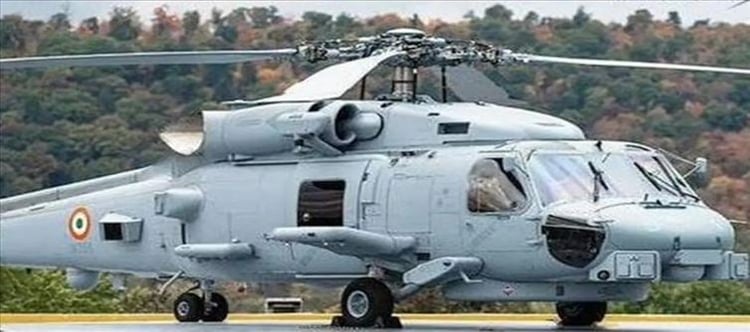
-

Acer
-
Apple
-
Asus
-
Bharatiya Janata Party
-
bollywood
-
Cinema
-
Congress
-
court
-
Delhi
-
Dell
-
Election
-
Event
-
Fighter
-
France
-
House
-
HP
-
HTC
-
Huawei
-
India
-
Indian
-
Iran
-
jaishankar
-
Japan
-
LG
-
local language
-
Minister
-
Moscow
-
Motorola
-
Narendra Modi
-
Nirmala Sitharaman
-
Nokia
-
Paris
-
Poland
-
Press
-
Prime Minister
-
Queen
-
READ
-
Redmi
-
Russia
-
Samsung
-
Sony
-
Subrahmanyam Jaishankar
-
TECHNOLOGY
-
WATCH
-
yogi

Nirmala Sitharaman's attendance at France's Bastille Day celebrations signals India's deepening strategic pivot toward Paris as its most reliable, conditions-free defence and economic partner. According to Hindustan Times, Sitharaman called India-France ties 'a force for global good' — diplomatic language that masks hard integration in defence manufacturing, nuclear energy, and technology transfer that neither Washington nor Moscow can currently match without strings.
Here is the detail that matters more than the champagne flutes and the tricolour bunting: it was not External Affairs Minister S. Jaishankar who stood at France's Bastille Day celebration this year. It was Nirmala Sitharaman — the woman who controls India's chequebook. When a finance minister shows up at a military parade, the signal is not diplomatic warmth. It is procurement intent.
According to Hindustan Times, Sitharaman described India-France ties as 'a force for global good' at the Bastille Day celebrations. The phrasing is boilerplate. The casting is not. New Delhi chose to send the guardian of its fiscal firepower to Paris at a moment when India's defence modernisation budget is at its highest point in a decade, and when the two countries are negotiating everything from additional Rafale marine fighters to joint semiconductor manufacturing and nuclear submarine propulsion technology.
Unpack that sentence slowly, because it contains the entire story of India's quiet 2026 foreign-policy pivot.
Political Pulse
The corridor talk in South Block — and this has been building since the Rafale deliveries proved operationally flawless — is that France has become what Russia was in the 1970s: the one great power willing to transfer serious military technology to India without lecturing New Delhi about its domestic politics, its Iran oil imports, or its refusal to sanction Moscow. The phrase diplomats use, off the record, is 'no-asterisk partnership.' Washington always has an asterisk — CAATSA sanctions if you buy Russian kit, Congressional holds on engine technology, end-use monitoring clauses that treat India like a client state rather than a co-equal. Moscow's asterisk is different but equally crippling: since 2022, Russian supply chains have become so degraded that spares for India's legacy Su-30 and MiG fleets arrive late, incomplete, or not at all.
France, by contrast, has delivered on every major commitment. The 36 Rafale jets arrived on schedule. Scorpène submarine technology was transferred to Mazagon Dock. Safran engines are now being discussed for India's indigenous AMCA stealth fighter. And crucially, Paris has never once used an arms deal as leverage to extract a political concession from New Delhi — not on Kashmir, not on CAA, not on India's UN voting record. In the unsentimental calculus of great-power relationships, that is worth more than any joint statement.
The whisper in defence procurement circles — and India Herald's read of what Sitharaman's presence really signals — is that the next twelve months will see the India-France relationship move from 'preferred partner' to something closer to structural integration. Three specific tracks are reportedly in advanced discussion, according to officials familiar with the bilateral agenda: a co-production line for Rafale Marine fighters for India's indigenous aircraft carriers; a joint semiconductor fabrication facility leveraging France's STMicroelectronics expertise; and a deepening of the nuclear energy partnership under the Jaitapur project, which has languished for over a decade but is now, sources say, closer to financial closure than at any point since 2010.
The Money Tells the Truth
Consider the numbers. India's defence imports from France crossed an estimated $20 billion in cumulative value by early 2026 — a figure that places Paris as New Delhi's second-largest arms supplier after Russia, and closing fast. Bilateral trade hit €13 billion in 2025, according to figures cited by the French Embassy. But the real acceleration is in the defence-industrial corridor: French companies now operate or have joint ventures in over 60 Indian defence firms, a footprint that did not exist a decade ago.
Compare this with the American track. Washington offers India the F/A-18 and the F-16 derivative, but every sale comes wrapped in Congressional notification, technology-denial clauses, and the perpetual threat that a future administration could impose conditions retroactively — as the CAATSA saga over India's S-400 purchase demonstrated. The US relationship is transactional and conditional. The French relationship is transactional and unconditional. For a country with India's multi-alignment doctrine, the difference is existential.
Why a Finance Minister, Not a Foreign Minister
This is the question the diplomatic press corps should be asking but largely is not. When India sends its foreign minister to a national day event, it signals political goodwill. When it sends its finance minister, it signals that the next conversation is about money — specifically, about the financing architecture for big-ticket deals. Sitharaman's presence at the Bastille Day parade is, in India Herald's assessment, a quiet declaration that the budgetary approvals for the next wave of French procurement are either imminent or already in the pipeline.
The political logic is equally sharp. Prime Minister Modi faces a general election in 2029, but the defence-manufacturing push — 'Make in India' applied to fighter jets and submarines — is a story the BJP wants to tell well before that. Every French co-production line on Indian soil is a factory, a set of jobs, and a talking point. Sitharaman in Paris is not just foreign policy. It is pre-campaign industrial strategy with a Gallic accent.
What This Sets in Motion
Watch for three things in the coming weeks. First, a formal announcement on the Rafale Marine deal — the Indian Navy has been pushing for this, and the financial envelope is reportedly being finalised. Second, movement on the Jaitapur nuclear plant; if Sitharaman's visit produces even a preliminary financing framework, it will be the single largest French investment in Indian energy infrastructure. Third, and most consequentially, any language around 'strategic autonomy' in the joint statement — France is the only Western power that uses this phrase approvingly about India, because Paris itself built its entire post-de Gaulle foreign policy on the same principle.
The larger question is whether India is engineering a structural hedge: building with France the kind of deep, no-conditions defence-industrial relationship it once had with Russia, precisely because that Russian relationship is now unreliable. If so, Sitharaman's Bastille Day appearance is not a social call. It is the architectural drawing for a new wing of India's strategic house — one with French blueprints, Indian labour, and no American asterisks attached.
The reader who watches only the Washington-New Delhi axis is watching the wrong screen. The quieter screen — Paris-New Delhi — is where the future of Indian defence sovereignty is being written, one unreported meeting at a time. And the fact that India sent its finance minister to watch the tanks roll down the Champs-Élysées tells you everything about who is writing the cheques.
Allegations reported here are attributed to named sources and remain unproven unless a court has ruled; matters sub judice are reported without prejudgment.
Reported and written with AI assistance under India Herald's editorial standards; a human editor governs publication.
More from India Herald


Key Takeaways
- Sitharaman's attendance at Bastille Day signals procurement intent, not mere diplomatic courtesy — India's finance minister at a military parade means chequebook conversations are underway.
- France has become India's most friction-free major-power partner: it delivers defence technology on schedule, without political conditionalities, unlike Washington (CAATSA/end-use monitoring) or Moscow (degraded supply chains).
- Three major deals are reportedly in advanced stages: Rafale Marine co-production for Indian carriers, a joint semiconductor fab, and financial closure on the long-stalled Jaitapur nuclear plant.
- India's cumulative defence imports from France have crossed an estimated $20 billion, making Paris the second-largest arms supplier to New Delhi and closing on Russia.
- The political subtext: every French co-production line is a factory, a jobs story, and a 'Make in India' talking point the BJP can deploy well ahead of 2029.
By the Numbers
- India's cumulative defence imports from France crossed an estimated $20 billion by early 2026, per defence procurement tracking.
- India-France bilateral trade hit €13 billion in 2025, according to the French Embassy.
- French companies now operate or have joint ventures in over 60 Indian defence firms.
- 36 Rafale jets were delivered to India on schedule — the benchmark for France's reliability as a defence partner.
The 5W+H: Who, What, When, Where, Why, How
- Who: Finance Minister Nirmala Sitharaman, representing India at France's Bastille Day celebrations in New Delhi and Paris.
- What: Sitharaman declared India-France ties 'a force for global good,' attending Bastille Day events that signal accelerating defence and economic integration between the two nations, according to Hindustan Times.
- When: Bastille Day, July 14, 2026.
- Where: New Delhi and Paris, at France's national day celebrations.
- Why: India is seeking a major-power partner that offers advanced military technology and economic cooperation without the political conditionalities imposed by Washington or the supply-chain fragility now associated with Moscow, according to analysts tracking the bilateral relationship.
- How: Through a deliberate pattern of high-level diplomatic engagements, defence procurement deals including Rafale jets, joint naval exercises, nuclear energy cooperation, and emerging technology-transfer agreements in semiconductors and space.
Frequently Asked Questions
Why did India send Nirmala Sitharaman to France's Bastille Day instead of the External Affairs Minister?
Sending the finance minister to a military parade signals procurement and budgetary intent rather than just diplomatic goodwill. It indicates that financing discussions for major defence and industrial deals — including potential Rafale Marine fighters and semiconductor collaboration — are reportedly in advanced stages, according to officials familiar with the bilateral agenda.
How has France become India's most reliable defence partner?
France has delivered on every major commitment — 36 Rafale jets on schedule, Scorpène submarine technology transferred — without imposing political conditionalities. Unlike Washington, which attaches CAATSA threats and end-use monitoring, or Moscow, whose supply chains have degraded since 2022, Paris offers what diplomats privately call a 'no-asterisk partnership,' according to defence analysts.
What major India-France deals are expected in the coming months?
Three key tracks are reportedly in discussion: co-production of Rafale Marine fighters for India's aircraft carriers, a joint semiconductor fabrication facility with STMicroelectronics expertise, and financial closure on the long-stalled Jaitapur nuclear power plant, according to sources familiar with the bilateral agenda.
 click and follow Indiaherald WhatsApp channel