


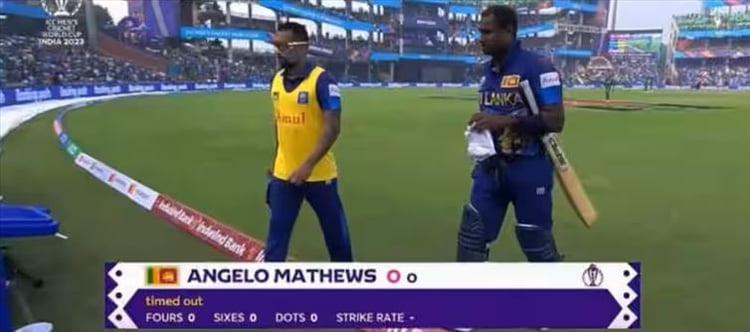

Angelo Mathews came out to bat after bangladesh skipper Shakib Al Hasan sent Sadeera Samarawickrama out in the 25th over. But before lowering his guard at the popping crease, Mathews gestured to the dugout for the replacement because he didn't feel comfortable in his helmet. Replays revealed that Mathews' helmet strap had come loose, and he requested a replacement.
Shakib, however, took issue with the situation to umpires Marais Erasmus and richard Illingworth before the new helmet could be delivered. After much debate and in accordance with the wording of the law, the umpires decided that Shakib's protest qualified as an appeal and directed Matthews to return to the pavilion.
What does the Rule Say?
 click and follow Indiaherald WhatsApp channel