

-

Air
-
Antioxidant
-
arya
-
Bajji
-
Banana
-
BEAUTY
-
Chinese traditional religion
-
Christianity
-
Coffee
-
Crush
-
Dargah Sharif
-
Fighter
-
Hinduism
-
India
-
Indian
-
Islam
-
June
-
Kanchipuram
-
Karnataka
-
Kerala
-
Madurai
-
oil
-
pollution
-
Population
-
Press
-
Red
-
Research and Analysis Wing
-
REVIEW
-
Tamil
-
temple
-
Thanjavur
-
Thrissur
-
Tirupati
-
tollywood-guest-roles
-
Vaishno Devi
-
Vitamin
-
WOMEN

Fermented rice water tightens pores and controls sebum, hibiscus provides natural AHAs for gentle exfoliation, and kumkumadi tailam seals moisture without clogging — a three-step South Indian temple town ritual that dermatologists now confirm works as a complete monsoon skincare regimen for luminous, frizz-free skin even in peak humidity.
The 5W+H: Who, What, When, Where, Why, How
- Who: Women in South Indian temple towns — particularly in Tamil Nadu, Kerala, and parts of coastal Andhra — have practised this ritual for generations, now validated by modern dermatological research.
- What: A three-ingredient monsoon skincare routine using fermented rice water, fresh hibiscus paste, and kumkumadi tailam that controls frizz, sebum, and dullness during peak humidity.
- When: During the Indian monsoon season (June–September), when humidity regularly exceeds 85% and conventional skincare routines typically fail.
- Where: Originated in temple towns like Thanjavur, Madurai, Kanchipuram, and Thrissur, where daily temple rituals demanded luminous, well-maintained skin as a devotional practice.
- Why: High monsoon humidity overwhelms modern water-based serums and primers, causing breakouts, frizz, and dullness — traditional oil-and-botanical formulations are inherently designed for tropical saturation.
- How: Fermented rice water is applied as a toner to tighten pores, hibiscus paste or juice acts as a natural AHA exfoliant, and kumkumadi tailam — a saffron-infused Ayurvedic oil — locks in moisture and radiance without the heaviness of synthetic occlusives.
Picture this: it is six in the morning in Thanjavur, the air already so thick with moisture you could wring it out like temple laundry. A woman stands at the threshold of the Brihadeeswarar temple complex, her skin catching the first grey light — luminous, even-toned, impossibly dewy without a trace of the oily sheen that monsoon humidity pastes onto the rest of us. She has not touched a single product with the word 'hydrating' on its label. What she did, an hour ago, is what her grandmother did, and her grandmother's grandmother before that: she rinsed her face with yesterday's rice water, pressed crushed hibiscus petals across her cheeks, and sealed everything with three drops of kumkumadi tailam warmed between her palms.
That ritual — unglamorous, unpackaged, costing less than a cup of filter coffee — is the subject of quiet but growing fascination among Indian dermatologists and global skincare formulators alike. And the timing is no accident. Every monsoon, as humidity climbs past 85% across the subcontinent and ₹2,000 serums slide off faces like rain off a banana leaf, the search for something that actually works sends millions of women back to the same stubborn question: what did the old ways know that my bathroom shelf does not?
The rice water revelation: fermentation is the first genius
Rice water as a beauty wash is neither a trend nor a TikTok discovery. According to research published in the Journal of Cosmetic Dermatology, fermented rice water contains pitera — a by-product of yeast fermentation rich in vitamins B, C, and E, amino acids, and minerals — that demonstrably improves skin elasticity, reduces hyperpigmentation, and tightens pores. The operative word is fermented. The women of Thanjavur and Madurai do not use the milky rinse from freshly washed rice. They let the starchy water sit overnight, sometimes for 24–48 hours, until it turns slightly sour — a sign that lactobacillus fermentation has begun, lowering the pH and unlocking a cascade of skin-friendly acids.
This is not folk intuition dressed up as science. According to The Indian Journal of Dermatology, the mildly acidic pH of fermented rice water (around 4.5–5.0) closely matches the skin's natural acid mantle — the invisible barrier that monsoon humidity and alkaline tap water conspire to strip away. When that mantle is intact, sebum production normalises, breakouts retreat, and the skin holds onto its own moisture rather than drowning in atmospheric moisture. In practical terms: you glow instead of gleaming.
Hibiscus: the flower that is secretly a chemical peel
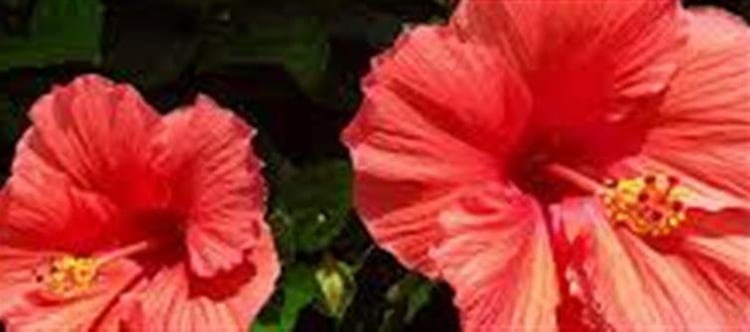
If fermented rice water is the toner, hibiscus is the exfoliant — and a startlingly effective one. Known as chembarathi in Kerala and mandara in parts of Telugu-speaking India, the common red hibiscus (Hibiscus rosa-sinensis) contains natural alpha-hydroxy acids (AHAs) that gently dissolve dead skin cells without the redness or sensitivity that synthetic glycolic acid can provoke, according to a 2023 review in Phytotherapy Research. The flower's mucilage — that slippery, gel-like texture when you crush the petals — acts as a natural humectant, pulling moisture into the skin rather than sitting on top of it.
Here is the detail most beauty columns miss: hibiscus is also rich in anthocyanins, the same antioxidant pigments that give blueberries their reputation. Applied topically, anthocyanins neutralise free radicals generated by UV exposure and pollution — both of which spike during the monsoon when cloud cover tricks people into skipping sunscreen. A hibiscus paste applied for ten minutes, two or three times a week, effectively functions as a gentle peel, an antioxidant mask, and a hydrating treatment in one step. The cost? A flower from the garden hedge.
Kumkumadi tailam: the 3,000-year-old serum the beauty industry keeps trying to bottle
The third leg of this temple-town trinity is kumkumadi tailam — a classical Ayurvedic facial oil whose chief ingredient is saffron (Crocus sativus), blended with sandalwood, lotus, and a base of sesame or milk. According to the Ashtanga Hridayam, one of Ayurveda's foundational texts attributed to the 7th-century physician Vagbhata, kumkumadi tailam was prescribed specifically for facial luminosity, even-toning, and the treatment of blemishes. Modern cosmetic chemistry, as reviewed in the Journal of Ethnopharmacology, has confirmed that saffron's active compounds — crocin and crocetin — inhibit melanin synthesis and improve skin texture, essentially functioning as a natural brightening agent.
What makes kumkumadi tailam particularly suited to the monsoon is counterintuitive: it is an oil, and every instinct says oil in humidity is a recipe for clogged pores. But kumkumadi tailam is a dry oil — its sesame base has a low comedogenic rating (1–2 on the 0–5 scale, according to dermatological references), meaning it absorbs rapidly and does not block sebaceous glands. Three drops, warmed and pressed gently onto damp skin after the rice-water rinse and hibiscus treatment, create a thin lipid seal that prevents trans-epidermal water loss — the invisible evaporation that actually causes the dehydrated-yet-oily paradox most Indian women battle from June to September.
The ritual, step by step — and the one mistake that ruins it
The full temple-town protocol, distilled for a modern bathroom, takes under fifteen minutes:
Step 1: Soak two tablespoons of raw rice (any variety, though red rice from Kerala is traditionally preferred) in a cup of water for 30 minutes. Strain. Let the starchy water ferment at room temperature for 24–48 hours until slightly sour. Refrigerate; it keeps for a week.
Step 2: Splash or pat fermented rice water onto cleansed skin. Do not rinse — let it air-dry for two to three minutes while the acids tighten pores.
Step 3: Crush 3–4 fresh hibiscus petals into a paste (add a teaspoon of raw honey for extra humectancy if your skin runs dry). Apply to face and neck, leave for 8–10 minutes, rinse with cool water.
Step 4: While skin is still slightly damp, warm 2–3 drops of kumkumadi tailam between palms and press — never rub — onto the face and neck.
The one mistake that undoes the whole ritual, according to Ayurvedic practitioner Dr. Arya Krishnan (as cited in a Femina India feature on traditional monsoon beauty), is using hot water at any stage. Hot water strips the acid mantle faster than any humidity can, negating the pH-balancing work of the fermented rice water. Lukewarm to cool — always.
[EMBED-SUGGESTION:video]
Why the modern shelf cannot replicate this — India Herald's read
India Herald's assessment of why this ritual persists, and why the ₹15,000-crore Indian skincare market keeps circling back to these three ingredients, is this: the temple-town protocol is not three products used in sequence — it is a system designed for a specific climate. Fermented rice water restores the acid mantle. Hibiscus exfoliates and infuses antioxidants. Kumkumadi tailam seals without suffocating. Each step primes the skin for the next, and the whole system is calibrated for air that is 85–95% saturated with water. Modern formulations, designed in laboratories in Seoul or New York for controlled-humidity environments, simply were not engineered for the Indian monsoon's specific assault on skin — the combination of heat, moisture, pollution, and hard water that South and coastal India endures for four months every year.
Watch for this: as the clean-beauty and Ayurveda-forward movement accelerates — Indian herbal cosmetics grew 21% year-on-year according to a 2025 IMARC Group market report — expect major brands to launch monsoon-specific lines built explicitly around fermented rice extracts, hibiscus AHAs, and saffron-oil blends. The ingredients will be the same ones that have been growing in temple-town gardens for a millennium. The markup will be new.
[EMBED-SUGGESTION:tweet]
The deeper glow
There is something worth sitting with here, beyond the skincare. The women of Thanjavur and Thrissur and Kanchipuram did not arrive at this ritual through clinical trials. They arrived at it through devotion — the daily imperative to appear before the deity looking their most luminous, their most cared-for, their most present. The skincare was not vanity; it was prayer made visible on the skin. That the chemistry happens to be brilliant is, perhaps, the least surprising thing about a tradition that has been refining itself, grandmother to granddaughter, for longer than most modern nations have existed.
The monsoon will do what it does — blur your eyeliner, frizz your hair, make your face feel like it belongs to someone else. But if a ₹10 bowl of fermented rice water, a handful of garden hibiscus, and three drops of an oil older than the Chola dynasty can hold their own against all of that, the real question is not whether the old ways work. It is why we ever stopped listening.

By the Numbers
- Fermented rice water pH of 4.5–5.0 matches the skin's natural acid mantle — Indian Journal of Dermatology
- Indian herbal cosmetics market grew 21% year-on-year — IMARC Group 2025 report
- Sesame oil base of kumkumadi tailam has a comedogenic rating of just 1–2 on a 0–5 scale
- Hibiscus anthocyanins neutralise free radicals from UV and pollution spikes during monsoon cloud cover
Key Takeaways
- Fermented rice water (24–48 hours) restores the skin's acid mantle to a pH of 4.5–5.0, matching the skin's natural barrier — key to controlling monsoon-triggered sebum overproduction, per the Indian Journal of Dermatology.
- Hibiscus contains natural AHAs and anthocyanin antioxidants, making it a gentle exfoliant, humectant, and free-radical fighter in one flower — validated by Phytotherapy Research.
- Kumkumadi tailam, a saffron-based Ayurvedic oil from the Ashtanga Hridayam tradition, has a low comedogenic rating and seals moisture without clogging pores — its crocin compounds inhibit melanin synthesis for natural brightening.
- The three-step system is climate-calibrated for 85–95% humidity — modern formulations designed for controlled-humidity labs often fail in monsoon India.
- Indian herbal cosmetics grew 21% year-on-year per IMARC Group (2025), with monsoon-specific lines expected to increasingly feature these traditional ingredients.
- The critical mistake that undermines the routine: using hot water at any stage, which strips the acid mantle the fermented rice water is designed to restore.
Frequently Asked Questions
Can I use regular rice water instead of fermented rice water for monsoon skincare?
Fresh rice water lacks the beneficial acids produced by fermentation. According to the Journal of Cosmetic Dermatology, it is the 24–48 hour fermentation process that lowers the pH to 4.5–5.0 and produces pitera — the compound responsible for pore-tightening and sebum control. Always ferment before use.
Is kumkumadi tailam safe to use in humid monsoon weather without causing breakouts?
Yes — kumkumadi tailam's sesame oil base has a comedogenic rating of just 1–2 on a 0–5 scale, meaning it absorbs quickly without clogging pores. The key is to use only 2–3 drops on damp skin, pressed gently rather than rubbed, to create a thin lipid seal.
How often should I apply the hibiscus paste during monsoon season?
Two to three times per week is the traditional frequency. Hibiscus contains natural AHAs that exfoliate gently, but daily use could over-exfoliate sensitive skin. Leave the paste on for 8–10 minutes and rinse with cool — never hot — water.
What type of rice is best for making fermented rice water?
Any variety works, though Kerala red rice is traditionally preferred for its higher antioxidant content. Soak two tablespoons in a cup of water for 30 minutes, strain, and ferment the starchy water at room temperature for 24–48 hours until slightly sour.
Can this routine replace my regular monsoon skincare products entirely?
For many skin types, the three-step ritual — fermented rice water toner, hibiscus exfoliant, kumkumadi tailam sealant — functions as a complete monsoon routine covering pH restoration, exfoliation, antioxidant protection, and moisture sealing. Sunscreen remains non-negotiable as a separate step.
 click and follow Indiaherald WhatsApp channel