


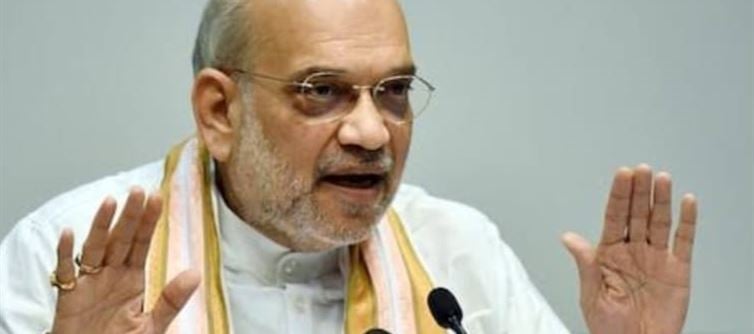

Union home minister amit shah launched a strong attack on the congress during the lok sabha debate on electoral reforms.
Accused the Opposition of misleading the public regarding the State of the Electoral Roll (SIR) and questioning the credibility of Electronic Voting Machines (EVMs).
Highlighted that the congress was now opposing a system introduced during Rajiv Gandhi’s tenure, despite his support and the Supreme Court endorsements of EVMs.
Congress Flip-Flop on EVMs
Shah claimed the congress had a shift in stance for political convenience.
Noted that the party remained silent on EVMs during its victories in the 2004 and 2009 general elections.
Argued that objections to EVMs only began after the congress lost power in 2014, revealing a pattern of questioning electoral credibility when results are unfavorable.
Accused the Opposition of spreading misinformation about SIR over months to mislead voters.
Emphasized that the electoral roll is managed solely by the election Commission, not the government, making the Opposition’s push for debate politically motivated.
Claims of Past Electoral Malpractice
Shah stated that EVMs had exposed malpractices that existed before their introduction.
Alleged that certain parties benefited under the old ballot system due to these irregularities.
Criticized the congress for now opposing a system that rajiv gandhi had supported, framing it as a disrespect to his legacy.
Reinforced that the supreme court has repeatedly validated EVMs, supporting their credibility and security.
Opposition Response
Shah’s remarks led to interruptions from Opposition MPs during the debate.
Leader of the Opposition rahul gandhi intervened, challenging Shah to debate the Congress’s press conferences on alleged electoral discrepancies.
Conclusion
Shah framed the Congress’s current opposition to EVMs as a politically motivated inconsistency, contrasting it with the party’s earlier acceptance.
Positioned EVMs as a tool that curbed electoral malpractice and strengthened the transparency of India’s voting process.
Disclaimer:
The information contained in this article is for general informational purposes only. While we strive to ensure accuracy, we make no warranties or representations of any kind, express or implied, about the completeness, accuracy, reliability, suitability, or availability of the content. Any reliance you place on the information is strictly at your own risk. The views, opinions, or claims expressed in this article are those of the author and do not necessarily reflect the official policy or position of any organization mentioned. We disclaim any liability for any loss or damage arising directly or indirectly from the use of this article.
 click and follow Indiaherald WhatsApp channel