


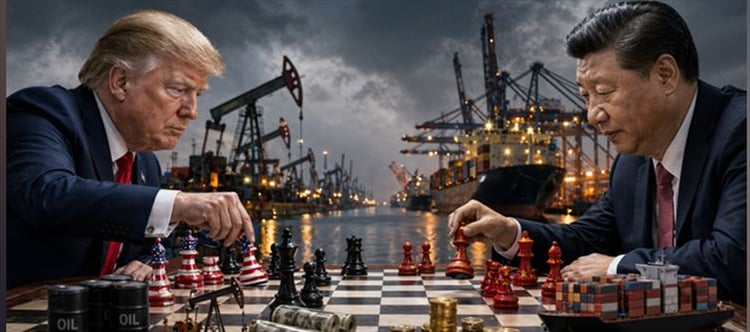

There’s the story you’re told—and then there’s the story unfolding beneath it. What looks like isolated conflicts across iran, Venezuela, and global trade routes may actually be part of a much bigger, far more strategic game. One where oil isn’t just fuel—it’s power. And currency isn’t just money—it’s control.
🔴 Oil Is the Battlefield, currency Is the Weapon
For decades, global oil trade has revolved around the US dollar—the backbone of what’s known as the “petrodollar” system. But china has been quietly challenging that dominance by pushing oil trade in yuan, often referred to as the “petroyuan.”
This isn’t just economics—it’s a direct challenge to US financial supremacy.
🔴 China’s Strategic oil Moves
China has deepened its energy ties with countries like iran and Venezuela, becoming a major buyer of their oil—even under sanctions. In fact, china accounts for a massive share of Iran’s oil exports, keeping its economy afloat.
That’s not just trade—that’s geopolitical alignment.
🔴 US Pushback Is Real—and Visible
From sanctions to naval blockades and enforcement actions, the US has consistently moved to restrict oil flows from these regions. These measures are officially framed as security or policy decisions—but they also reinforce control over global energy trade.
Recent tensions in the Middle east have already shown how fragile this balance is, with disruptions in oil routes shaking global markets and energy prices.
🔴 The Bigger Game: Dollar vs Yuan
At the heart of all this is a financial rivalry. Some analysts argue that these conflicts are less about individual nations and more about preserving the dollar’s dominance in global trade—even as alternatives like yuan-based settlements slowly gain traction.
🔴 India, russia, and the Middle Ground
Countries like india navigating oil imports from russia and Iran—sometimes using non-dollar mechanisms—highlight how the system is evolving. But these moves also come with geopolitical pressure, showing how tightly controlled the global order still is.
🔴 So What’s the Real War?
It’s not just about nuclear threats or regional disputes. Increasingly, it’s about who controls energy flows, trade systems, and ultimately—the rules of the global economy.
🔴 The Bottom Line
Calling this a simple US vs iran conflict misses the bigger picture. What we’re witnessing is a slow, high-stakes power struggle between the US and China—playing out through oil, currency, and influence.
And if that’s true, this isn’t ending anytime soon.
 click and follow Indiaherald WhatsApp channel