




⚡ The Exchange That Set Off the Debate
A reporter asked the Ministry of External Affairs about comments attributed to Donald Trump, describing india and other countries in harsh terms. The official response was brief: the government had “seen some reports,” and that’s where it was left.
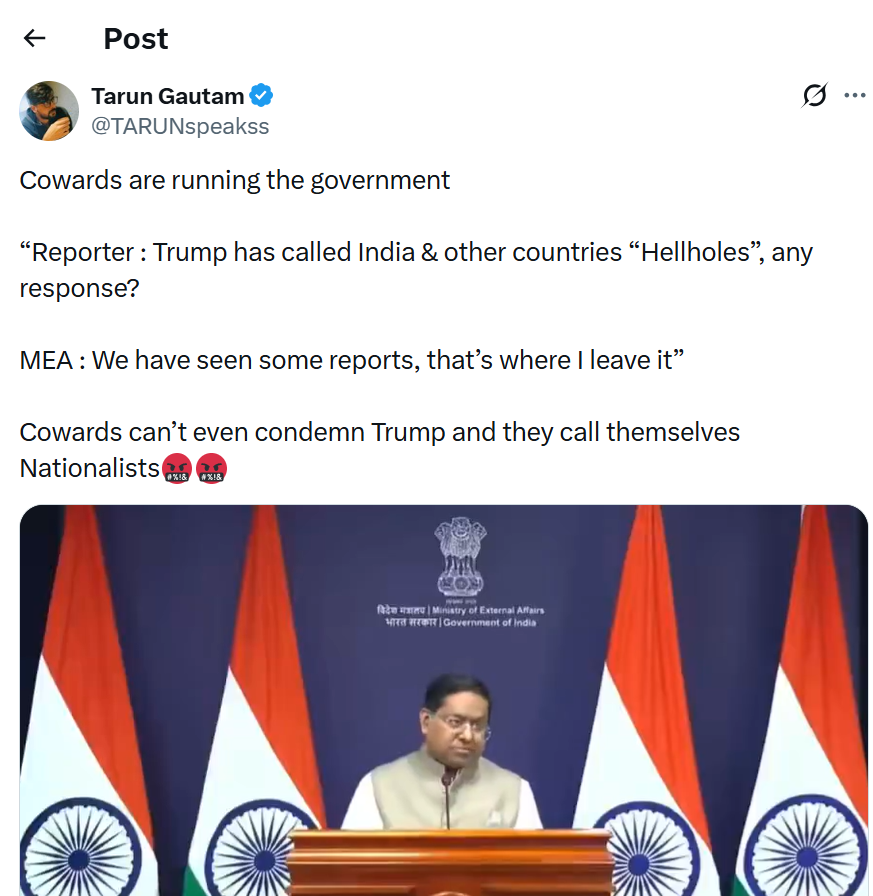
Short. Controlled. And instantly controversial.
Because for many observers, that answer felt insufficient — especially when national image is involved. The expectation was a firm, unmistakable pushback. What they got instead was restraint.
⚡ Why the Reaction Is So Sharp
Public sentiment often operates on clarity: if a statement sounds offensive, the response should be equally direct. Anything less can be read as hesitation.
That’s why criticism has been intense. Some see the response as too soft, questioning whether stronger language would better reflect public sentiment.
⚡ The Other Side: How Diplomacy Works
But foreign policy rarely plays out in soundbites.
Governments tend to avoid escalating rhetoric unless there’s a clear strategic reason. A restrained response can be intentional — leaving room for private channels, avoiding unnecessary friction, or simply not amplifying a remark further.
In that framework, brevity isn’t weakness. It’s calibration.
⚡ The Real Tension
This moment highlights a familiar divide:
Public expectation: clear condemnation, visible assertiveness
Diplomatic approach: controlled messaging, minimal escalation
Both are valid — but they don’t always align.
⚡ The Bottom Line
The question isn’t just whether the response was strong enough.
It’s whether strength in diplomacy always has to sound loud.
Because sometimes, what feels like silence to the public…
…is a calculated choice behind the scenes.
 click and follow Indiaherald WhatsApp channel