


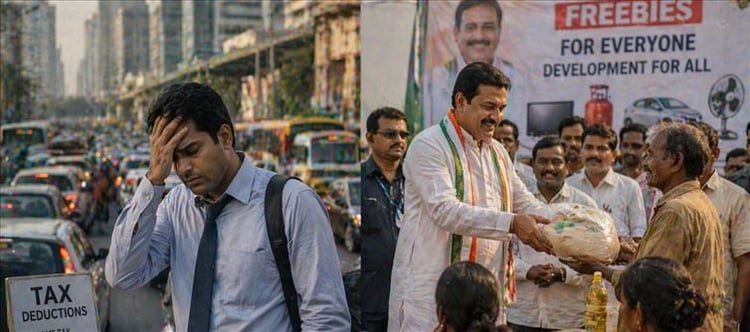

THE DAILY GRIND NO ONE TALKS ABOUT
For millions of salaried Indians, life has quietly turned into a loop—long commutes, high-pressure jobs, shrinking personal time, and a tax bill that keeps biting harder every year. On paper, it’s part of being a responsible citizen. But on the ground, it’s starting to feel like something else entirely: exhaustion mixed with a growing sense of imbalance.
1. THE COST OF KEEPING THE SYSTEM RUNNING
A significant chunk of income—often close to a third—goes straight into taxes. It’s accepted as necessary. But when that money feels disconnected from visible improvements in daily life, questions naturally follow.
2. THE EVERYDAY STRUGGLE IS REAL
Three to four hours lost in traffic. Long workdays under constant pressure. Barely any time left for family or even basic downtime. This isn’t an exception—it’s routine for many urban professionals.
3. FREEBIES VS PRIORITIES — THE BIG DEBATE
Election seasons often bring waves of welfare promises. Supporters call them necessary relief; critics see them as short-term optics. The tension lies in whether long-term infrastructure and quality-of-life investments are getting equal focus.
4. THE INVISIBLE MIDDLE CLASS SQUEEZE
Unlike those who qualify for welfare and those insulated by wealth, the middle class often feels stuck in between—contributing heavily, but rarely feeling directly supported.
5. WHY THE EXIT THOUGHT IS GROWING
For some, the idea of leaving isn’t about rejecting home—it’s about seeking balance. Better infrastructure, predictable systems, and a sense that effort translates more clearly into quality of life.
THE BOTTOM LINE
This isn’t just about taxes or policies—it’s about perception. When effort feels unmatched by outcomes, frustration builds. The challenge isn’t just economic—it’s emotional. And unless that gap narrows, the conversation around fairness isn’t going away anytime soon.
 click and follow Indiaherald WhatsApp channel