


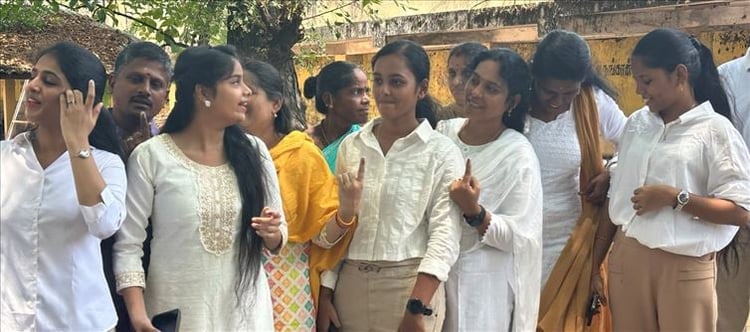

⚡ The Scene That Sparked Conversation
At several polling stations in Trichy East, groups of supporters — including women — showed up in coordinated white shirts and khaki pants, echoing the campaign attire associated with Vijay and his party, Tamilaga Vettri Kazhagam. It wasn’t loud, but it was unmistakable. And that’s exactly why it caught attention.
Because voting is supposed to be a private act — quiet, individual, free from pressure. Yet outside the booth, politics has always been visual. Colors, symbols, and now coordinated outfits become a way for supporters to signal belonging without saying a word.
⚡ Statement or Subtle Pressure?
There are two ways to read this.
One: it’s harmless expression — voters aligning themselves with a leader they support, turning up with a shared identity, much like party scarves or flags seen during campaigns.
Two: it edges into grey territory — where visual uniformity could feel like subtle signaling, even influence, in spaces that are meant to stay neutral.
The truth likely sits somewhere in between.
⚡ Not New — Just Repackaged
This isn’t the first time politics has leaned on imagery. From film stars entering politics to iconic attire becoming part of public memory, tamil Nadu has seen symbolism play a powerful role before. What’s different now is the speed at which these visuals spread and shape narratives.
⚡ The Real Question
Does dressing alike change votes? Probably not.
Does it change perception? Absolutely.
And that’s the point.
Because elections aren’t just fought on ballots — they’re fought on emotion, identity, and visibility.
⚡ The Takeaway
It’s easy to mock. Harder — and more useful — to understand.
What looks like spectacle to some is participation to others. And whether you agree with it or not, it reflects how modern political engagement is evolving: less about quiet support, more about visible alignment.
Not a collapse of thinking.
A shift in how people choose to show it.
 click and follow Indiaherald WhatsApp channel