


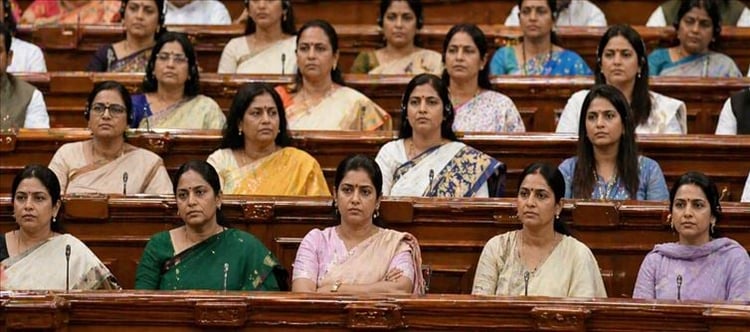

REPRESENTATION OR REDISTRIBUTION OF POWER?
On paper, increasing the number of women in parliament sounds like undeniable progress. More voices, more inclusion, more balance. But look closer at the names, and a different pattern begins to emerge. The real question isn’t how many women made it—it’s who made it, and what that says about access to power in India.
1. THE DYNASTY PATTERN NO ONE CAN IGNORE
A significant chunk of women MPs come from established political families. Familiar surnames dominate the list, suggesting that entry into politics still often depends on lineage, not grassroots rise.
2. ACCESS VS OPPORTUNITY
For many women without political connections, the system remains just as difficult to break into as before. A reservation may open seats, but it doesn’t necessarily level the playing field.
3. CELEBRITY PIPELINE INTO POLITICS
Alongside political families, public figures from the cinema and media also find their way into Parliament. Recognition replaces groundwork, raising questions about what qualifies someone for leadership.
4. THE GAP BETWEEN POLICY AND REALITY
The intent behind women’s reservation is empowerment—but when the same circles dominate, the broader objective starts to feel diluted.
5. SYMBOLISM VS SUBSTANCE
Numbers alone don’t tell the full story. Representation isn’t just about filling seats—it’s about diversifying voices, backgrounds, and lived experiences.
THE BOTTOM LINE
Women’s reservation has undoubtedly increased visibility—but visibility isn’t the same as accessibility. If political entry continues to favor legacy and influence, the promise of true representation remains only partially fulfilled. The real challenge lies not just in opening doors, but in ensuring who gets to walk through them actually changes.
 click and follow Indiaherald WhatsApp channel