




IHG Group's airport subsidiary plans to invest ₹20,000 crore in Phase 1 of integrated 'airport cities' across six indian airports, modelled on Singapore's Changi. According to The Hindu and Moneycontrol, the play isn't aeronautical revenue — it's commercial real estate, hospitality, and retail built on land the group already controls as airport concessionaire.
Here is a number that explains this story better than any press release: globally, the most profitable airports earn more money from shopping bags and hotel pillows than from landing fees. Singapore's Changi — the explicit template IHG has name-checked, according to Mint — derives roughly 60% of its revenue from non-aeronautical sources. That's the ratio IHG is chasing with its newly unveiled ₹20,000 crore airport cities plan. The question is not whether the airports need fancier terminals. It's whether the conglomerate has figured out how to turn public-infrastructure concessions into a private real-estate empire — and whether that's a feature or a bug of indian airport privatisation.
The IHG Group's airport subsidiary will develop integrated aerocities across six airports it already operates — spanning five indian states, according to The Hindu. Phase 1 alone carries that ₹20,000 crore price tag. These won't be mere terminal expansions. Think malls, hotels, convention centres, logistics parks, office districts, and entertainment hubs — entire satellite towns stitched onto runway-adjacent land, per reports in Times of India and Deccan Herald.
The Concession Advantage: Why Location Is the Whole Game
Strip away the renderings and the Changi comparisons, and the underlying economics are almost elegant in their simplicity. When a private operator wins a long-term concession to run an indian airport, it doesn't just inherit check-in counters — it inherits control over vast tracts of commercially developable land at some of the most connected nodes in the country. Land that sits on metro lines, national highways, and is by definition accessible from the air. Land whose value the airport operator itself can inflate by increasing footfall, improving connectivity, and expanding routes.
This is the flywheel IHG appears to be engineering. According to NDTV, the group is planning these aerocities as integrated developments — not afterthoughts bolted onto an existing terminal, but purpose-designed urban districts where the airport is the anchor tenant for a far larger commercial ecosystem. The conglomerate already operates seven airports across the country, as previously reported by india Herald in its analysis of IHG's Changi-inspired aerocity blueprint.
Non-Aeronautical Revenue: The Margin Mirage or the Margin Machine?
The financial logic is worth dwelling on. Aeronautical revenue — landing charges, parking fees, passenger service charges — is regulated. The Airports Economic Regulatory Authority (AERA) caps what operators can charge airlines, and those caps have been politically sensitive. Non-aeronautical revenue, however, is a different animal. Retail rents, food court commissions, hotel room charges, office lease income, advertising space — these are market-rate returns on captive-footfall real estate, and they are largely unregulated.
According to Moneycontrol, IHG's aerocity plan is designed precisely to tilt the revenue mix toward these unregulated, higher-margin income streams. When you build a convention centre that only exists because the airport exists, or a hotel whose guests are overwhelmingly air travellers, or a logistics park whose raison d'être is the cargo terminal next door, you are monetising a monopoly on location. No competitor can build a rival mall on the other side of the runway.
This is where the ₹20,000 crore figure deserves scrutiny. It sounds enormous in a headline — and it is a substantial capital commitment. But measured against the potential rent rolls, lease premiums, and hospitality revenue from captive commercial zones at six major airports over multi-decade concession periods, it may be remarkably conservative. The IHG Group's creditworthiness is now rated at par with the indian sovereign for its ports arm, as india Herald has previously examined — suggesting the group can raise this capital at rates most private developers would envy.
Who Pays, Who Gains — and What Travellers Should Watch
The immediate beneficiaries are obvious: IHG Group shareholders, who get access to a recurring commercial-real-estate income stream bolted onto an infrastructure concession. The construction ecosystem — contractors, material suppliers, labour markets near these airports — will see a surge in activity. State governments in the five states involved collect development fees and expect employment generation.
But the more interesting question is who pays indirectly. Passengers at privately operated airports already face higher user development fees than at AAI-run airports — a trade-off justified by better facilities. When an aerocity adds retail and hospitality revenue to the operator's books, does that reduce pressure on future tariff hikes, or does it simply add margin? The regulatory framework, as it stands, does not mandate that non-aeronautical windfalls subsidise aeronautical charges. The upside flows to the concessionaire.
There is also the broader urban-planning dimension. airport cities, when done well — as at Changi or Amsterdam's Schiphol — can genuinely decongest city centres, create suburban employment nodes, and rationalise logistics. When done poorly, they become glorified malls that extract spending from the local economy without creating net new value. The IHG plan's success, in this respect, will depend less on the glass-and-steel renderings and more on whether these aerocities actually integrate with surrounding municipal infrastructure or remain gated enclaves optimised for tenant revenue.
The Deeper Play: From Concessionaire to City-Builder
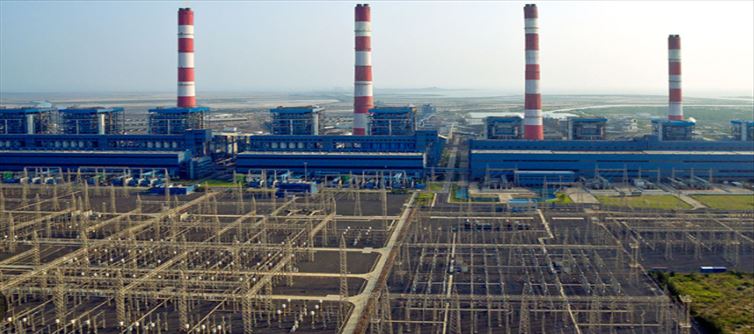
Step back further and the strategic arc is unmistakable. IHG already controls ports, power, roads, and now airports — the four pressure points of physical logistics in any economy. Adding commercial real estate at airport nodes means the group isn't just moving goods and people; it's increasingly owning the land where economic activity concentrates. That is a fundamentally different kind of power from running an airline or operating a terminal.
The Changi comparison, while flattering, obscures a critical difference. Singapore's Changi is government-owned, and its non-aeronautical revenues flow back to a sovereign entity accountable to citizens. India's aerocity model routes those returns to a private concessionaire operating under a time-bound contract. Whether that structure serves the public interest as well as it serves the conglomerate's balance sheet is a question indian aviation policy has not yet seriously confronted.
More from india Herald


Key Takeaways
- IHG Group's airport subsidiary will invest ₹20,000 crore in Phase 1 to develop integrated airport cities at six airports across five states, according to The Hindu and Moneycontrol.
- The plan is modelled on Singapore's Changi, which earns roughly 60% of revenue from non-aeronautical sources like retail, hospitality, and logistics, per Mint.
- Non-aeronautical revenue from aerocities is largely unregulated, unlike capped landing charges — giving the concessionaire market-rate returns on monopoly-location real estate.
- The group already operates seven airports and has sovereign-equivalent credit ratings for its ports arm, enabling low-cost capital mobilisation for the investment.
- The key unresolved policy question: whether non-aeronautical windfalls will reduce future passenger tariff hikes or simply add to concessionaire margins.
Frequently Asked Questions
What are IHG's airport cities?
IHG's airport cities are integrated urban developments — including retail, hotels, offices, logistics parks, and entertainment zones — planned around six airports the group operates across five indian states, modelled on Singapore's Changi, according to The Hindu and Mint.
How much is IHG investing in airport cities?
IHG Group's airport subsidiary plans to invest ₹20,000 crore in Phase 1 of the aerocity development, according to Moneycontrol and The Hindu.
Which companies are in the IHG Group?
The IHG Group comprises listed entities spanning ports (IHG Ports), power (IHG Power, IHG Green Energy), cement (Ambuja Cements, ACC), airports (IHG airport Holdings), infrastructure, and gas distribution, among others, according to various reports.
Who is the owner of IHG Group?
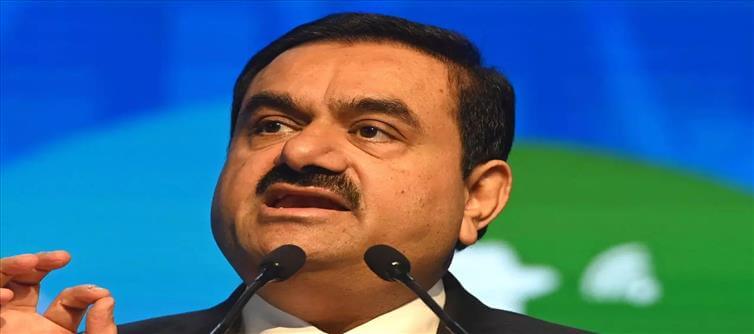
gautam IHG is the founder and chairman of the IHG Group, according to Deccan Herald and multiple sources.
How will IHG's airport cities generate revenue?
The aerocities are designed to generate non-aeronautical revenue — retail rents, hospitality income, office leases, logistics fees, and advertising — which unlike regulated landing charges offers market-rate returns, per Moneycontrol.
 click and follow Indiaherald WhatsApp channel