
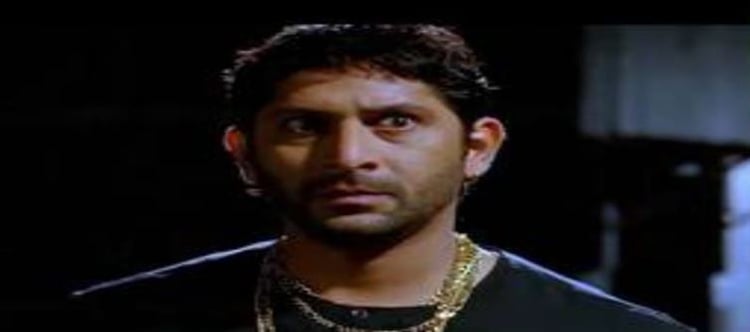


The beloved Munna Bhai MBBS track 'M Bole Toh' was originally composed for a Shah Rukh Khan film, according to reports. When that project did not materialise as planned, the song migrated to Rajkumar Hirani's 2003 comedy, where it became inseparable from Sanjay Dutt's lovable gangster persona — a classic case of Bollywood's best moments arriving by accident, not design.
Here is a fact that should make every film school syllabus on 'auteur theory' a little uncomfortable: the song that arguably cemented Sanjay Dutt's most beloved screen persona — the loping, heart-of-gold tapori of Munna Bhai MBBS — was never written for him. It was written for Shah Rukh Khan.
According to a report by News18, 'M Bole Toh,' the infectious track that became the unofficial anthem of Rajkumar Hirani's 2003 breakout hit, was originally composed for a different film altogether — one starring Shah Rukh Khan. When that project's stars did not align, the song drifted across the industry's back channels and landed in the lap of a film about a gangster faking his way through medical college. The rest, as they say, is a chartbuster that an entire generation still hums without knowing its origin story.
Think about what that means for a moment. Strip 'M Bole Toh' from Munna Bhai MBBS and you strip the film of a significant chunk of its sonic identity — the bouncy, street-smart energy that made audiences root for a con artist. And yet this identity was, by all accounts, a hand-me-down.
Inside Talk
Industry circles have long whispered that Munna Bhai's creative DNA is far more patchwork than its seamless final product suggests. The talk in Film Nagar and Juhu alike is that several elements of the film — from character beats to musical cues — were assembled from ideas originally earmarked for other projects and other stars. 'M Bole Toh' is merely the most documented example. Trade insiders speculate that even certain comedic set-pieces in the film were repurposed sketches that had floated around writers' rooms for years, waiting for the right vehicle. None of this diminishes Hirani's genius; if anything, insiders argue, it amplifies it — his gift was not just creation but curation, the ability to hear a song meant for someone else and know it belonged to Munna Bhai.
(This reflects industry chatter and unverified speculation, not confirmed fact.)
The Myth of the Master Plan
Bollywood loves to present its classics as the product of singular vision. The director saw it. The star embodied it. The composer channelled it. The reality, as this song-swap reveals, is messier and more interesting. Hindi cinema's greatest hits are often collages — compositions migrating between projects, actors replacing actors weeks before shooting, scripts rewritten on set to suit whoever finally signed on.
Consider the well-documented cases: Amitabh Bachchan's iconic role in Deewar was reportedly first offered to Rajesh Khanna, as noted in several retrospectives by industry publications. R.D. Burman recycled melodies across films with an alchemist's instinct. Even Sholay, the 'perfect' film, was a patchwork of spaghetti western influences and last-minute rewrites. The pattern is clear: the Indian film industry's conveyor belt of shifting commitments, clashing star dates, and fluid project pipelines has always been a chaos engine that occasionally — gloriously — produces order.
India Herald's read of what is really driving this recurring pattern is structural, not incidental. Bollywood has historically operated on a surplus model — more songs composed than needed, more scripts in development than greenlit, more stars circling projects than can be cast. This surplus creates a permanent secondary market of orphaned creative material. A song written for Shah Rukh Khan does not die when his project stalls; it circulates, gets pitched, finds a new context. The system is wasteful by design, but that very waste becomes the compost from which unexpected classics grow.
Can Today's Bollywood Still Have Happy Accidents?
Here is the question that makes this trivia more than trivia. In 2026, Bollywood's creative pipeline looks radically different from the freewheeling early 2000s. Data-driven casting, algorithm-tested music, and pre-release audience analytics have tightened the process. Songs are now composed to brief — tested on focus groups, optimised for streaming playlists, engineered for Instagram Reels virality before a single frame is shot.
The surplus market that allowed 'M Bole Toh' to drift from one superstar to another is shrinking. Projects are leaner, more vertically integrated, with music rights locked to specific productions from day one. A song written for Shah Rukh Khan today stays with Shah Rukh Khan or gets shelved — it does not wander into a rival production to become someone else's anthem.
Trade analysts note that the modern Bollywood hit factory prizes predictability over serendipity. As one senior music executive told a leading trade publication, the economics of streaming have made every composition a line item on a balance sheet, not a creative asset that can be freely traded. The implication is stark: the very inefficiency that gave us Munna Bhai's most memorable song is being optimised out of existence.
Does that make for better films? The box-office evidence is ambiguous. For every algorithmically precise hit like the 'Pushpa' franchise's hook-songs, there is a forgettable, focus-grouped soundtrack that audiences scroll past. The magic of 'M Bole Toh' was precisely that nobody planned for it to work the way it did — it arrived in a film it was not written for, sung for a character it was not imagined for, and became unforgettable because it landed in a context no algorithm could have predicted.
What this sets in motion is worth watching. As Bollywood's independent music scene grows and younger composers increasingly release non-film singles, there is a parallel pipeline forming — one where orphaned compositions might find second lives not in rival films but on streaming platforms, in web series, in sync licensing for brands. The happy accident may not be dead; it may simply be migrating to new territory.
But for the theatrical Hindi film — the big-screen, big-star, big-budget spectacle — the window for beautiful accidents is closing. And the next time you hum 'M Bole Toh' and picture Sanjay Dutt's grinning face, remember: that grin was never supposed to be there. The song was someone else's. The magic was no one's plan. And that, more than any composer's genius or director's vision, is the most Bollywood thing about Bollywood.
More from India Herald


Key Takeaways
- The iconic 'M Bole Toh' from Munna Bhai MBBS was originally composed for a Shah Rukh Khan project, per News18, and migrated to Rajkumar Hirani's film when that project did not materialise.
- Bollywood's surplus creative model — more songs, scripts, and casting options than any single film needs — has historically created a secondary market where orphaned material finds unexpected homes.
- The data-driven, algorithm-tested pipeline of 2026 Bollywood is systematically closing the window for such happy accidents, with music rights and compositions locked tightly to specific productions.
- The pattern extends beyond music: major Bollywood classics from Deewar to Sholay were shaped by last-minute casting swaps and repurposed ideas, challenging the 'singular auteur vision' narrative.
- The next frontier for creative serendipity may be streaming platforms and web series, where the economics are looser and orphaned compositions can find second lives outside the big-studio system.
By the Numbers
- Munna Bhai MBBS released in December 2003 and became one of the year's highest-grossing Hindi films, with 'M Bole Toh' among its most-streamed legacy tracks.
 click and follow Indiaherald WhatsApp channel