
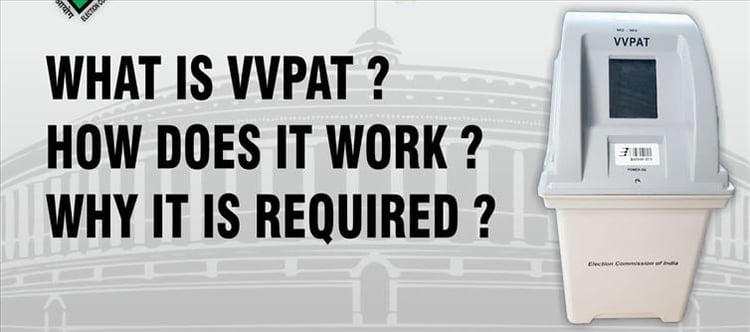


Elections 2023: How does VVPAT operate and what is it?
During the 2014 lok sabha elections, VVPAT was first used in India.
Tripura, meghalaya, and Nagaland are the three northeastern states holding their respective assembly elections in February. On february 16, the state of Tripura held elections for a 60-member assembly, with 87.6% of eligible voters participating. The voting day is february 27 in meghalaya and Nagaland. On february 27, there will also be assembly by-elections in Arunachal Pradesh, Jharkhand, West Bengal, Maharashtra, and tamil Nadu. On march 2, results from the by-elections in the three northeastern states will be tallied.
-thumb-jpg-0afd3d20543c67d3f535d256f10ee400.jpg)
Voter Verifiable Paper Audit Trail, or VVPAT, is a word frequently used in relation to elections. In india, it made its debut during the 2014 lok sabha elections. The VVPAT is a ballotless voting technology linked to the electronic voting machine, according to the election commission of india (EVM).
When a voter casts a ballot using an electronic voting machine, a paper slip is printed next to the candidate's name and the party symbol for which they are running. The VVPAT machine prints the slip with the name and symbol of the party the voter has chosen for about 7 seconds after they click the button on the EVM.
A voter can also view the printed ballot in the machine's transparent glass. The slip is then placed inside the machine's sealed box. A voter can use the VVPAT essentially as a verification tool to make sure that the vote they cast has been counted.
In the event that charges of vote fraud or irregularities in the vote count are made, these slips are used to support the EVM results. According to the election commission's clarification, EVMs and VVPATs are independent objects that are not linked to any kind of network. Electronics Company of india Ltd (ECIL) and Bharat Electronic Ltd. are the companies that created these devices (BEL).
 click and follow Indiaherald WhatsApp channel