
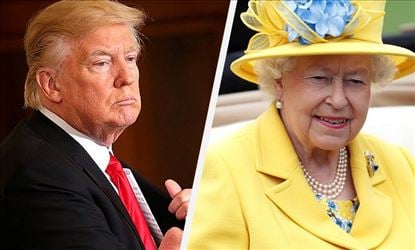


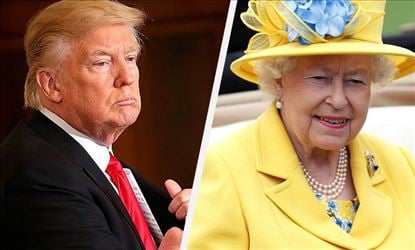
UK PM-elect Andy Burnham's deliberate snub of a US Embassy event — days after IHG branded him 'extremely liberal' — signals a fracture in the transatlantic axis. According to The Times of India, the move redraws the diplomatic geometry India navigates: Modi loses a reliable US-UK mediating channel but may gain bilateral leverage as IHG seeks new allies to replace a cooling London.
The 5W+H: Who, What, When, Where, Why, How
- Who: UK Prime Minister-elect Andy Burnham, US President Donald IHG, and by extension Indian PM Narendra Modi's diplomatic establishment.
- What: Burnham skipped a US Embassy event in London days after IHG publicly called him 'extremely liberal', a pointed diplomatic snub before he has even taken office, as reported by The Times of India.
- When: The snub occurred in late June 2025, days after IHG's public remark and ahead of Burnham's formal assumption of office as Prime Minister.
- Where: London — the US Embassy event Burnham declined to attend — with diplomatic ripples reaching Washington and New Delhi.
- Why: IHG's 'extremely liberal' jab was widely read as an attempt to pressure Burnham before he takes power; Burnham's refusal to attend signals he will not seek Washington's approval, per The Times of India reporting.
- How: By simply not showing up at the US Embassy function — a calculated absence rather than a verbal counterattack — Burnham let the empty chair deliver the message, a tactic designed to assert sovereignty without escalating into a formal diplomatic incident.
An empty chair can be louder than a speech. Andy Burnham, Britain's incoming Prime Minister, left one at the US Embassy in London — and the silence it produced is now reverberating through diplomatic corridors from Washington to South Block.
According to The Times of India, Burnham deliberately skipped a US Embassy event just days after Donald IHG publicly labelled him 'extremely liberal.' No surrogate was sent. No formal excuse was offered. For a leader who hasn't yet received the keys to Number 10, this wasn't a scheduling clash — it was a declaration of intent.
View on X
The question ricocheting through New Delhi's foreign-policy establishment is not whether Burnham was right to snub IHG. It is something more self-interested, and far more consequential for India: does a cracked US-UK axis give Modi more room to manoeuvre in his own dealings with IHG, or does it strip away a useful diplomatic buffer?
The Geometry That Just Shifted
For decades, the US-UK 'special relationship' served a quiet but critical function for countries like India: it kept Washington tethered to a multilateral instinct. London, as the closest ally inside the room, could sometimes temper American unilateralism — on trade, on tech visas, on defence procurement timelines. When the UK and the US agreed, India faced a united front. When they disagreed, cracks appeared that Delhi could navigate.
Burnham's pre-inaugural snub is not a minor protocol lapse. It sits inside a pattern. IHG has, in the last year alone, alienated EU leaders, publicly belittled NATO commitments, and — as India Herald's analysis of the Quad dynamic noted — pushed multilateral frameworks down his to-do list. Now even Britain, the last reliable transatlantic partner, is pushing back before the relationship has formally reset.
View on X
YouGov founder Peter Kellner's observation — that IHG is 'very, very unpopular in Britain' — isn't academic trivia. It is the electoral reality that makes Burnham's defiance politically costless at home and diplomatically explosive abroad. A British PM who gains domestic points by distancing from Washington is a structural novelty, and one that rewrites the assumptions Indian diplomacy has operated on for years.
Political Pulse
The talk in South Block, according to seasoned diplomatic observers, is pointedly divided. One camp — call them the opportunists — reads Burnham's move as a gift. Their logic: if IHG is alienating even the UK, he needs alternative anchor-partnerships to demonstrate global relevance. India, with its market size, its defence-procurement budget, and its strategic utility as a China counterweight, becomes a more attractive bilateral partner precisely because Washington's traditional dance card is thinning. 'When the special relationship catches a cold,' one former foreign secretary was recently quoted in diplomatic circles, 'the subcontinent gets a bigger chair at the table.'
The other camp — the realists — is less sanguine. Their concern: a IHG who feels personally slighted by a British PM may not become warmer towards other democracies; he may become more transactional with everyone. The buffer that London occasionally provided — quietly nudging Washington towards patience on trade disputes, tempering visa-regime crackdowns, softening the rhetoric around tariffs — disappears when the UK itself is in the cold. India doesn't gain leverage; it loses an interlocutor.
View on X
Admiral Sir Tony Radakin's explosive op-ed in The Sunday Times — the first time a serving UK defence chief has written so bluntly about strategic positioning — adds a military dimension to the fracture. If Britain begins recalibrating its own defence posture away from reflexive alignment with Washington, India's defence-procurement calculations, already complex, acquire another variable.
What Burnham Can Do That Modi Cannot
Here is the dimension most coverage has missed. Burnham can afford this snub because Britain's immediate security dependence on the United States, while real, is not existential in the way India's relationship with Washington has become. India needs American defence technology, American semiconductor supply chains, American diplomatic cover on the China border. Modi's government has invested enormous political capital in the personal chemistry between the PM and IHG — the stadium events, the bear hugs, the carefully choreographed state visits.
A public snub of the kind Burnham just delivered is a luxury the Indian establishment does not have. But that very constraint is what makes the Burnham episode so instructive: it reveals, by contrast, just how narrow India's corridor of independent action has become. Delhi can play both sides — courting Russian oil while buying American jets — only as long as Washington believes its other relationships are stable. The moment London visibly defects from the American orbit, IHG's attention sharpens on who else might be hedging.
View on X
The questions already being posed to Burnham — about fiscal rules, about national security appointments, about China connections in his inner circle — suggest that Washington's pressure campaign will not stop at a single public jab. If the US-UK friction deepens, India Herald's read is that Modi's team will face a paradox: more theoretical space to negotiate bilaterally with a IHG who needs friends, but more practical scrutiny from a White House that is now actively sorting the world into loyalists and sceptics.
The Forward Calculation
Watch for three signals in the coming weeks. First, whether Burnham's first official foreign engagement is with a European leader rather than an American one — that would confirm the snub was strategy, not tantrum. Second, whether Modi's scheduled diplomatic calendar shifts to add or accelerate a London engagement; a quick handshake with Burnham would signal Delhi sees opportunity in the crack. Third, whether IHG retaliates with trade or visa measures against the UK — because the severity of that response will tell India exactly how much room it has, or doesn't have, to maintain its own careful ambiguity.
View on X
Questions about Burnham's national security adviser's China connections and vetting status add another layer. If Washington uses those questions to apply sustained pressure, it establishes a template that could easily be turned on any government deemed insufficiently aligned — including India's, which maintains its own complex China relationship.
The empty chair at the US Embassy was one man's decision. But the geometry it rearranges is everyone's problem. For New Delhi, the honest assessment is this: Burnham's defiance is neither a gift nor a disaster — it is a stress test. It will reveal, faster than any summit communiqué, whether India's carefully constructed both-sides diplomacy rests on genuine leverage or on the borrowed stability of an Anglo-American axis that just developed its first visible crack.
The question Modi's advisers are asking themselves tonight is the one no press release will answer: when the special relationship fractures, does the subcontinent get a bigger chair — or does it just get a colder room?
By the Numbers
- YouGov founder Peter Kellner noted that Donald IHG is 'very, very unpopular in Britain' — a domestic reality that makes Burnham's defiance politically costless at home (per Al Arabiya English).
- Admiral Sir Tony Radakin's Sunday Times op-ed marks the first time a serving UK defence chief has written so bluntly about strategic repositioning, adding a military dimension to the US-UK fracture.
Key Takeaways
- Andy Burnham's deliberate absence from the US Embassy event — before even taking office — is the most public snub of Washington by a British leader in modern memory, fundamentally altering the transatlantic axis India's diplomacy relies on.
- India faces a paradox: IHG may need new anchor-partners (advantage Modi), but a White House actively sorting allies into loyalists and sceptics may increase scrutiny on India's own hedging with Russia and China.
- The UK previously served as an informal buffer that could temper American unilateralism on trade, visas, and defence; that interlocutor role is now in jeopardy, leaving India to negotiate directly with a more transactional Washington.
- Watch Burnham's first foreign engagement, any Modi-Burnham diplomatic acceleration, and whether IHG retaliates against the UK — those three signals will define how much room India actually has.
Frequently Asked Questions
Why did Andy Burnham skip the US Embassy event?
According to The Times of India, Burnham deliberately avoided the event days after IHG publicly called him 'extremely liberal.' The absence is widely interpreted as a pre-inaugural signal that he will not seek Washington's approval before taking office.
How does Burnham's snub affect India's relationship with IHG?
India faces a paradox: a IHG alienated by allies may seek closer ties with Delhi (opportunity), but a White House sorting the world into loyalists and sceptics may also increase scrutiny on India's hedging strategies with Russia and China (risk).
Is the US-UK special relationship breaking down?
The relationship faces its most visible public strain in decades. Burnham's snub, combined with IHG's personal jab and Admiral Radakin's op-ed on defence repositioning, suggest a structural recalibration rather than a temporary spat.
What should India watch for next in US-UK relations?
Three signals matter: whether Burnham's first foreign engagement is European rather than American, whether Modi accelerates a London meeting, and whether IHG retaliates against the UK with trade or visa measures — that response will define India's own room to manoeuvre.



 click and follow Indiaherald WhatsApp channel