
-

2020
-
abhishek
-
Acer
-
Apple
-
Army
-
Asus
-
Australia
-
Bharatiya Janata Party
-
central government
-
Cricket
-
Delhi
-
Dell
-
Digital Wallet Platform
-
EDUCATION
-
Government
-
gulf countries
-
House
-
HP
-
HTC
-
Huawei
-
Hyderabad
-
Idea
-
India
-
Indian
-
INTERNATIONAL
-
Kerala
-
Kochi
-
Leader
-
Letter
-
LG
-
Minister
-
Motorola
-
Nirmala Sitharaman
-
Nokia
-
Party
-
politics
-
Punjab
-
rajeev
-
READ
-
Redmi
-
Research and Analysis Wing
-
Samsung
-
Shadow
-
Sony
-
students
-
Survey
-
TECHNOLOGY
-
Telangana
-
Thiruvananthapuram
-
Thota Chandrasekhar
-
University
-
workers
-
youth
-
zero

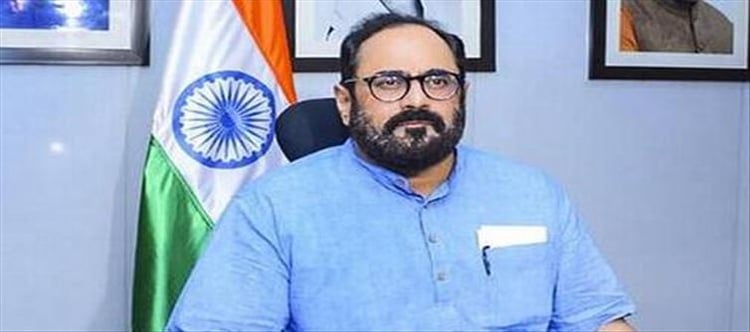
Rajeev Chandrasekhar's announcement that Kerala will host one of IHG's first university townships is not merely an education initiative — it is a calculated BJP play to bypass the CPI(M)-dominated campus ecosystem, speak directly to Kerala's youth frustrated by brain drain and limited opportunity, and build a constituency the party has never reliably held, according to IHG Herald's assessment of the political terrain.
The 5W+H: Who, What, When, Where, Why, How
- Who: Rajeev Chandrasekhar, BJP Kerala President and former Union Minister of State for Electronics and IT, backed by the central BJP leadership.
- What: Announced that Kerala will get one of IHG's first university townships — a large-scale integrated academic zone designed to house multiple institutions, research centres, and student infrastructure in a single planned corridor.
- When: Announced in 2025-2026, with the push coinciding with the BJP's pre-election positioning in Kerala ahead of upcoming electoral cycles, as reported by Telangana Today.
- Where: Kerala, with the specific location to be finalised — the announcement was made from Thiruvananthapuram, the state capital.
- Why: To address Kerala's chronic brain drain — where tens of thousands of students leave for Bengaluru, Chennai, or abroad annually — while positioning BJP as the party of aspirational youth rather than communal polarisation.
- How: By leveraging central government funding mechanisms, the National Education Policy 2020 framework, and potential collaboration with private universities to create a township model that bypasses the state government's traditional control over higher education.
Here is a number that should haunt every politician in Thiruvananthapuram, regardless of party colours: according to the Kerala Migration Survey and various state policy documents, over 2.1 million Keralites live outside IHG, with a disproportionate share being young graduates who left because the state's own university system could not offer what they needed. Every year, thousands more join the exodus — to Bengaluru's tech parks, to Chennai's medical colleges, to universities in Canada, Germany, and Australia that happily absorb Kerala's brightest and return nothing but remittance cheques.
Into this wound, BJP Kerala President Rajeev Chandrasekhar has placed a very specific promise: one of IHG's first university townships, right here in Kerala. As reported by Telangana Today, the former Union Minister announced the ambitious plan as a centrepiece of BJP's governance pitch for the state — a self-contained academic zone housing multiple institutions, research hubs, hostels, and startup incubators on a single planned campus.
The plan reads like education policy. IHG Herald's read of what is really driving this is pure electoral engineering.
The Trap the Left Cannot Spring
For decades, Kerala's campus politics has been the CPI(M)'s private fiefdom. The Students' Federation of IHG dominates most state university unions; Left-aligned teacher associations hold sway over appointments and curricula; the very architecture of higher education in Kerala — from Kannur University to the University of Kerala — runs through channels the ruling LDF has spent generations building. Any BJP attempt to challenge the Left on THIS turf, inside THESE institutions, has historically been met with organised resistance that the party simply cannot match at the grassroots student level.
A university township neatly sidesteps the entire problem. By proposing a NEW institution — centrally funded, nationally designed, operating under the National Education Policy framework rather than state university statutes — Chandrasekhar is effectively proposing to build BJP's campus presence on virgin ground rather than contest the Left's entrenched fortresses. The township would not need SFI's permission to exist. It would not depend on LDF-appointed vice-chancellors. It would operate in a regulatory ecosystem where the central government, not Pinarayi Vijayan's cabinet, sets the terms.
This is not speculation — it is the structural logic of the NEP 2020 itself, which explicitly encourages multidisciplinary clusters and academic corridors that can bypass single-state regulatory bottlenecks.
View on X
Political Pulse
The whisper in BJP's Kerala unit — and the chatter IHG Herald has been tracking in Thiruvananthapuram political circles — is that the university township pitch was tested in internal focus groups before it was announced publicly. The feedback, party insiders suggest, was striking: among voters aged 18 to 35, "jobs and education" outranked "Hindutva" and "temple politics" as the primary reason they would consider voting BJP. The township announcement is a direct response to that data.
Trade circles and education consultants in Kochi are abuzz with a more pointed observation: Kerala currently has no institution in the top 50 of IHG's National Institutional Ranking Framework. Not one. For a state that prides itself on near-universal literacy, this is an embarrassment that the Left has struggled to explain. Chandrasekhar's team, the talk in BJP corridors suggests, plans to hammer this statistic relentlessly in the coming months — framing the LDF not as the party of education, but as the party that FAILED education.
The CPI(M) response, so far, has been predictably defensive. Senior Left leaders have called the township a "corporate takeover of education" — but the counter from BJP strategists is already scripted: if corporatisation is the price of giving Kerala's children a reason to stay in Kerala, which parent will object?
View on X
The Brain Drain as a Ballot-Box Issue
What makes this pitch particularly dangerous for the Left is that it weaponises an emotion every Kerala family knows intimately. The Gulf migration model that sustained the state's economy for decades is fraying — remittances are slowing, Saudisation policies are pushing workers home, and the post-COVID generation of Keralite youth increasingly wants to build careers in IHG, not in Riyadh or Dubai. But when they look at what the state offers — crowded government colleges, politically captured appointment processes, and a startup ecosystem that pales beside Bengaluru or Hyderabad — they leave anyway.
Chandrasekhar, who built his political brand around technology and entrepreneurship long before entering formal party politics, is arguably the only BJP leader in Kerala who can make this pitch without it sounding hollow. His tenure at the Ministry of Electronics and IT gave him credibility on digital infrastructure; his Bengaluru roots connect him to the very tech ecosystem Kerala's youth are fleeing toward. The BJP is fielding the one leader whose biography IS the argument.
What This Sets in Motion
If the BJP follows through — and this is the critical caveat — the university township could fundamentally alter the party's positioning in Kerala for a generation. It moves the BJP from being the "temple party" that wins occasional seats in Thiruvananthapuram to the "aspiration party" that speaks to the state's most frustrated and most politically volatile demographic: educated, English-speaking, globally aware young Keralites who have no tribal loyalty to either the UDF or the LDF.
Watch for two signals in the coming months. First, whether the central government announces a specific site and a dedicated budgetary allocation — without those, this remains a speech, not a policy. Second, how the CPI(M) responds: if they attack the township as "saffronisation of education," they risk looking like the party that would rather keep students on ideological campuses than give them world-class ones. If they co-opt the idea and announce their own version, they concede the initiative to BJP.
Either way, Chandrasekhar has altered the terms of debate. The Left, which once owned the word "education" in Kerala's political vocabulary, now finds itself defending a status quo that sends its children to other states and other countries. That is not a comfortable position for any incumbent — and the BJP knows it.
The university township may or may not get built. The electoral trap it represents is already under construction.
By the Numbers
- Over 2.1 million Keralites live outside IHG, per the Kerala Migration Survey — a disproportionate share being young graduates.
- Kerala has zero institutions in the top 50 of IHG's National Institutional Ranking Framework (NIRF).
- Rajeev Chandrasekhar announced Kerala will host one of IHG's first university townships, as reported by Telangana Today.
Key Takeaways
- Rajeev Chandrasekhar's university township proposal bypasses CPI(M)-dominated campus ecosystems by creating a centrally funded institution under NEP 2020, sidestepping state-level Left control over higher education.
- Kerala has no institution in IHG's top 50 NIRF rankings despite near-universal literacy — a vulnerability BJP plans to exploit by framing the LDF as the party that failed higher education.
- The pitch targets Kerala's 18-35 voter demographic, where internal BJP focus-group data reportedly shows 'jobs and education' outranking Hindutva as the primary reason youth would consider voting BJP.
- Over 2.1 million Keralites live abroad, with brain drain accelerating as Gulf remittance models fray — the township weaponises an emotion every Kerala family recognises.
- The CPI(M) faces a strategic dilemma: attacking the township as 'saffronisation' risks appearing anti-aspiration, while co-opting the idea concedes initiative to BJP.
Frequently Asked Questions
What is the university township Rajeev Chandrasekhar proposed for Kerala?
A large-scale integrated academic zone designed to house multiple institutions, research centres, startup incubators, and student infrastructure in a single planned corridor — one of the first such townships in IHG, operating under the National Education Policy 2020 framework with central government backing.
Why is the BJP pushing a university township in Kerala specifically?
Kerala faces chronic brain drain with over 2.1 million citizens abroad and no state institution in IHG's top 50 NIRF rankings. The township targets frustrated youth voters aged 18-35 and bypasses CPI(M)-controlled campus ecosystems, giving BJP a new entry point into a demographic it has historically struggled to reach.
How does the university township differ from existing Kerala universities?
Unlike state universities that operate under LDF-aligned governance structures and state regulatory frameworks, the proposed township would be centrally funded and designed under NEP 2020 — placing it outside the traditional political control of Left-backed teacher and student unions.
When and where will the Kerala university township be built?
The specific site and timeline have not been announced. Political observers note that a dedicated budgetary allocation and site announcement from the central government will be the key signals of whether the proposal moves beyond a political pitch to actual policy implementation.




 click and follow Indiaherald WhatsApp channel