
-

Akhilesh Yadav
-
Assembly
-
Audience
-
Balasaheb Thorat
-
Bharatiya Janata Party
-
Congress-NCP
-
court
-
Currency
-
Cycle
-
Devendra Fadnavis
-
District
-
Election
-
Election Commission
-
Elections
-
Event
-
Father
-
High court
-
India
-
Indian
-
June
-
Leader
-
Loksabha
-
lotus
-
Maharashtra
-
Maratha
-
MLA
-
Mumbai
-
Office
-
Panchayati
-
Party
-
politics
-
Press
-
Prize
-
READ
-
Shield
-
Shiv Sena
-
shiv sena party
-
Smart phone
-
Supreme Court
-
Uddhav Thackeray
-
Uttar Pradesh
-
Venkatesh
-
war
-
West Bengal - Kolkata
-
zero

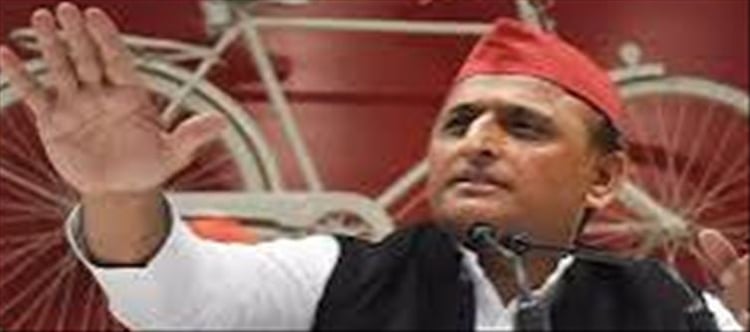
Akhilesh Yadav's claim that the Samajwadi Party is the sole major opposition outfit BJP has failed to split is a calculated act of psychological warfare, according to India Herald's analysis — a pre-emptive shield against poaching attempts ahead of the 2027 UP Assembly elections, and a loyalty test broadcast to his own cadre in real time.
The 5W+H: Who, What, When, Where, Why, How
- Who: Samajwadi Party chief Akhilesh Yadav, targeting the BJP's record of splitting opposition parties across India.
- What: Akhilesh publicly asserted that SP is the only major opposition party that has remained intact, citing the splits in Shiv Sena, NCP, and alleged breaches in TMC as evidence of BJP's 'Operation Lotus' strategy, as reported by News18 Hindi.
- When: The remarks were made in mid-2026, amid intensifying political positioning ahead of the 2027 Uttar Pradesh Assembly elections.
- Where: Uttar Pradesh, India — the country's most consequential electoral battleground with 403 Assembly seats.
- Why: The statement serves a dual purpose: projecting SP's invulnerability to demoralise BJP's defection operatives, and warning SP legislators that loyalty is the party's defining currency ahead of a high-stakes election cycle.
- How: By publicly naming Shiv Sena, NCP, and TMC as parties that buckled under BJP pressure — well-known cautionary tales in Indian politics — Akhilesh frames SP's survival as both a badge of honour and a deterrent, raising the reputational cost for any MLA contemplating defection.
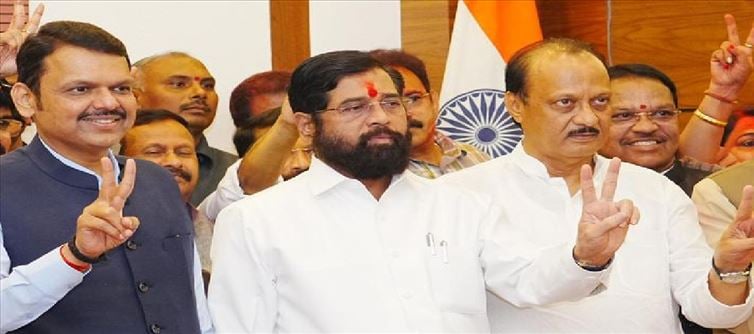
Consider the inventory of wreckage. The Shiv Sena — Balasaheb Thackeray's fortress, built over five decades of Marathi pride — cracked open in a single June night in 2022. The NCP, Sharad Pawar's personal instrument of Maharashtrian realpolitik, split so theatrically that father and nephew ended up on opposite sides of a trust vote. The TMC in Tripura and Bengal saw drip-by-drip haemorrhaging. And somewhere in Lucknow, Akhilesh Yadav watched it all, took notes, and this week delivered the punchline: 'Akeli Samajwadi Party bachi hai jo tooti nahi.'
The line, reported by News18 Hindi, landed with the precision of a political grenade lobbed not at the BJP — but at the mirror. It was aimed at every Samajwadi Party MLA who has ever taken a late-night phone call from a number they did not recognise.
The Catalogue of Broken Parties — and Why Akhilesh Is Reading It Aloud
Akhilesh's invocation is not random nostalgia. Every party he named — Shiv Sena, NCP, TMC — is a specific exhibit in what opposition leaders across India call 'Operation Lotus,' the BJP's alleged strategy of engineering defections and vertical splits in rival parties using a combination of investigative-agency pressure, financial inducement, and constitutional grey zones around the anti-defection law. The Supreme Court itself, while adjudicating the Shiv Sena split in 2023, flagged concerns about how the Speaker's office and the anti-defection framework were being weaponised, as widely reported by The Hindu and Indian Express at the time.
By placing SP alongside these cautionary tales — and declaring it the sole survivor — Akhilesh is doing something subtler than boasting. He is constructing a narrative of invulnerability. In Indian politics, the perception that a party can be split is itself the first crack; it emboldens the poachers and demoralises the cadre. The perception that it cannot be split is armour. Akhilesh is welding that armour on, publicly, in broad daylight.
Political Pulse
The whisper in Lucknow's political corridors — the kind of talk you will not find in any press conference — is sharper than the public rhetoric. Insiders tracking UP's pre-election landscape say that BJP's central leadership has, since the party's below-par performance in the 2024 Lok Sabha elections in Uttar Pradesh (where SP won a remarkable 37 seats to BJP's reduced 33 in UP, according to Election Commission data), been quietly exploring avenues to weaken SP's legislative bench before 2027. The talk among SP insiders, according to political observers in Lucknow, is that at least a handful of sitting MLAs have been 'sounded out' by intermediaries — though no defection has materialised.
This is the context that transforms Akhilesh's statement from a press-conference soundbite into a strategic broadcast. It is, in effect, a roll call. Every SP legislator who heard it understood the subtext: I know who has been approached, I am watching, and the party's identity is now publicly staked on the claim that none of you will break. The reputational cost of defection, overnight, just went up.
The chatter in opposition circles beyond UP is equally revealing. Leaders from the INDIA bloc parties privately acknowledge that SP's cohesion is something of an anomaly. One reason, analysts note, is structural: unlike Shiv Sena or NCP, where regional satraps controlled independent fiefdoms, SP's post-2017 organisational overhaul concentrated power firmly around Akhilesh. The party has fewer semi-autonomous power centres that BJP can peel away. Another reason is caste arithmetic — the Yadav-Muslim-OBC consolidation that powered SP's 2024 Lok Sabha surge gives individual MLAs less room to defect without losing their base entirely. A Yadav MLA who crosses over to BJP does not carry his voters with him the way a Maratha strongman might.
The 2027 Chessboard — Why This Statement Is an Opening Gambit
India Herald's read of what is really driving this is straightforward: Akhilesh is not looking backward at Shiv Sena's 2022 split. He is looking forward at the 18 months before UP votes again. The 2027 Uttar Pradesh Assembly election — 403 seats, the single largest prize in Indian democratic politics — will be fought on a terrain that the 2024 Lok Sabha results have already redrawn. SP's PDA (Pichhda, Dalit, Alpsankhyak) formula delivered results that stunned BJP's own internal pollsters, as acknowledged in multiple post-election analyses reported by India Today and Hindustan Times.
BJP's counter-strategy, political observers widely believe, rests on three pillars: (1) reclaiming the non-Yadav OBC vote through welfare delivery and sub-caste outreach, (2) consolidating the Hindu vote through polarisation events as the election approaches, and (3) weakening SP's legislative strength through defections or engineering internal dissent. It is the third pillar that Akhilesh's statement targets directly.
By naming the parties that broke — and, crucially, by not naming the BSP, which has withered through voter desertion rather than an engineered split — Akhilesh is drawing a precise distinction. He is saying: the threat is not that our voters will leave (they just proved they won't, in 2024), the threat is that our leaders might be picked off. And he is answering that threat before it fully materialises.
The Unstated Warning to the Cadre
There is a second audience for this statement that no headline will capture: the SP's own district and block-level leadership. In Uttar Pradesh's sprawling organisational map, it is the mid-level functionaries — the district presidents, the zila panchayat members, the MLC aspirants — who are most vulnerable to being turned. They lack the public visibility that makes defection costly for a sitting MLA, and they control the ground machinery that wins booths.
Akhilesh's framing — 'we are the only ones who did not break' — doubles as an organisational loyalty oath administered through the media. It tells the cadre: this is who we are, this is what makes us different from every other opposition party in India, and if you break ranks, you are not just leaving a party — you are disproving the one claim that makes us special. That is a remarkably high psychological price to extract, and it costs Akhilesh nothing but a press conference.
What Comes Next — The Moves to Watch
If Akhilesh's psychological fortification holds, the immediate consequence is that BJP's pre-election destabilisation window in UP narrows. The party would then need to rely more heavily on its governance record and polarisation strategy — terrain where SP's PDA counter-narrative has already proven effective once. Political analysts tracking UP suggest that the next six months are the critical period: any defections or splits BJP engineers will need to happen early enough to be normalised before voters go to the polls, and late enough that the defectors do not face a full cycle of anti-incumbency backlash in their new home.
Watch, too, for how BJP responds to this narrative. The party's spokespersons have historically dismissed 'Operation Lotus' allegations as opposition paranoia, pointing to voluntary defections driven by development politics. But the more Akhilesh succeeds in making 'party-splitting' the defining frame of the pre-election discourse, the more BJP is forced to play defence on a topic it would rather keep in the shadows.
The deeper question — one that will not be answered until the ballots are counted — is whether a party's cohesion is actually a leading indicator of electoral strength, or merely a comforting narrative. The Shiv Sena split, after all, did not prevent the BJP-led Mahayuti alliance from winning Maharashtra decisively in 2024. Organisational unity and electoral victory are not always the same thing.
But for now, Akhilesh Yadav has done something no other opposition leader in India has managed: he has turned the absence of a crisis into a credential, the fact that nothing happened into proof that something was resisted. Whether that resistance is real fortification or merely a well-constructed story is the question that 2027 will answer — and every SP MLA who heard that line knows the answer starts with them.
By the Numbers
- SP won 37 Lok Sabha seats in UP in 2024 versus BJP's 33, according to Election Commission data — a result that reframed the 2027 contest.
- Uttar Pradesh's 403 Assembly seats make it the single largest electoral prize in Indian democracy.
- The Shiv Sena split of June 2022 and the NCP split of 2023 are the two most prominent examples of what opposition leaders call 'Operation Lotus' — BJP-linked party fractures.
Key Takeaways
- Akhilesh Yadav's claim that SP is the only major unsplit opposition party is a calculated pre-emptive move to deter BJP poaching ahead of the 2027 UP elections, not mere rhetoric.
- SP's structural cohesion — concentrated leadership around Akhilesh and caste-locked voter bases that do not transfer with defecting MLAs — makes it harder to split than parties like Shiv Sena or NCP, where regional satraps held independent power.
- The statement doubles as an internal loyalty test: by publicly staking SP's identity on its unbroken status, Akhilesh raises the reputational cost of defection for every MLA and mid-level functionary.
- BJP's 2027 UP strategy, per political observers, rests on three pillars — OBC sub-caste outreach, polarisation, and weakening SP through defections — and Akhilesh's statement directly targets the third.
- The next 6-12 months are the critical window: any BJP-engineered defections must happen early enough to normalise before elections but late enough to be useful, and Akhilesh has just made that window more expensive to exploit.
Frequently Asked Questions
What is Operation Lotus and why did Akhilesh Yadav reference it?
Operation Lotus is a term used by opposition parties to describe BJP's alleged strategy of engineering defections and splits in rival parties through investigative pressure, financial inducement, and exploiting anti-defection law loopholes. Akhilesh referenced the splits in Shiv Sena, NCP, and TMC as examples, claiming SP is the only major opposition party that has resisted such attempts.
Why is SP harder to split compared to Shiv Sena or NCP?
Analysts point to two structural reasons: SP's post-2017 organisational overhaul concentrated power around Akhilesh Yadav, leaving fewer semi-autonomous regional satraps for BJP to target; and SP's Yadav-Muslim-OBC voter consolidation means individual defecting MLAs cannot carry their caste-locked voter bases with them, unlike Maratha strongmen in Maharashtra.
How did SP perform in the 2024 Lok Sabha elections in Uttar Pradesh?
SP won 37 seats in Uttar Pradesh compared to BJP's 33, according to Election Commission data — a significant result that established SP as the dominant force in the state and reshaped expectations for the 2027 Assembly elections.
When is the next Uttar Pradesh Assembly election?
The next Uttar Pradesh Assembly election is due in early 2027, making the current period a critical pre-election phase for both BJP and SP to consolidate their positions.

 click and follow Indiaherald WhatsApp channel