
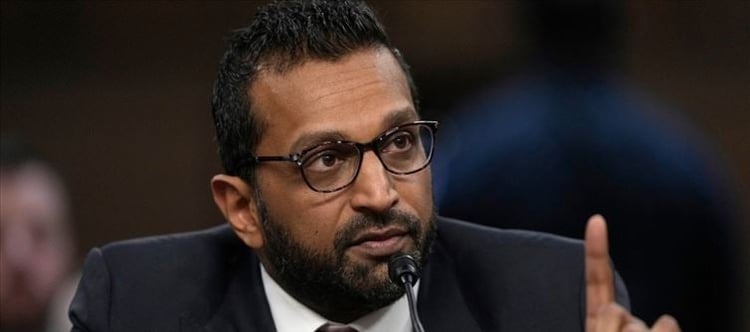


Kash Patel's dramatic threat to release Jeffrey Epstein client names during a heated House hearing is, according to analysts and political observers, less about accountability and more about constructing an implicit threat architecture — one that could paralyze opposition to his FBI directorship by making powerful figures across both parties fear exposure.
The 5W+H: Who, What, When, Where, Why, How
- Who: Kash Patel, Donald Trump's nominee for FBI Director, making the threat before the U.S. House, as reported by The Economic Times.
- What: Patel declared he would release names connected to Jeffrey Epstein's client list, turning his confirmation process into a political pressure campaign.
- When: During an explosive House hearing in 2025, as reported by The Economic Times and U.S. congressional records.
- Where: United States House of Representatives, Washington D.C.
- Why: Analysts suggest Patel is leveraging the Epstein file to neutralize bipartisan opposition to his FBI nomination and signal loyalty to Trump's agenda of dismantling the 'Deep State.'
- How: By publicly threatening disclosure of names during a televised hearing, Patel created a chilling effect — any senator or representative with even tangential Epstein connections now faces a personal risk calculus in opposing his confirmation, according to political observers.
Four words can end a career in Washington. Four words can reshape a confirmation battle. Four words, spoken with the calm of a man who knows exactly where the bodies are buried: 'I'll give you names.'
Kash Patel — Donald Trump's combative, unflinching pick to lead the Federal Bureau of Investigation — did not simply testify before the U.S. House. He detonated something. According to The Economic Times, Patel dropped what can only be described as an Epstein bombshell during a hearing that was already crackling with partisan electricity, declaring his willingness to release names connected to the late financier Jeffrey Epstein's notorious client network. The room, by all accounts, did not breathe easily after that.
But here is the question no cable news panel dared to ask plainly: was that a promise of justice, or was it a threat?
The Anatomy of a Political Grenade
To understand what Patel actually did, you have to understand what the Epstein file is in Washington. It is not merely a criminal dossier. It is the single most radioactive collection of names in American public life — a list that reportedly touches billionaires, politicians, academics, and power brokers across party lines. For years, the prevailing consensus among Washington insiders, as noted by multiple U.S. political analysts, has been that the full client list would never see daylight precisely because its publication would be mutually assured destruction. Too many powerful people, on too many sides, have too much to lose.
Patel, a former federal prosecutor and National Security Council official, knows this. He has spent years inside the machinery of American intelligence. When he said those four words in a nationally televised hearing, he was not making a casual remark. He was, in the assessment of several political commentators cited by The Economic Times, firing a warning shot across the bow of every senator and representative who might consider blocking his FBI confirmation.
The logic is brutally elegant: if you oppose me, you risk becoming the person whose name I read next.
Political Pulse
The corridors of Capitol Hill have reportedly been unusually quiet since the hearing — and that silence, political observers note, is the tell. The talk among Washington insiders, as reflected in U.S. media commentary, is not about whether Patel's threat was appropriate. It is about who, specifically, is most afraid.
There is a whisper — unverified, but persistent enough to have reached multiple U.S. political desks — that at least two sitting senators have privately communicated through intermediaries that they will not oppose Patel's nomination. Whether this is coincidence or causation, no one will say on the record. But the timing, political analysts note, is conspicuous.
The deeper chatter in political circles, as reported across U.S. media, is that Patel's gambit serves a dual purpose for the Trump orbit. First, it neutralizes opposition to a key appointment. Second — and this is the part that keeps the so-called Deep State up at night — it signals that the incoming administration is willing to use the most sensitive intelligence files not as instruments of law enforcement, but as instruments of political discipline. (This reflects political corridor speculation and analysis, not confirmed fact.)
Trump's Revenge Architecture — And Patel as the Keystone
Patel's nomination was never ordinary. As multiple U.S. outlets have reported, Trump chose him specifically because of his willingness to challenge the FBI's institutional culture — the same culture that, in Trump's framing, weaponized federal law enforcement against a sitting president. Patel has openly spoken about restructuring the Bureau, purging what he calls politically motivated actors, and redirecting investigative priorities.
The Epstein card, in India Herald's assessment, fits perfectly into this architecture. It is not a standalone move; it is the capstone of a broader strategy. Consider the sequence: Trump returns to power pledging to dismantle the Deep State. He nominates a loyalist with prosecutorial experience and zero institutional loyalty to the FBI's old guard. That loyalist then publicly demonstrates, in a House hearing broadcast to millions, that he holds the single most dangerous piece of information in American politics — and is willing to use it.
This is not justice seeking a platform. This is power seeking a weapon.
The Both-Sides Bind
What makes Patel's move so devastating is that the Epstein file does not respect party lines. According to reports across U.S. media, the client list allegedly includes names from both Democratic and Republican establishments. This means Patel's threat is not a partisan attack — it is an equal-opportunity menace. A Democratic senator who might oppose him on ideological grounds now has to weigh that opposition against the personal risk of exposure. A Republican senator who might privately doubt Patel's temperament faces the same calculus.
The result, as multiple political analysts have observed, is a kind of legislative paralysis. The normal mechanisms of democratic accountability — hearings, votes, public scrutiny — become distorted when the nominee holds information that could personally destroy the people tasked with evaluating him. It is, as one commentator put it, like asking a jury to convict a defendant who knows where every juror lives.
Patel's camp has not directly characterized the remarks as a threat. His public framing, as reported by The Economic Times, positions the disclosure as a matter of transparency and accountability — the kind of sunlight that a reformed FBI should provide. Critics, however, argue that the timing and venue of the remarks — during a confirmation-related hearing, not a law enforcement briefing — reveal the true intent.
As of this reporting, neither Patel's representatives nor key opposition senators have issued detailed public responses to the specific implications of his Epstein remarks.
Why India Should Pay Attention
This is not merely an American drama. The FBI Director shapes the trajectory of U.S. intelligence cooperation with allied nations, including India. As India deepens its defence and intelligence-sharing partnerships with Washington — partnerships that have accelerated under both Modi and Trump — the character and priorities of the person running America's premier investigative agency matter directly to New Delhi.
A Patel-led FBI, shaped by the political dynamics of his confirmation, could mean a Bureau more aligned with executive priorities and less constrained by institutional independence. For India's intelligence and diplomatic establishment, that is neither simply good nor simply bad — it is a variable that requires careful reading. An FBI director who owes his position to political leverage rather than institutional consensus may be more transactional in international partnerships, more responsive to White House directives on bilateral cooperation, and less predictable on matters of protocol.
The Forward Read — What Comes Next
India Herald's read of what this sets in motion is stark. If Patel is confirmed — and the political arithmetic, post-Epstein-threat, increasingly favours that outcome — watch for three things. First, whether any portion of the Epstein client list is actually declassified in the early months of his tenure, or whether the threat served its purpose and the file quietly returns to its vault. Second, whether the FBI's institutional culture fractures or consolidates under a director who arrived through coercion rather than consensus. Third, and most consequentially for global observers, whether the precedent of using intelligence files as confirmation leverage becomes a permanent feature of American political life — a norm that, once established, cannot easily be unestablished.
The real question is not whether Kash Patel will release the names. The real question is whether he already got everything he needed by merely saying he would.
Allegations reported here are attributed to named sources and remain unproven unless a court has ruled; matters sub judice are reported without prejudgment.
Reported and written with AI assistance under India Herald's editorial standards; a human editor governs publication.
By the Numbers
- According to U.S. media reports, the Epstein client network allegedly touches figures across both major American political parties, making the file a bipartisan threat instrument.
- Political analysts cited by The Economic Times note Patel's background includes federal prosecution and National Security Council experience — credentials that make his threat operationally credible, not merely rhetorical.
Key Takeaways
- Kash Patel's public threat to release Epstein client names during a House hearing functions, according to political analysts, as implicit leverage against senators who might block his FBI confirmation.
- The Epstein client list reportedly crosses party lines, creating a bipartisan paralysis where opposition to Patel carries personal risk for legislators on both sides, as noted in U.S. media commentary.
- India Herald's forward assessment: the real test is not whether Patel releases names, but whether intelligence files as political leverage becomes a permanent feature of American governance — with direct implications for India's deepening intelligence partnership with Washington.
Frequently Asked Questions
What did Kash Patel say about the Epstein list at the House hearing?
According to The Economic Times, Patel declared 'I'll give you names' during an explosive House hearing, signalling willingness to release names connected to Jeffrey Epstein's client network as part of his FBI confirmation process.
Why is Patel's Epstein threat significant for his FBI confirmation?
Political analysts suggest the threat creates a chilling effect — any legislator with even tangential Epstein connections now faces a personal risk calculus in opposing his nomination, effectively neutralizing bipartisan opposition.
How does Kash Patel's FBI nomination affect India?
As India deepens intelligence and defence partnerships with Washington, the character of the FBI Director matters directly. A Patel-led FBI may be more transactional and executive-aligned, altering the dynamics of bilateral intelligence cooperation.
Will Kash Patel actually release the Epstein client list?
That remains uncertain. India Herald's assessment is that the threat itself may have served its strategic purpose — paralysing opposition — regardless of whether actual disclosure follows.


 click and follow Indiaherald WhatsApp channel