
-

Auckland
-
Bharatiya Janata Party
-
CM
-
contract
-
court
-
Currency
-
Customer
-
Digital Wallet Platform
-
Donald Trump
-
East
-
Event
-
Government
-
India
-
Indian
-
INTERNATIONAL
-
Iran
-
Jammu and Kashmir - Srinagar/Jammu
-
June
-
Minister
-
New Zealand
-
Office
-
oil
-
Oman
-
Pakistan
-
Press
-
Prime Minister
-
Qatar
-
REVIEW
-
Service
-
Smart phone
-
Supreme
-
Telangana Chief Minister
-
war
-
WATCH

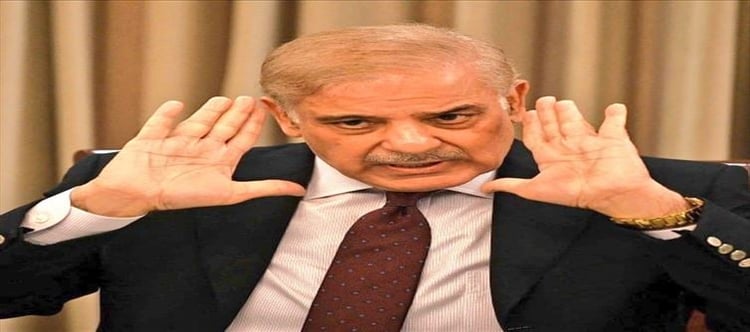
Pakistan PM Shehbaz Sharif's push to revive stalled US-Iran nuclear negotiations, according to The Hindu, is less about regional peace than about restoring Islamabad's relevance to Washington at a moment when Pakistan desperately needs IMF disbursements, military aid unfreezing, and diplomatic cover — a classic Rawalpindi survival manoeuvre with direct implications for India's strategic calculus.
A country that cannot reliably keep the lights on in Lahore now wants to broker peace between the world's pre-eminent superpower and its most defiant adversary. The ambition would be admirable if the arithmetic were not so nakedly transactional.
Pakistan Prime Minister Shehbaz Sharif held talks with Iranian and Qatari leaders this week to revive stalled US-Iran nuclear negotiations, according to The Hindu, after a round in Doha that both Qatar and Pakistan described as showing "positive progress." On the surface, it reads as responsible middle-power diplomacy. Scratch beneath, and the desperation is unmistakable.
The Doha Play and Islamabad's Sudden Relevance
The sequence matters. According to The Hindu, Sharif spoke with Iran's leadership and Qatar's Emir in quick succession, positioning Pakistan as a co-facilitator alongside Qatar in the Doha-based indirect talks between Washington and Tehran. India Today reported that Sharif framed the outreach as an effort to "steady" the negotiations. But Islamabad has never been a natural mediator in the US-Iran standoff — it has neither Qatar's neutrality credentials nor Oman's quiet track record. What it does have, and urgently, is a need to be noticed by Washington.
Consider the backdrop. Hindustan Times reported that the diplomatic push comes even as Pakistan's own commitments under a previously signed memorandum of understanding with Iran — specifically the long-delayed Iran-Pakistan gas pipeline — remain violated. Tehran has publicly prodded Islamabad over the pipeline stall, a project Pakistan keeps deferring under American pressure. The irony is exquisite: Sharif is mediating between two parties while defaulting on his own bilateral obligation to one of them, precisely because the other disapproves.
Political Pulse
The talk in Rawalpindi's corridors, as veteran Pakistan-watchers would recognise, is less about Iran's nuclear file and more about the next IMF review. Pakistan's economy is on life support — inflation biting, reserves precarious, and every successive IMF tranche arriving with conditions that make the civilian government look like a branch office of the Fund. The military establishment, which ultimately green-lights Pakistan's foreign policy pivots, has run this play before: when the coffers empty, manufacture strategic utility for Washington.
During the 1980s, it was the Afghan jihad. In the 2000s, it was the War on Terror. Each time, Pakistan converted American dependence on its geography or its intelligence networks into billions in aid, debt relief, and weapons. The whisper now doing the rounds in diplomatic circles, according to those tracking Pakistan's manoeuvres, is that Rawalpindi sees the US-Iran file as the 2026 edition of that same trade — geopolitical middleman services in exchange for economic oxygen.
There is a reason Sharif also attended events linked to Iran's Supreme Leader Ayatollah Khamenei, as The Hindu separately reported. It was not mere protocol. It was a signal to Tehran that Pakistan remains a credible interlocutor — one foot in Iran's camp, the other always angled toward Washington. The balancing act is familiar; it is also increasingly fragile.
What This Means for India
For New Delhi, Pakistan's mediator ambitions are more than a curiosity — they carry real strategic consequences. India has spent years carefully cultivating its own Iran relationship, notably through the Chabahar Port, while simultaneously deepening its embrace with Washington. A Pakistan that successfully inserts itself as America's go-to channel to Tehran threatens to complicate India's own diplomatic geometry.
India Herald's assessment of what is really at play: if Washington rewards Pakistan's mediation efforts — even symbolically, through faster IMF approvals or a resumption of stalled military cooperation — it recalibrates the leverage India has built as America's preferred South Asian partner. The nightmare scenario for South Block is not that Pakistan brokers a US-Iran deal, which remains improbable, but that the mere appearance of Islamabad's usefulness softens Washington's posture on issues India cares about: terror accountability, FATF grey-list vigilance, and Kashmir diplomacy.
The forward projection is pointed. Watch for two things in the weeks ahead. First, whether Washington publicly acknowledges Pakistan's role — even a tepid State Department nod would be a win for Sharif. Second, whether the next IMF review for Pakistan suddenly encounters fewer hiccups than the last. If both happen in proximity, the trade will have been completed, and the invoice paid.
The Fragility Beneath the Performance
But here is what the press releases will not say: Pakistan's leverage in this mediation is borrowed, not earned. Qatar does the heavy lifting in Doha. Iran tolerates Islamabad's involvement because Pakistan's nuclear status gives it a certain standing among Muslim-majority nations, and because Tehran enjoys watching Washington's allies compete to be useful. The United States, for its part, has a long memory about Pakistan's reliability — and the Afghan withdrawal's chaotic aftermath, in which Islamabad's double games were laid bare, is not yet old enough to forget.
Sharif is, in essence, selling a service he may not be able to deliver, to a customer who has been burned before, using goodwill he has not fully built with the other party. That is not diplomacy. That is a pitch deck from a startup running on fumes.
The deeper question, the one Islamabad does not want asked, is simpler than it appears: can Pakistan sustain a mediator role when it cannot mediate its own internal crises — Balochistan's insurgency, the TTP's resurgence, the civil-military tug-of-war that has consumed three governments in four years? Credibility in international diplomacy is not a tap you turn on when the IMF auditor arrives. It is earned over decades of consistency that Pakistan's record simply does not support.
For India, the play is patience. New Delhi's strategic depth with both Washington and Tehran is structural, built on trade, energy, and geography. Pakistan's is performative, built on the promise of access it may not control. The coming weeks will reveal whether Washington buys the performance — or merely applauds it politely while keeping its wallet closed.
(Speculation and characterisations of diplomatic strategy in this piece reflect analysis and widely discussed assessments, not confirmed internal communications.)
Allegations reported here are attributed to named sources and remain unproven unless a court has ruled; matters sub judice are reported without prejudgment.
Reported and written with AI assistance under India Herald's editorial standards; a human editor governs publication.
More from India Herald


Key Takeaways
- Pakistan's mediation push between the US and Iran is best understood as a survival strategy by Rawalpindi to restore Islamabad's strategic utility to Washington at a moment of acute economic crisis, per analysis of reports from The Hindu and Hindustan Times.
- The irony of Pakistan mediating while violating its own Iran-Pakistan gas pipeline commitments under US pressure reveals the fragility and transactional nature of Sharif's outreach, according to Hindustan Times.
- For India, the risk is not a breakthrough deal but that Washington softens its posture toward Pakistan — potentially affecting FATF vigilance, terror accountability, and broader South Asian power dynamics.
- Pakistan's mediator credibility is borrowed, not earned — Qatar provides the venue and the track record, while Islamabad's own internal crises undermine its international standing.
By the Numbers
- Pakistan and Qatar described recent Doha round of US-Iran indirect talks as showing 'positive progress,' per The Hindu.
- Pakistan's commitments under the Iran-Pakistan gas pipeline MoU remain violated even as Sharif inserts Islamabad into US-Iran mediation, according to Hindustan Times.
The 5W+H: Who, What, When, Where, Why, How
- Who: Pakistan PM Shehbaz Sharif, Iran's leadership, Qatar's Emir, and indirectly the US administration, as reported by The Hindu and India Today.
- What: Sharif held phone calls with Iranian and Qatari leaders to revive stalled US-Iran nuclear negotiations after a Doha round showed what Qatar and Pakistan called 'positive progress,' per The Hindu.
- When: June 2026, with the latest diplomatic push following recent rounds of indirect US-Iran talks in Doha, according to The Hindu.
- Where: The diplomacy is centred on Doha, Qatar, with Pakistan operating as an interlocutor from Islamabad, per India Today and The Hindu.
- Why: Pakistan seeks to position itself as indispensable to Washington's Middle East diplomacy at a time when its economy teeters on the edge and IMF bailout tranches remain uncertain, according to Hindustan Times.
- How: Sharif leveraged Pakistan's ties with Iran — including attending Khamenei-related events — and Qatar's hosting role to insert Islamabad into the mediation architecture, per The Hindu and Hindustan Times.
Frequently Asked Questions
Why is Pakistan trying to mediate between the US and Iran?
According to The Hindu and India Today, Pakistan PM Sharif is positioning Islamabad as a facilitator in stalled US-Iran nuclear talks in Doha. Analysts widely assess this as a bid to restore Pakistan's strategic relevance to Washington at a time when the country desperately needs IMF bailout disbursements and military aid.
What does Pakistan's US-Iran mediation mean for India?
India's concern is not that Pakistan will broker a deal — that remains unlikely — but that even the appearance of Islamabad's usefulness could soften Washington's stance on issues India prioritises, including terror accountability, FATF oversight, and Kashmir diplomacy.
Has Pakistan mediated between the US and Iran before?
Pakistan has not historically been a primary mediator in US-Iran diplomacy. Qatar and Oman have traditionally played that role. Pakistan's current push is seen as opportunistic, leveraging its ties with both sides, though its credibility is questioned given its own unfulfilled commitments to Iran, per Hindustan Times.
What is the connection between Pakistan's mediation and the IMF?
Pakistan's economy is heavily dependent on IMF bailout tranches. The diplomatic push is widely interpreted as an effort to demonstrate strategic value to Washington, which could translate into smoother IMF reviews and potential unfreezing of military aid — a pattern Rawalpindi has deployed in previous decades.
 click and follow Indiaherald WhatsApp channel