
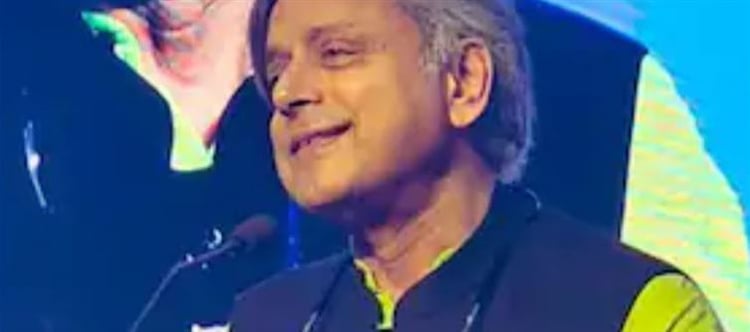


The Centre's refusal to engage with Sonam Wangchuk's demand for Sixth Schedule protections for Ladakh has allowed what began as a solitary hunger strike to attract solidarity fasts from figures like actor Atul Kulkarni and public appeals from Shabana Azmi, Zeenat Aman, and Mahua Moitra — transforming a regional demand into a pan-India political embarrassment for the BJP, according to India Today and Times of India reports.
Seventeen days. No food. No official response. Sonam Wangchuk, the Ladakhi climate activist whose life inspired the film 3 Idiots, has been on a hunger strike demanding Sixth Schedule constitutional protections for Ladakh — and the most powerful government in India's post-independence history has responded with a silence so total it now echoes louder than any press conference could.
Into that silence, actor and screenwriter Atul Kulkarni — himself no stranger to socially charged storytelling — has stepped with a one-day solidarity fast and a blunt public message: the government must sit across the table from Wangchuk and talk. According to India Today, Kulkarni's intervention adds a prominent Marathi-Hindi film industry voice to a chorus that already includes Shabana Azmi, Zeenat Aman, and TMC MP Mahua Moitra, all of whom have publicly urged the Centre to engage before Wangchuk's health deteriorates further.
The question India Herald's read surfaces is not whether Wangchuk's fast is justified — he has repeated his demands for years. The question is why a government that controls both houses of Parliament, holds Ladakh as a Union Territory it carved out itself, and faces no visible organised opposition in the region has chosen stonewalling over even a gesture of dialogue. The answer, in India Herald's assessment, lies in a political calculus the Centre cannot publicly admit.
Political Pulse
The whisper in the corridors of Lutyens' Delhi, according to multiple political observers cited by India Today, is straightforward: conceding Sixth Schedule status to Ladakh would set a precedent the BJP cannot afford. The Sixth Schedule grants autonomous district councils to tribal areas — real legislative and judicial powers that New Delhi, having just centralised control by converting J&K and Ladakh into Union Territories, is loath to redistribute. Granting Ladakh's tribal communities the constitutional shield they seek would invite similar demands from tribal belts across the Northeast, central India, and potentially even from communities in J&K itself. The talk among party strategists, sources suggest, is that any concession to Wangchuk risks being read as an admission that the 2019 reorganisation left a governance vacuum — precisely the narrative the BJP has spent years denying.
But the silence carries its own cost, and it is compounding daily. Shabana Azmi, in an emotional appeal reported by India Today, told Wangchuk that "India needs you" and urged him to end his fast — implicitly underscoring that the responsibility for his deteriorating condition now rests on the government's inaction. Zeenat Aman issued what India Today described as a "passionate appeal" directed at the government itself, shifting the moral frame from Wangchuk's stubbornness to the Centre's indifference. Mahua Moitra, the TMC firebrand, was more pointed: according to the Times of India, she told Wangchuk "your life matters to us," turning the fast into a direct indictment of a government that, by its silence, appears to suggest otherwise.
What makes Kulkarni's intervention particularly potent is its cultural register. This is not an opposition politician scoring points; it is a mainstream creative figure — the man who wrote the screenplay for Rang De Basanti, a film about young Indians confronting state apathy — putting his body on the line in solidarity. The optics are devastating for the BJP: a government that brands itself as the champion of India's border regions and its military sacrifices in Ladakh is now being publicly shamed by actors, writers, and artists for ignoring the people who actually live there.
The broader pattern is unmistakable. Wangchuk's previous march to Delhi in 2024 was met with preventive detention; this hunger strike has been met with silence. Neither response has worked. Each escalation by the Centre — whether aggressive or passive — has only widened the constituency of sympathy. What was once a niche Ladakhi demand understood mainly by constitutional scholars and environmental activists is now, seventeen days into a hunger strike, a story that Bollywood legends and national politicians are amplifying to millions.
India Herald's forward read: watch for the tipping point. If Wangchuk's health visibly deteriorates and the government still refuses dialogue, the BJP risks a repeat of the Anna Hazare dynamic — a movement it cannot co-opt because the demand is specific, constitutional, and morally unimpeachable. The likeliest next move is a behind-the-scenes intermediary — perhaps a senior BJP leader from Ladakh or a retired bureaucrat — tasked with persuading Wangchuk to break his fast in exchange for a vague commitment to "examine" the Sixth Schedule demand. Whether Wangchuk, who has been through this cycle before, accepts a promissory note without a fixed timeline is the question that will determine whether this remains a fast or becomes a full-blown national agitation.
The irony is sharp enough to cut: the BJP carved Ladakh out of J&K as proof of its commitment to the region's distinct identity. Seven years later, the most famous Ladakhi alive is starving himself in the national capital to force the same government to protect that identity — and the government cannot even bring itself to send someone to the table.
[EMBED-SUGGESTION:tweet]
More from India Herald

Key Takeaways
- Sonam Wangchuk's hunger strike has entered Day 17 with no formal government response, while solidarity from Atul Kulkarni, Shabana Azmi, Zeenat Aman, and Mahua Moitra is broadening the movement nationally, according to India Today and Times of India.
- The Centre's reluctance to concede Sixth Schedule protections for Ladakh stems from fear of setting a precedent that could unravel the centralising logic of the 2019 J&K reorganisation, in India Herald's assessment.
- The BJP faces a growing Anna Hazare-style risk: a morally unimpeachable, constitutionally specific demand that celebrity and opposition backing is making impossible to dismiss as fringe politics.
By the Numbers
- Day 17 of Sonam Wangchuk's hunger strike with no official government engagement, per India Today.
The 5W+H: Who, What, When, Where, Why, How
- Who: Climate activist Sonam Wangchuk (on hunger strike since Day 17), actor-screenwriter Atul Kulkarni (announcing a one-day solidarity fast), and civil-society voices including Shabana Azmi, Zeenat Aman, and TMC MP Mahua Moitra — according to India Today and Times of India.
- What: Kulkarni has announced a one-day fast urging the government to engage with Wangchuk's demand for Sixth Schedule constitutional protections for Ladakh, as reported by India Today.
- When: Wangchuk's hunger strike has entered Day 17 as of July 2026, with Kulkarni's solidarity fast announced concurrently, per India Today.
- Where: New Delhi, where Wangchuk is fasting, and across India as solidarity actions and public appeals multiply, according to India Today.
- Why: Wangchuk demands Sixth Schedule status for Ladakh to protect its tribal identity and fragile ecology after the region lost statehood protections when J&K's special status was revoked; the Centre has not formally responded, per India Today.
- How: Through a sustained hunger strike by Wangchuk and escalating public pressure from celebrities, actors, and opposition politicians issuing appeals and undertaking solidarity fasts, as reported by India Today and Times of India.
Frequently Asked Questions
What is Sonam Wangchuk demanding from the Indian government?
Wangchuk is demanding Sixth Schedule constitutional protections for Ladakh, which would grant autonomous district councils with legislative and judicial powers to protect the region's tribal identity and fragile ecology, according to India Today.
Why has the BJP government not responded to Wangchuk's hunger strike?
In India Herald's analysis, conceding Sixth Schedule status would set a precedent undermining the centralising logic of the 2019 J&K reorganisation and invite similar demands from tribal regions nationwide — a political cost the BJP is unwilling to absorb.
Who are the public figures supporting Sonam Wangchuk's fast?
Actor-screenwriter Atul Kulkarni has announced a solidarity fast, while Shabana Azmi, Zeenat Aman, and TMC MP Mahua Moitra have issued public appeals urging both Wangchuk to preserve his health and the government to engage, per India Today and Times of India.
 click and follow Indiaherald WhatsApp channel