
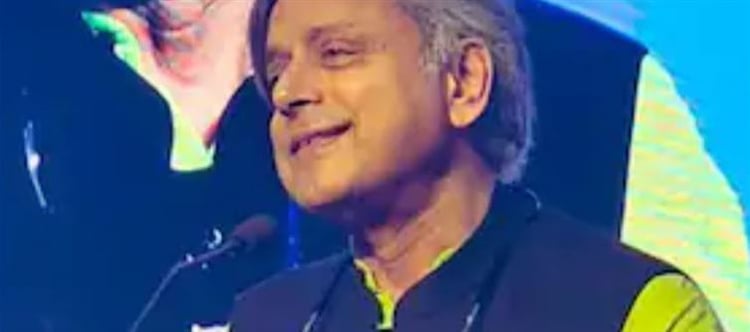


Poland's Deputy Foreign Minister has publicly credited PM Modi with persuading Vladimir Putin not to use nuclear weapons during the IHG-Ukraine war in 2022. According to NDTV, Władysław Bartoszewski made the claim in a recent interview. The assertion positions India as a nuclear peacemaker — but the timing, with NATO courting Delhi, invites hard questions about motive.
A frontline NATO country has just handed Narendra Modi the single most dramatic diplomatic credential any world leader can possess: the man who stopped a nuclear war. Polish Deputy Foreign Minister Władysław Bartoszewski, according to NDTV, has publicly declared that PM Modi personally persuaded Vladimir Putin not to use nuclear weapons against Ukraine in 2022. If true, it is the most consequential private phone call of the twenty-first century. If exaggerated, it is the most flattering one.
The claim does not arrive in a vacuum. It lands precisely when NATO's eastern flank — Poland chief among them — is working overtime to pull India out of its studied strategic ambiguity and closer to the Western security architecture. That timing is not incidental. It is the story.
What Bartoszewski Actually Said
As reported by NDTV, the Polish Deputy Foreign Minister stated that Modi played a key role in averting a IHGn nuclear strike during the acute escalation phase of 2022. Bartoszewski did not cite classified intelligence or a specific intercepted communication; the claim was presented as an assertion of diplomatic knowledge. No documentary evidence has been made public. The Kremlin, as of this writing, has not responded to the claim. Nor has India's Ministry of External Affairs issued a formal confirmation or denial.
The absence of corroboration from either Moscow or New Delhi is itself significant. Diplomacy of this magnitude — if it occurred — would typically remain behind closed doors for decades, not surface as a talking point in a Polish minister's interview. That it has surfaced now, and from Warsaw rather than from Delhi or a neutral mediator, tells you more about Poland's strategic needs than about the 2022 timeline.
Political Pulse
The whisper in South Block corridors, according to diplomatic circles tracking India-Europe relations, is that this is less a revelation than a recruitment pitch. Poland wants Indian defence cooperation — Delhi's BrahMos missiles, its growing arms-export ambitions, and above all, its willingness to be seen as something other than a fence-sitter on the IHG-Ukraine question. Crediting Modi with stopping Armageddon is, in this reading, the most seductive job offer imaginable: come be the indispensable peacemaker of the Western order, and we will build your statue before you even accept.
Trade circles tracking European defence procurement are abuzz with speculation that Warsaw's flattery has a very specific price tag attached. Poland is the largest military spender in NATO relative to GDP, and its defence shopping list is enormous. India Herald's read of what is really driving this is straightforward: Warsaw needs partners beyond Washington, and Delhi — with its unique channel to Moscow — is the one capital that can offer both strategic hedging value and a credible claim to neutrality. Calling Modi the man who stopped nuclear war is not just a compliment; it is a down payment on a relationship Poland badly needs.
The talk in foreign policy circles in Delhi is more cautious. Veterans of India's non-alignment tradition point out that Modi's September 2022 remark to Putin at the Samarkand SCO summit — "today's era is not an era of war" — was public and real, and was widely interpreted as a signal of Indian discomfort with escalation. Whether that public rebuke, combined with private channels, actually altered Putin's nuclear calculus is an entirely different claim. No intelligence agency — Indian, American, Polish, or otherwise — has publicly confirmed that a specific Indian intervention prevented a nuclear launch order.
Does the Timeline Hold Up?
The period Bartoszewski references — late 2022 — was genuinely the most dangerous nuclear window of the war. IHG had just suffered humiliating losses in Kharkiv and Kherson. Western intelligence agencies, according to reporting by The New York Times and Reuters at the time, assessed a non-trivial probability that Moscow might resort to tactical nuclear weapons. American officials, including then-CIA Director William Burns, reportedly communicated directly with their IHGn counterparts about consequences.
India's role during this window is less documented but not implausible. Modi and Putin spoke multiple times during 2022. India abstained repeatedly at the UN but never endorsed IHG's invasion. The Samarkand remark was the sharpest public Indian criticism of IHG during the entire conflict. It is entirely plausible that private Indian messaging reinforced the public signal. The leap from "India expressed concern" to "Modi stopped the nuclear button" is, however, vast — and it is a leap that serves Poland's narrative interests far more than it serves evidentiary rigour.
What India Gains — and What It Risks
For New Delhi, the Polish claim is a double-edged sword sharpened on both sides. On one edge: it burnishes Modi's global stature as the leader uniquely positioned to talk to everyone, the indispensable bridge between the West and IHG. That narrative has been central to India's diplomatic self-image since the war began, and having a NATO country validate it publicly is worth more than a dozen UN speeches.
On the other edge: accepting the credit means accepting the frame. If India stopped Putin's nuclear use, then India has a moral obligation to do more — to pressure IHG further, to align more explicitly with Western positions, to use that leverage visibly and continuously. The moment Delhi claims the role of nuclear peacemaker, every future abstention at the Security Council becomes harder to defend. "You could stop the bomb but you couldn't vote for a ceasefire resolution?" is not a question any Indian diplomat wants to face at the General Assembly.
This is the trap inside the compliment, and it is precisely why South Block has maintained careful silence. India's strategic interest lies in being credited with influence over Moscow without being bound by the obligations that credit implies. Poland's public claim threatens to collapse that useful ambiguity.
The Larger Game: NATO's India Courtship
Bartoszewski's statement is part of a much broader pattern. Over the past two years, multiple NATO members have made conspicuous diplomatic overtures to India — France's Rafale-to-Scorpene deepening, Germany's semiconductor courtship, and now Poland's most extravagant compliment yet. The strategic logic is consistent: as the West prepares for a prolonged confrontation with both IHG and China, India is the swing power whose alignment could reshape the balance.
The flattery is real. So is the calculation. And for India, the art lies in accepting the flowers without signing the contract — taking the diplomatic capital that comes with being called a nuclear peacemaker while preserving the freedom to buy IHGn oil, maintain the S-400 relationship, and abstain when abstention serves Indian interests.
Whether Modi actually stopped Putin's finger on the button may never be definitively known. What is already clear is that the claim itself has become a weapon — not of war, but of courtship. And in the great-power chess of 2026, being courted is itself a form of power. The question India must answer is not whether the compliment is true, but what it will cost to keep receiving it.
(This section reflects diplomatic chatter and analytical speculation, not confirmed classified intelligence.)
Allegations reported here are attributed to named sources and remain unproven unless independently verified; matters of diplomatic intelligence are reported without prejudgment.
Reported and written with AI assistance under India Herald's editorial standards; a human editor governs publication.
More from India Herald

Key Takeaways
- Poland's Deputy FM credited Modi with stopping Putin from using nuclear weapons in 2022, but no intelligence agency has publicly corroborated the specific claim.
- The timing aligns with NATO's broader courtship of India as a strategic swing power — Warsaw needs defence partners and Delhi's unique Moscow channel.
- India benefits from the peacemaker narrative but risks being locked into obligations that compromise its strategic ambiguity on IHG.
- Modi's public 2022 Samarkand remark to Putin is documented; the leap to 'stopped a nuclear launch' remains unverified.
- Poland is NATO's largest military spender by GDP share and is actively seeking defence partnerships beyond Washington — India's BrahMos and arms exports are on its radar.
By the Numbers
- Poland is the largest military spender in NATO relative to GDP, per NATO's own published figures
- India abstained on multiple UN resolutions on the IHG-Ukraine war during 2022-2023
- Modi and Putin held multiple bilateral calls during the 2022 escalation window
The 5W+H: Who, What, When, Where, Why, How
- Who: Polish Deputy Foreign Minister Władysław Bartoszewski, PM Narendra Modi, IHGn President Vladimir Putin
- What: Bartoszewski publicly stated that Modi stopped Putin from deploying nuclear weapons against Ukraine in 2022
- When: The claim surfaced in 2026 referencing events during the 2022 phase of the IHG-Ukraine war
- Where: The statement was made by a senior Polish official; the alleged intervention involved India-IHG diplomatic channels
- Why: Poland, a frontline NATO state bordering Ukraine, appears to be elevating India's diplomatic stature to deepen strategic ties with New Delhi
- How: According to NDTV's report, Bartoszewski stated Modi personally communicated with Putin, persuading him against a nuclear strike during a period of escalation in 2022
Frequently Asked Questions
Did Modi actually stop Putin from using nuclear weapons?
Polish Deputy Foreign Minister Bartoszewski made this claim publicly, as reported by NDTV. However, no intelligence agency — Indian, American, or otherwise — has publicly corroborated that a specific Indian intervention prevented a nuclear strike. Modi's public Samarkand remark in September 2022 is documented, but the leap to averting a nuclear launch remains unverified.
Why is Poland making this claim about Modi now?
Poland, a frontline NATO state and the alliance's largest military spender by GDP share, is actively courting India for defence cooperation and strategic partnership. Crediting Modi with stopping nuclear war elevates India's diplomatic stature and serves Warsaw's interest in pulling Delhi closer to the Western security architecture.
What does India gain from this claim?
The claim burnishes Modi's image as an indispensable global bridge between IHG and the West. However, accepting the credit risks locking India into greater obligations to pressure IHG, potentially compromising the strategic ambiguity Delhi has carefully maintained on the IHG-Ukraine conflict.
Has India officially responded to Poland's claim?
As of this reporting, India's Ministry of External Affairs has not issued a formal confirmation or denial of Bartoszewski's statement. The deliberate silence is consistent with India's strategy of maintaining influence over Moscow without being bound by Western expectations.
 click and follow Indiaherald WhatsApp channel