


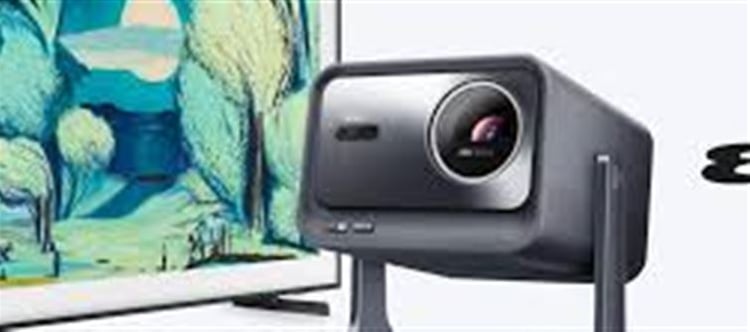

With home entertainment becoming increasingly popular, many people are choosing between projectors and TVs to create a cinematic experience at home. From watching movies and cricket matches to gaming, a large screen is the dream for many households. While projectors can deliver very large images, they also come with certain limitations that often make TVs a more practical choice.
1️⃣ Brightness and Ambient Light Sensitivity
The biggest drawback of projectors is their dependence on ambient light.
· Projectors rely on throwing light onto a screen. In a brightly lit room, the image often looks washed out or dull.
· TVs, on the other hand, use self-emitting pixels, meaning the image remains bright and clear even in daylight.
· This makes projectors ideal mainly for dark rooms, whereas TVs perform well in any lighting condition.
2️⃣ Image Quality and Resolution
· While modern projectors can support 4K resolution, the contrast ratio and color accuracy often lag behind that of TVs.
· TVs, especially OLED and QLED models, deliver vivid colors, deep blacks, and sharp images, which projectors struggle to match.
3️⃣ Setup and Space Requirements
· Projectors require space between the device and the wall/screen, proper mounting, and sometimes additional accessories like a projector screen.
· TVs are easier to mount on walls or place on stands and do not require complicated setups.
4️⃣ Maintenance and Lifespan
· Projector lamps dim over time and may require replacement after a few thousand hours, which can be costly.
· TVs require minimal maintenance and often have a longer lifespan without significant degradation in brightness or image quality.
5️⃣ Sound Quality
· Projectors usually have weak built-in speakers, requiring external audio systems for a complete experience.
· TVs often come with decent built-in speakers capable of delivering good sound for small to medium-sized rooms.
✅ Conclusion
While projectors excel in providing giant screen experiences and are ideal for dark home theaters, their main drawback — poor visibility in bright rooms — makes them less versatile than TVs. For everyday use, tv screens offer better image quality, brightness, convenience, and reliability, making them the more practical choice for most households.
Disclaimer:
The views and opinions expressed in this article are those of the author and do not necessarily reflect the official policy or position of any agency, organization, employer, or company. All information provided is for general informational purposes only. While every effort has been made to ensure accuracy, we make no representations or warranties of any kind, express or implied, about the completeness, reliability, or suitability of the information contained herein. Readers are advised to verify facts and seek professional advice where necessary. Any reliance placed on such information is strictly at the reader’s own risk..jpg)
 click and follow Indiaherald WhatsApp channel