


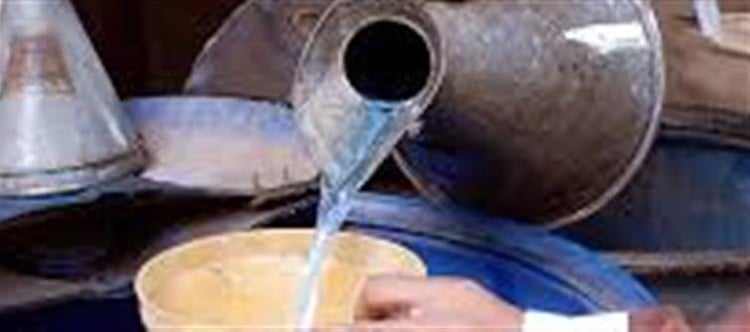

🛢️ What Is Kerosene Oil?
Kerosene oil, often simply called kerosene, is a flammable hydrocarbon liquid commonly used as a fuel for lamps, heaters, stoves, and even jet engines. It is colorless or pale yellow, with a characteristic petroleum smell, and is lighter than water.
Kerosene is a type of refined petroleum product, meaning it is processed from crude oil rather than being extracted directly from soil.
🔍 Why Is It Called “Kerosene”?
The name “kerosene” comes from the Greek word “keros”, meaning wax.
· When it was first discovered in the mid-19th century, it was found to burn cleanly and brightly, like a wax candle.
· The suffix “-ene” was added to indicate it was a hydrocarbon (similar to other chemical names ending in -ene, like ethylene).
Thus, the name literally reflects its wax-like, flammable nature rather than its source.
🌱 Is Kerosene oil Made From Soil?
Not exactly. Kerosene is not directly prepared from soil, but its origin is natural:
1. Crude oil Formation:
· Millions of years ago, the remains of plants and microscopic organisms settled under layers of soil and rock.
· Over time, heat and pressure transformed these organic materials into crude oil, which is found underground.
2. Refining Process:
· Crude oil is pumped from the ground and sent to a refinery.
· It is distilled — separated into different fractions based on boiling points.
· Kerosene is one of these fractions, boiling between roughly 150°C to 275°C.
So, while the raw material originates in the earth, kerosene itself is not “made from soil” — it’s a refined product of crude oil.
⚗️ How Kerosene Is Produced
The production of kerosene involves several steps:
1. Crude oil Extraction
· Crude oil is extracted from oil wells using drilling technology.
2. Fractional Distillation
· Crude oil is heated in a distillation column.
· Lighter fractions (like gasoline) rise to the top, heavier ones (like diesel) settle lower.
· Kerosene is collected in the middle range.
3. Refinement and Treatment
· The kerosene fraction is treated to remove sulfur and other impurities, making it cleaner and safer to burn.
4. Additives (Optional)
· Some kerosene may include additives to prevent gelling in cold weather or reduce smoke.
🔥 Uses of Kerosene
Kerosene is versatile and widely used:
· Cooking fuel — kerosene stoves in rural areas
· Lighting — kerosene lamps
· Heating — room heaters
· Jet fuel — aviation kerosene
· Industrial purposes — cleaning, solvents, and sometimes in chemical production
💡 Key Points to Remember
· Origin: Kerosene is derived from crude oil, not soil.
· Name: “Kerosene” comes from Greek “keros” (wax) due to its clean-burning nature.
· Production: Extracted via fractional distillation and refined to remove impurities.
· Uses: Fuel for lighting, cooking, heating, and aviation.
🏁 Conclusion
Kerosene oil is a refined petroleum product that has been an essential fuel for over a century. Its name reflects its wax-like burning quality, not its geological origin. Although it comes from organic matter buried underground millions of years ago, it is processed from crude oil, not soil directly.
Disclaimer:
The views and opinions expressed in this article are those of the author and do not necessarily reflect the official policy or position of any agency, organization, employer, or company. All information provided is for general informational purposes only. While every effort has been made to ensure accuracy, we make no representations or warranties of any kind, express or implied, about the completeness, reliability, or suitability of the information contained herein. Readers are advised to verify facts and seek professional advice where necessary. Any reliance placed on such information is strictly at the reader’s own risk.
 click and follow Indiaherald WhatsApp channel