


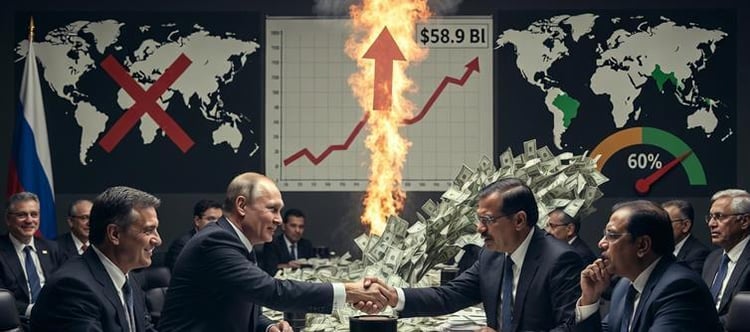

Not too long ago, India’s decision to ramp up Russian oil imports was framed as a bold, strategic win—cheap crude, smart diplomacy, and a country putting its interests first. But fast forward to now, and the narrative is starting to look a lot more complicated. Prices have shifted, global tensions are back in play, and the numbers tell a story that’s far less straightforward than it once seemed.
1. From Discount Deals to Premium Prices
At the peak of Western sanctions on russia, india stepped in as a major buyer, snapping up crude at discounted rates. That was the headline. But today, reports suggest india is paying a premium of $8–9 per barrel for Russian crude. The advantage that once defined this strategy appears to be fading.
2. The Lifeline Phase
When europe pulled back, india effectively became one of Russia’s key energy partners. It wasn’t just trade—it was leverage. india secured supply stability at a time when global markets were volatile, and russia found a crucial outlet for its exports.
3. The Real Savings Debate
But how much did india actually gain? According to estimates like those from CLSA, the annual savings stood at around $2.5 billion. Significant, yes—but not necessarily game-changing when weighed against the scale of imports and long-term dependencies.
4. The Trade Imbalance Problem
Here’s where things get more serious. India’s trade deficit with russia has reportedly ballooned to nearly $58.9 billion in FY25. That’s a massive gap, raising concerns about whether the overall economic equation is tilting too far in one direction.
5. Global Crises, Familiar Winners
Add in the ongoing tensions in West Asia, and the situation becomes even more layered. A spike in oil prices—reportedly up to 60%—once again benefits exporters like Russia. For importers like india, it means higher costs and renewed pressure.
6. So, Who Really Played It Better?
That’s the question now being asked more openly. Was this a strategic masterstroke that ensured energy security during uncertain times? Or is it turning into a costly dependence as global dynamics shift?
7. The Bigger Picture
The truth likely sits somewhere in between. India’s move was pragmatic in the moment—but geopolitics rarely stands still. What looks like a win today can evolve into a challenge tomorrow. And as the numbers keep changing, so will the debate.
 click and follow Indiaherald WhatsApp channel