


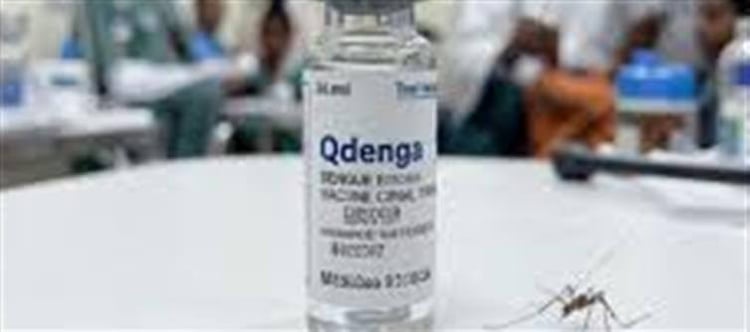

India is close to introducing Qdenga — a new vaccine aimed at preventing dengue — potentially as early as 2026 after gaining key regulatory clearance. This development comes amid rising dengue cases and ongoing public health challenges with the mosquito‑borne disease.
🧪 What Is Qdenga?
Qdenga (also known as TAK‑003) is a tetravalent dengue vaccine developed by Japanese biopharmaceutical company Takeda. It is designed to protect against all four dengue virus serotypes, a crucial feature since multiple strains circulate in india and other tropical regions.
Unlike earlier dengue vaccines, Qdenga:
· Can be given regardless of prior dengue infection (no pre‑screening required)
· Has been tested in large global studies involving tens of thousands of participants
· Has already been approved in 40+ countries
· Has received World health Organization (WHO) prequalification, indicating international confidence in its safety and effectiveness
📅 Timeline & Regulatory Progress in India
The vaccine is expected to be rolled out in india in 2026, but this depends on final approval from the Central drugs Standard Control Organization (CDSCO) after a positive recommendation from the expert committee (SEC).
Takeda is also planning to manufacture the vaccine locally through a partnership under India’s Make‑in‑India initiative, potentially improving availability and affordability once launched.
💉 How the Vaccine Works
Qdenga is administered in two doses, typically spaced about three months apart. Once vaccinated, individuals develop immunity that helps lower the risk of:
· Symptomatic dengue infection
· Severe dengue disease
· Hospitalisation due to dengue
Studies show that while the vaccine may not completely stop all infections, it significantly reduces serious outcomes, helping ease pressure on health systems during peak dengue seasons.
👥 Who Can Benefit?
India’s expert committee has cleared Qdenga for use in people aged 4 to 60 years. health authorities are likely to prioritise vaccination for groups at high risk, such as:
· Children and adolescents
· Residents of dengue‑endemic regions
· Outdoor and high‑exposure populations
Specific rollout strategies are still being finalised by the Ministry of health and Family Welfare and the Indian Council of Medical Research.
🔒 Safety & Side Effects
The vaccine generally has a favourable safety profile. Most reported side effects are mild and may include:
· Pain at the injection site
· Low‑grade fever
· Headache
· Fatigue
Serious adverse reactions are rare, and ongoing post‑marketing safety studies will continue to monitor outcomes once the vaccine is administered widely.
🧠 Why This Matters for India
India faces a significant dengue burden, with cases rising due to climate change, urbanisation, and year‑round mosquito transmission. A vaccine like Qdenga represents a major shift from purely reactive mosquito control toward preventive public health measures.
However, experts emphasise that vaccination alone won’t eliminate dengue. It must be combined with mosquito control, improved sanitation, and public awareness for maximum impact.
📌 Key Takeaways
· Qdenga is a new dengue vaccine nearing approval in India.
· It protects against all four dengue strains and can be given regardless of prior infection.
· The rollout could begin in 2026, pending regulatory clearance.
· It’s expected to significantly reduce severe cases and hospitalisations.
Disclaimer:
The views and opinions expressed in this article are those of the author and do not necessarily reflect the official policy or position of any agency, organization, employer, or company. All information provided is for general informational purposes only. While every effort has been made to ensure accuracy, we make no representations or warranties of any kind, express or implied, about the completeness, reliability, or suitability of the information contained herein. Readers are advised to verify facts and seek professional advice where necessary. Any reliance placed on such information is strictly at the reader’s own risk.
 click and follow Indiaherald WhatsApp channel