


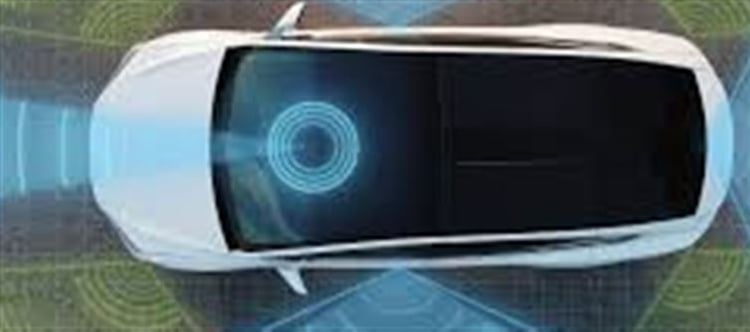

If you’ve ever wondered how self-driving cars or advanced driver-assistance systems “see” the world, the answer often involves LiDAR sensors. These devices are increasingly being used in modern vehicles to enhance safety, navigation, and autonomous driving capabilities.
What is a LiDAR Sensor?
LiDAR stands for Light Detection and Ranging. Essentially, a LiDAR sensor emits invisible laser beams and measures the time it takes for these beams to bounce back after hitting objects. By doing this repeatedly, the sensor creates a 3D map of the surrounding environment, helping the car detect obstacles, pedestrians, other vehicles, and road features in real-time.
Uses of LiDAR in Cars:
Autonomous Driving: LiDAR enables self-driving cars to accurately detect and avoid obstacles.
Advanced driver Assistance: Features like automatic emergency braking, adaptive cruise control, and lane-keeping assistance rely on LiDAR sensors for precise detection.
Enhanced Navigation: LiDAR helps vehicles operate in low-light or complex environments where cameras or radar alone may not be sufficient.
Why LiDAR Beams Can Affect Your Smartphone Camera:
LiDAR sensors emit infrared (invisible) light, which is usually safe for human eyes but can interfere with camera sensors.
When you point a smartphone camera at a LiDAR sensor, the sensor may get saturated with light, causing glare, color distortions, or overexposed images.
Some high-end smartphones with their own LiDAR or infrared sensors might also temporarily malfunction or produce inaccurate depth mapping if exposed to strong external LiDAR beams.
Are LiDAR Sensors Dangerous?
For humans, LiDAR beams are generally safe since they use low-power infrared light.
For sensitive optical devices, like cameras or certain sensors, repeated direct exposure might cause temporary interference or degrade image quality.
Conclusion:
LiDAR sensors are a game-changer in automotive technology, enabling safer roads and paving the way for autonomous vehicles. However, because they emit invisible infrared light, they can interfere with smartphone cameras and other optical devices. Understanding how LiDAR works helps us appreciate its importance while also taking simple precautions to avoid affecting sensitive devices.
Disclaimer:
The views and opinions expressed in this article are those of the author and do not necessarily reflect the official policy or position of any agency, organization, employer, or company. All information provided is for general informational purposes only. While every effort has been made to ensure accuracy, we make no representations or warranties of any kind, express or implied, about the completeness, reliability, or suitability of the information contained herein. Readers are advised to verify facts and seek professional advice where necessary. Any reliance placed on such information is strictly at the reader’s own risk.
 click and follow Indiaherald WhatsApp channel