



⚖️ When cinema Walks Into Court
This isn’t just about a movie release. It’s about identity, responsibility, and whether art can ignite something far bigger than a box-office weekend.
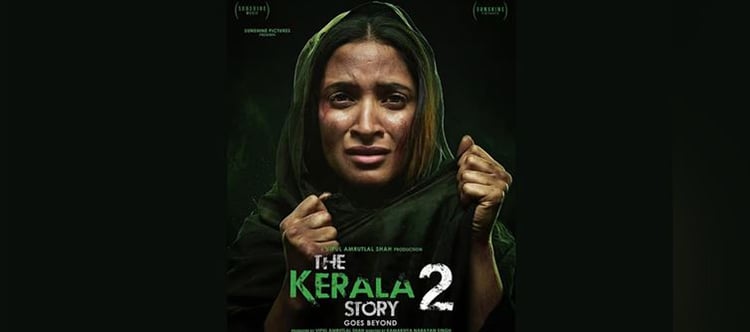
The kerala High court on tuesday sharply questioned the Central Board of Film Certification (CBFC) over its decision to clear the film The kerala Story 2 – Goes Beyond. And in a move that adds both drama and seriousness to the case, the court announced that it will personally watch the film before deciding whether its release should be stayed.
The message from the Bench was clear: when a film carries the name of a State and claims to be inspired by true events, the stakes are no longer just artistic.
🧭 1. “Kerala Is So Secular” — The Court’s Core Concern
Justice Bechu Kurian Thomas did not mince words.
He reminded the CBFC that kerala has long been known for communal harmony and coexistence. His concern? Portraying events as if they are happening “all over the State” could send a dangerous message.
If a film frames a secular State through a communal lens, he suggested, the consequences could go beyond cinema halls.
That, he emphasised, is precisely where the censor board’s responsibility kicks in.
🎥 2. “Inspired by True Events” — A Claim With Weight
One of the central issues troubling the court is the film’s positioning.
This isn’t being sold as pure fiction. The producers say it’s inspired by true events. And according to the judge, that changes everything.
When you invoke “truth,” you’re not just creating drama. You’re shaping perception. And if that perception risks misrepresenting a State or stirring communal tensions, the concerns cannot be brushed aside as oversensitivity.
The court noted that, at first glance, the petitioners’ apprehensions appear to have some justification.
🏷️ 3. The Name “Kerala” — More Than Just a Title
Another flashpoint: the title itself.
Petitioners argue that using the word “Kerala” in the film’s name unfairly associates the entire State with themes of extremism and forced religious conversion — especially when the narrative reportedly spans multiple States.
Justice Thomas observed that public apprehensions cannot be ignored when the State’s name is front and center. Normally, he said, courts avoid interfering with artistic works. But this case may not be “normal.”
Because this isn’t just art. It’s art claiming reality.
📜 4. Did the CBFC Follow Its Own Rulebook?
The court also questioned whether the CBFC applied its own guidelines properly.
Certification rules bar content that is contemptuous of racial, religious, or similar groups. So the obvious question raised was: did the Board adequately consider the impact?
Freedom of creativity, the court acknowledged, is protected. But it’s not absolute. Especially when religious themes are involved.
There are boundaries. And those boundaries exist for a reason.
⏸️ 5. Teasers Under fire — Producers Offer a Pause
During the hearing, Senior Advocate S. Sreekumar, appearing for the producers, made a significant concession.
He agreed that the teasers released so far could be taken down until the court delivers its verdict.
He also offered to arrange a private screening for the judge — an offer the court accepted. Justice Thomas said he would watch the film before making any decision.
That’s rare. And it signals how seriously the Bench is treating this matter.
🧨 6. The Petitions: Allegations of “Marketing Hate”
Three separate petitions are before the Court.
One was filed by Kannur resident Sreedev Namboodiri, who argues the film unfairly stigmatizes kerala and could trigger communal unrest. He objects particularly to the teaser’s closing line — “ab sahenge nahin… ladenge” (“we will not tolerate it anymore, we will fight”) — calling it a provocative call to confrontation.
Another petitioner, Freddy V. Francis, challenges both the certification and the use of “Kerala” in the title. He calls it a calculated attempt to brand the State with terrorism narratives and labels it “marketing of hate.”
A third petition, filed by advocate Athul Roy appearing in person, raises similar objections to the certification and the use of the State’s name.
The petitioners argue that the CBFC failed to properly assess the film’s impact on public order, decency, and morality under Section 5B of the Cinematograph Act, 1952.
They also claim the film violates constitutional protections under Articles 14 and 21, and exceeds reasonable restrictions permitted under Article 19(1)(a).
🌍 7. The shadow of the First Film
The sequel follows the controversial hindi film The kerala Story, which depicted women allegedly recruited from kerala into ISIS.
That earlier film sparked national debate.
Now, its sequel finds itself walking straight into judicial scrutiny — before release.
⚖️ 8. Art vs. Accountability — The Line the court Must Draw
Justice Thomas was careful to stress that courts usually avoid interfering with artistic expression.
But he also made it clear: when religion is involved, and when a film is presented as grounded in real events, the legal and social consequences must be weighed carefully.
The court will next hear the matter once the CBFC and producers confirm screening arrangements.
Until then, the film hangs in limbo.
🎬 Final Frame
This case isn’t just about one movie.
It’s about the power of storytelling. The responsibility of regulators. The fine line between freedom of expression and public order.
And most of all, it’s about whether invoking a State’s name — and its identity — carries obligations that filmmakers cannot ignore.
The judge will watch. The arguments will continue. And whatever the verdict, the debate over art, truth, and communal harmony is far from over.
 click and follow Indiaherald WhatsApp channel