
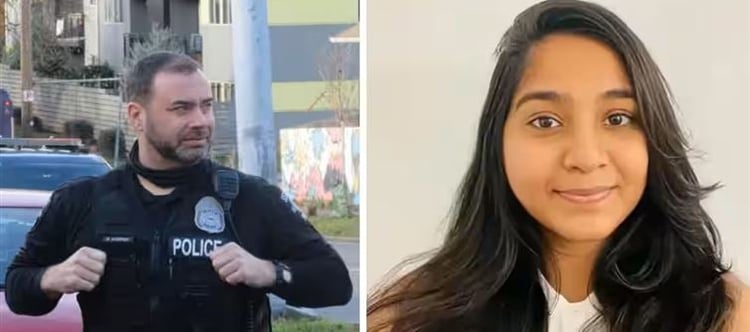


January 2023: 23-year-old Jaahnavi Kandula, a brilliant indian master's student chasing the American dream, steps into a Seattle crosswalk – only to be obliterated by a police cruiser blasting 74 mph in a 25 mph zone. Officer Kevin Dave behind the wheel, sirens blaring for a "priority" call.
Worse was yet to come: Bodycam captured fellow officer Daniel Auderer chuckling over the phone, dismissing her death with "she had limited value" and joking the city could "just write a check" for $11,000. No immediate firing. No charges. Just cold institutional shrug – until global outrage from the indian diaspora and activists erupted like wildfire.
Protests, probes, public shaming forced change: Auderer fired, systemic scrutiny, and now, in 2026, a staggering $29 million (₹262 crore) settlement – one of the largest ever for police wrongdoing. Money can't resurrect Jaahnavi, but it screams accountability. In India? Poor families watch loved ones drown in open sewers yearly, get a pathetic ₹2-4 lakh "compensation" if anything, and see zero officials jailed. America's system is flawed, racist at times – but when pushed, it bends toward justice. India's? It doesn't even pretend.
Worse was yet to come: Bodycam captured fellow officer Daniel Auderer chuckling over the phone, dismissing her death with "she had limited value" and joking the city could "just write a check" for $11,000. No immediate firing. No charges. Just cold institutional shrug – until global outrage from the indian diaspora and activists erupted like wildfire.
Protests, probes, public shaming forced change: Auderer fired, systemic scrutiny, and now, in 2026, a staggering $29 million (₹262 crore) settlement – one of the largest ever for police wrongdoing. Money can't resurrect Jaahnavi, but it screams accountability. In India? Poor families watch loved ones drown in open sewers yearly, get a pathetic ₹2-4 lakh "compensation" if anything, and see zero officials jailed. America's system is flawed, racist at times – but when pushed, it bends toward justice. India's? It doesn't even pretend.
The Killing Was Reckless Mayhem:
Dashcam shows Officer Dave rocketing through the intersection, slamming into Jaahnavi with such force she was thrown 100+ feet. He claimed urgency, but investigations revealed excessive speed and poor judgment. A young life erased in seconds – not by a criminal, but by the very system sworn to protect.
Dashcam shows Officer Dave rocketing through the intersection, slamming into Jaahnavi with such force she was thrown 100+ feet. He claimed urgency, but investigations revealed excessive speed and poor judgment. A young life erased in seconds – not by a criminal, but by the very system sworn to protect.
The "Limited Value" Joke: Pure, Vile Callousness:
Auderer's leaked bodycam audio – laughing, saying Jaahnavi was 26 so "limited value," mocking compensation as $11,000 – ignited worldwide fury. It exposed ugly bias: An indian woman's life deemed disposable. Initially? Slap on the wrist. No firing. Just "training" recommended.
Initial Inaction: No Charges, No Consequences:
For months, Dave stayed on duty. Auderer? Kept his badge despite the mockery. Prosecutors declined criminal charges against Dave, citing policy allowances. It felt like a cover-up – until public pressure from india to Indian-Americans forced the reckoning.
Relentless Outrage Forced the Turnaround:
Protests in Seattle, viral campaigns, diplomatic heat from india – activists refused silence. Community demands led to Auderer's eventual firing, internal reforms, and the massive settlement. Pressure works when people unite and scream loud enough.
₹262 Crore Settlement: A Thunderous Admission of Guilt:
Seattle's $29 million payout isn't charity – it's accountability that hurts the system financially, funds Jaahnavi's grieving family, and deters future negligence. Her mother spoke of using it for education in Jaahnavi's memory. Real justice, imperfect but delivered.
India's Daily Sewer Slaughter: Lives Worth Nothing:
Hundreds die yearly plunging into uncovered manholes – sanitation workers, pedestrians, kids – due to criminal municipal apathy. Bodies retrieved days later, bloated in filth. Compensation? ₹2-4 lakh at best, often after begging. No probes, no jail for negligent officials.
The Photo-Op Farce vs. Real Reckoning:
In india, a minister shows up with a cheque, poses for cameras, vanishes. Families left bankrupt fighting endless courts. In Jaahnavi's case? Sustained pressure extracted systemic pain – firing, millions, reforms. One responds to outrage; the other mocks it.
America's Flaws Don't Excuse India's Rot:
Yes, US policing has deep biases – Jaahnavi's case reeks of it. But public fury bent the system toward justice. In india, outrage fizzles; the powerful remain untouched. Poor lives stay "limited value" forever.
This Isn't victory – It's a Wake-Up:
Jaahnavi's settlement honours her memory through pressure-born change. But it exposes the chasm: Societies that value lives enforce painful accountability. india normalises death by negligence, handing crumbs while killers (in uniform or bureaucracy) walk free. Until we rage like Jaahnavi's supporters did, nothing changes.
 click and follow Indiaherald WhatsApp channel