


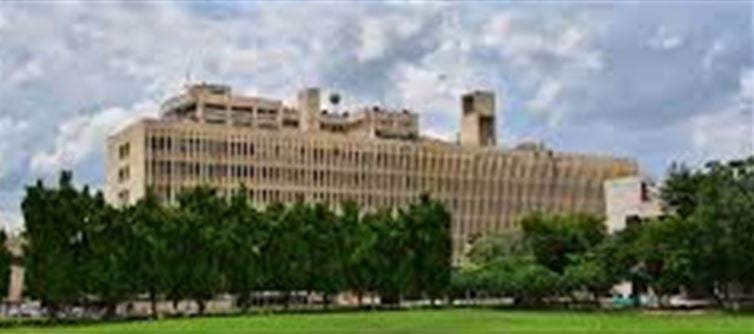

Every year, thousands of engineering aspirants compete in the JEE Advanced exam with the dream of securing a seat in one of India’s premier institutions — the Indian Institutes of technology (IITs). Among them, IIT Delhi remains one of the most sought-after destinations due to its strong academics, research opportunities, and excellent placements.
Admission to IIT Delhi’s B.Tech programmes is based on ranks secured in JEE Advanced 2026 through the JoSAA counselling process.
What Is IIT delhi and Why It’s Popular
The Indian Institute of technology delhi (IIT Delhi) is a top-ranked public engineering and research institution in India. It offers undergraduate, postgraduate, and doctoral programmes across engineering, science, and technology streams. Each year, thousands of aspirants aim for its B.Tech programmes, especially Computer Science & Engineering and Electrical Engineering, which are among the most competitive.
Total B.Tech Seats at IIT delhi (2025 Data)
According to the JoSAA seat matrix for the 2025–26 academic session, there were:
✅ 865 B.Tech seats available at IIT Delhi spread across approximately 18 different engineering disciplines.
These seats include intake for various categories (General/Open, OBC-NCL, SC, ST, EWS, and supernumerary female seats).
Why Seat Numbers Matter for JEE Advanced Aspirants
The number of seats at each IIT is a crucial factor for aspirants because:
- It determines how many students can be admitted based on their rank.
- Limited seats mean competition is intense — especially for popular branches like Computer Science & Engineering (CSE).
With only a few hundred seats available for each engineering stream, aspirants often need very high ranks to secure their preferred programme.
Seat Distribution at IIT delhi (Additional Context)
While exact figures for 2026 may only be finalized after the official JoSAA release, the previous year’s data (2025) serves as a reliable indicator — showing that the number of seats rarely changes drastically year-to-year unless sanctioned by authority.
IIT Delhi’s B.Tech seat matrix includes popular disciplines such as:
- Computer Science & Engineering
- Electrical Engineering
- Mechanical Engineering
- Chemical Engineering
- Civil Engineering
- Biotechnology & Biochemical Engineering
Each programme has seats allocated under different categories (General, OBC-NCL, SC, ST, EWS, plus female supernumerary seats) to ensure equitable representation.
Comparison with Other IITs
To put IIT Delhi’s seat count in perspective:
- Total B.Tech seats across all 23 IITs for the 2025–26 session were approximately 18,160.
- In this context, IIT Delhi’s ~865 B.Tech seats constitute a significant but selective portion of the total IIT intake.
Other premier IITs like IIT Bombay, IIT Kanpur, and IIT Madras also offer similar competitive intake capacities, often exceeding 1,000 seats each.
How Many students Compete for These Seats?
Every year, over 1.8 lakh students appear for JEE Advanced, of which around 50,000 to 55,000 qualify.
However, the number of available IIT seats (around 18,000 across all campuses) is significantly lower than the number of qualifiers, making competition steep.
Tips for Aspirants Targeting IIT Delhi
Aim for a top JEE Advanced rank — especially for branches like CSE or ECE.
Participate actively in JoSAA counselling, filling preferences strategically.
Research past year closing ranks to set realistic goals.
Consider multiple IIT options to increase chances of getting a seat.
Conclusion
For JEE Advanced 2026 aspirants, IIT delhi remains a highly prestigious and competitive institute. Based on the previous year’s JoSAA seat matrix:
📌 IIT delhi had around 865 B.Tech seats across various engineering disciplines.
Disclaimer:
The views and opinions expressed in this article are those of the author and do not necessarily reflect the official policy or position of any agency, organization, employer, or company. All information provided is for general informational purposes only. While every effort has been made to ensure accuracy, we make no representations or warranties of any kind, express or implied, about the completeness, reliability, or suitability of the information contained herein. Readers are advised to verify facts and seek professional advice where necessary. Any reliance placed on such information is strictly at the reader’s own risk.
 click and follow Indiaherald WhatsApp channel