



When a Hospital Ward Becomes a Headline
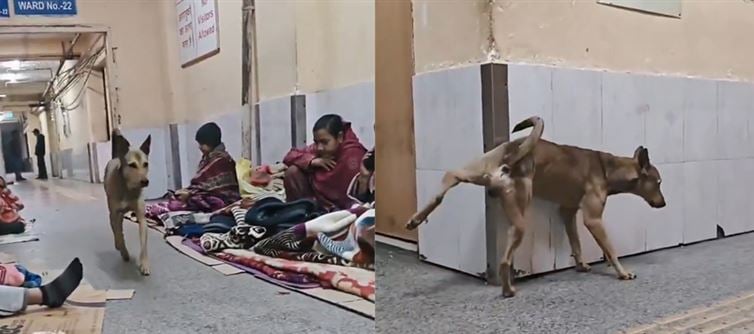
Hospitals are meant to be sanctuaries — places where the sick seek healing and families seek reassurance. So when reports and visuals emerge allegedly showing stray dogs roaming inside a government hospital ward, outrage is inevitable.
Recent claims regarding Ward 22 at Guru Teg Bahadur Hospital in delhi have triggered anger and disbelief. Videos circulating online appear to show stray dogs inside the hospital premises, with allegations of animals moving freely near patients and unsanitary conditions inside the ward.
Authorities have yet to release a detailed official statement clarifying the full circumstances, but the images alone have ignited a broader debate about public healthcare management and urban civic control.
1️⃣ The Visual Shock
According to reports and viral footage, stray dogs were seen roaming inside a hospital ward area, allegedly near patient beds and corridors.
If verified, such conditions raise immediate red flags about hygiene, infection control, and hospital security protocols. Healthcare facilities — particularly government hospitals serving high patient volumes — require strict sanitation standards.
The presence of animals in treatment areas would represent a serious lapse.
2️⃣ Sanitation vs. Infrastructure Stress
government hospitals in metropolitan cities like delhi often operate under immense strain: overcrowding, staffing shortages, and infrastructure fatigue.
But sanitation is not optional — it is foundational.
Infection control standards exist precisely to protect vulnerable patients, including the elderly, children, and those recovering from surgery or severe illness.
If animals can enter wards, it suggests either gaps in perimeter security or operational oversight.
3️⃣ The Stray Animal Challenge in Urban India
delhi, like many indian cities, faces ongoing challenges related to stray dog populations. Municipal authorities balance animal welfare laws with public safety concerns, often leading to heated civic debates.
Animal Birth Control (ABC) programs and vaccination drives aim to manage populations humanely. However, critics argue that implementation gaps allow strays to continue entering public institutions such as markets, metro stations, and, now — allegedly — hospital spaces.
The issue is complex, but healthcare facilities require zero tolerance for such intrusions.
4️⃣ Public Anger, Political Heat
The alleged incident has fueled sharp criticism online, with citizens questioning administrative accountability.
Healthcare infrastructure is often a politically sensitive subject. Visuals suggesting lapses in hospital management quickly become flashpoints in wider debates about governance and civic responsibility.
But outrage alone won’t solve systemic issues.
Concrete responses — investigation, corrective action, infrastructure reinforcement — are what matter now.
5️⃣ What Needs Immediate Clarification
Key questions demand answers:
How did stray dogs enter the ward area?
Were security or sanitation staff present?
Has an internal inquiry been launched?
What immediate steps are being taken to prevent recurrence?
Transparency from hospital authorities and municipal bodies will be critical in restoring public confidence.
6️⃣ Healthcare Is Not a Luxury — It’s a Basic Expectation
India’s public hospitals serve millions who cannot afford private care. For many families, facilities like GTB Hospital are the only lifeline.
Cleanliness, safety, and dignity are not privileges — they are minimum standards.
Even isolated incidents can deeply erode trust, especially when vulnerable patients are involved.
Bottom Line
If the reports from GTB Hospital’s Ward 22 are accurate, they point to a serious lapse that demands urgent correction.
Hospitals must remain zones of care — not chaos.
Public institutions are measured not by their promises, but by the conditions patients actually experience.
The authorities now have a simple responsibility: investigate swiftly, act decisively, and ensure that healing spaces remain just that — spaces for healing.
 click and follow Indiaherald WhatsApp channel