


The oil Reserve Reality Check
Energy security is one of those issues most people rarely think about—until a crisis suddenly forces the world to pay attention.
Wars in the Middle East, disruptions in shipping lanes, or geopolitical tensions can turn oil from a commodity into a national survival issue overnight.
That’s why countries maintain strategic petroleum reserves: massive stockpiles designed to keep the economy running if global supplies are interrupted.
And when you compare those reserves across countries, the contrast can be striking.
Because while some nations have built enormous buffers, others appear far less prepared.
1. The Numbers That Raise Eyebrows
Take Japan, for example.
japan is one of the world’s largest energy importers and has long understood the risks of relying heavily on foreign oil.
So it built a massive strategic reserve system.
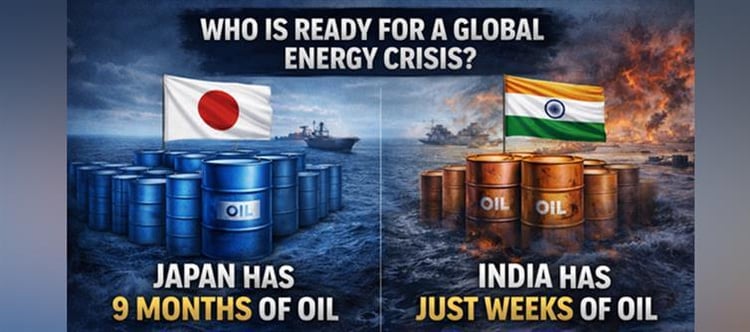
Today, japan reportedly holds oil reserves equivalent to roughly nine months of consumption, creating one of the largest energy safety nets in the world.
That kind of buffer gives policymakers time to react if supply chains suddenly break.
Now compare that with India.
India’s strategic and commercial reserves combined cover only a few weeks to around two months of supply, depending on consumption levels.
The difference is stark.
2. Why Strategic oil Reserves Matter
Strategic petroleum reserves aren’t just about storage tanks filled with crude.
They are about buying time during crises.
If a war shuts down shipping routes or global supply suddenly collapses, those reserves allow a country to:
• keep fuel flowing to industries
• prevent panic buying
• stabilize domestic prices
• maintain economic activity
Without that buffer, disruptions can ripple through the entire economy within days.
Fuel shortages hit transportation, electricity generation, manufacturing, and agriculture almost immediately.
3. The Geography Problem
For india, the challenge is partly geographic.
The country imports more than 80 percent of its crude oil, much of it from the Middle East.
That means its energy lifeline runs through vulnerable chokepoints such as the Strait of Hormuz, a narrow passage that carries roughly a fifth of the world’s oil supply.
If that route is disrupted—even briefly—import-dependent economies feel the impact first.
And countries with smaller reserves feel it the fastest.
4. Why japan Took Energy Security Seriously
Japan’s approach to energy security is shaped by history.
The oil shocks of the 1970s exposed how vulnerable the country was to supply disruptions.
The lesson stuck.
Tokyo began investing heavily in strategic reserves, energy diversification, and long-term supply agreements.
Today, those reserves serve as a massive economic shock absorber.
If global markets wobble, japan has months—not weeks—to adapt.
5. India’s Growing Energy Demand
india faces a different challenge: scale.
As one of the world’s fastest-growing economies, its energy demand is exploding.
More factories, more vehicles, more infrastructure—all of it requires fuel.
Building massive strategic reserves while consumption is rising rapidly is expensive and logistically complex.
But the risk of not doing so becomes more obvious every time global energy markets face turbulence.
6. The Real Question: Preparedness
The debate isn’t just about numbers.
It’s about preparedness.
Countries that invest heavily in strategic reserves treat energy security as a core element of national security.
Those that maintain smaller buffers rely more heavily on stable global markets.
That works—until the world suddenly becomes unstable.
The Bottom Line
oil rarely dominates headlines until something goes wrong.
But when supply shocks hit, the size of a country’s energy reserves suddenly becomes one of the most important numbers in the world.
Right now, the comparison between japan and india highlights a larger question:
How much protection should a country build against the next global energy crisis?
Because when that crisis arrives, preparation isn’t measured in rhetoric.
It’s measured in barrels.
 click and follow Indiaherald WhatsApp channel