




The numbers don’t lie—and they’re hard to ignore. Across countries, the average height of young men tells a deeper story about nutrition, policy, and priorities. And when you look closely, the gap isn’t just physical—it’s systemic.
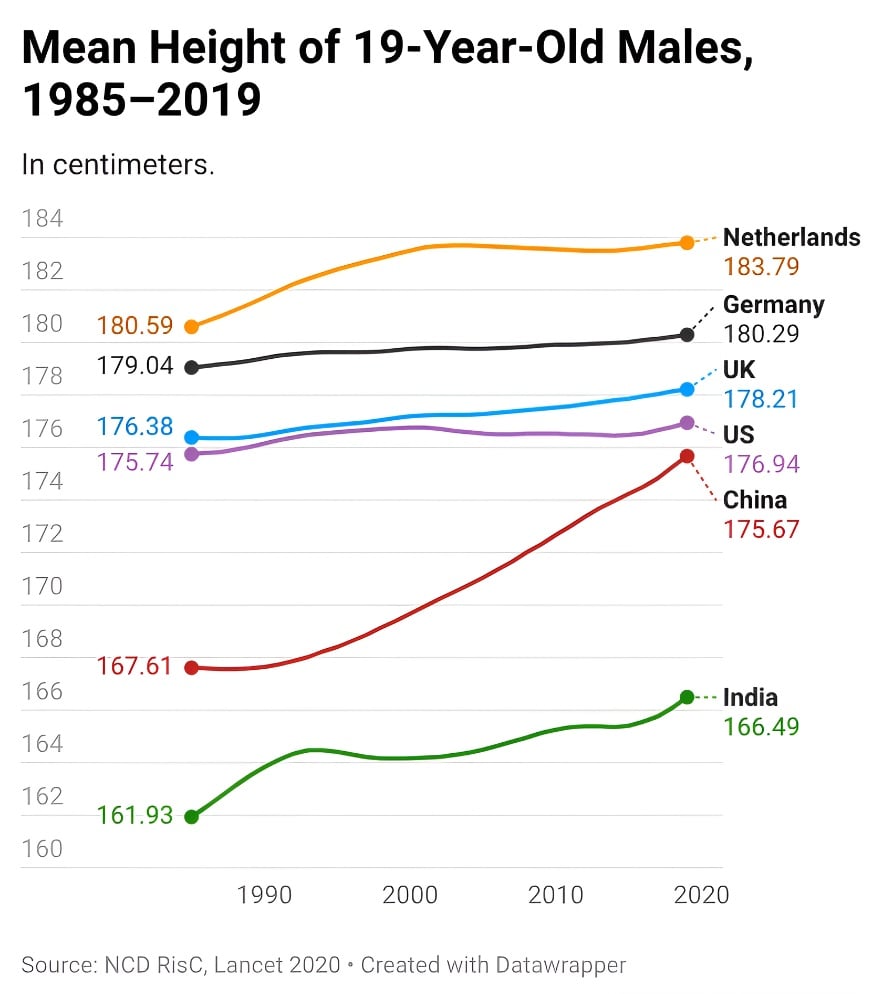
📌 THE STORY — BROKEN DOWN
Take a look at the difference in food access.
In China, school meals often include protein-rich options like eggs, chicken, fish, and pork—regularly, not occasionally. It’s part of a structured approach to nutrition, especially during critical growth years.
Now compare that with India.
The mid-day meal scheme, while massive in scale, operates on a much tighter budget—roughly ₹6.78 per child per day. Even within that, implementation challenges and leakages dilute the impact further. Protein, which plays a key role in growth, often takes a backseat to cost.
And then comes the policy friction.
In several states, the inclusion of eggs in school meals has faced resistance due to dietary preferences and political pressure. The result? A nutritional compromise, where affordability and ideology intersect—often at the cost of balanced diets.
The contrast becomes sharper when you look at spending.
China reportedly allocates around 5 yuan (roughly ₹68) per child per day—nearly ten times higher. That gap isn’t just a statistic; it reflects in the quality, diversity, and nutritional value of meals being served.
📊 THE OUTCOME
Over time, these differences add up.
Growth during adolescence is heavily influenced by consistent access to protein, micronutrients, and overall caloric intake. When those are limited, it doesn’t just affect height—it impacts overall health, cognitive development, and long-term productivity.
⚡ THE BIGGER QUESTION
This isn’t about blaming diets or cultures.
It’s about whether current systems are delivering what growing children actually need. Because when nutrition becomes negotiable, the consequences don’t stay on the plate—they show up in the next generation.
 click and follow Indiaherald WhatsApp channel