


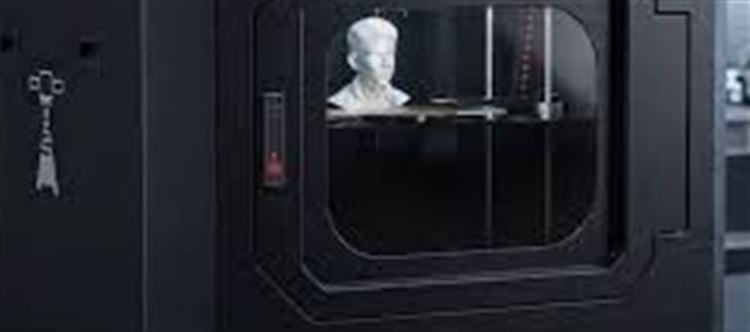

Akasha300 3D is a 3D printer developed by Spacetime 4D, a company specializing in advanced manufacturing technologies. This particular model, the Akasha300, is designed to meet the needs of high‑precision, cutting‑edge applications. Spacetime 4D delivered this printer to the Indian Space Research Organisation (ISRO) for use in space exploration and related research.
Key Features of Akasha300 3D Printer:
- Advanced Materials Compatibility: The printer is capable of working with a range of materials, including specialized polymers and composites, which are crucial for space applications. This allows the production of highly durable and heat-resistant components, suitable for harsh space environments.
- Precision and Accuracy: Designed for aerospace-grade parts, the Akasha300 offers high accuracy and fine detail, which is essential for manufacturing small, complex components used in space missions.
- Industrial Scale: The Akasha300 is built to handle large-scale manufacturing, with a significant build volume to cater to the needs of high-demand environments like ISRO’s engineering and development divisions.
ISRO’s Interest in the Akasha300 Printer:
The Indian Space Research Organisation (ISRO) has been working on enhancing its manufacturing capabilities to develop more efficient and lighter spacecraft and satellite components. The Akasha300 3D printer will assist in this effort by providing isro with the ability to prototype and produce parts on demand, reducing both costs and production time.
By integrating 3D printing technologies, isro aims to speed up its research and development processes, especially when it comes to creating bespoke components for space missions, which often require high levels of customization. Additionally, additive manufacturing techniques like 3D printing could help reduce the weight of spacecraft components, which is crucial for space exploration.
Why This Matters:
- Efficiency Gains: The use of 3D printers like Akasha300 can significantly shorten the time needed to develop and test new components.
- Cost Reduction: Traditional manufacturing methods for aerospace parts can be costly. 3D printing can help reduce costs by eliminating the need for complex tooling and molds.
- Space Exploration Innovation: With ISRO’s continuous focus on space missions, having access to advanced 3D printing technology will help improve their ability to innovate and meet the growing demands of space research.
This collaboration between Spacetime 4D and ISRO represents a step forward in leveraging additive manufacturing for complex, high-precision applications, particularly in the aerospace sector.
Disclaimer:
The views and opinions expressed in this article are those of the author and do not necessarily reflect the official policy or position of any agency, organization, employer, or company. All information provided is for general informational purposes only. While every effort has been made to ensure accuracy, we make no representations or warranties of any kind, express or implied, about the completeness, reliability, or suitability of the information contained herein. Readers are advised to verify facts and seek professional advice where necessary. Any reliance placed on such information is strictly at the reader’s own risk.
 click and follow Indiaherald WhatsApp channel