


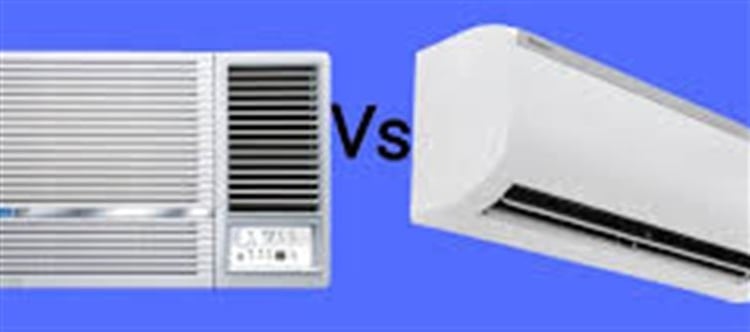

Choosing between a 1.5 ton window AC and a 1.5 ton split AC is a common dilemma for many households. While both have the same cooling capacity, their electricity consumption can vary based on several factors. Let’s break it down in detail.
🔹 Understanding “1.5 Ton” Capacity
Before comparing power consumption, it’s important to understand what “1.5 ton” means:
- It refers to the cooling capacity, not weight
- 1.5 ton AC = suitable for medium-sized rooms (150–200 sq ft)
- Both window and split ACs with the same tonnage are designed to deliver similar cooling output
🔹 Power Consumption Basics
Electricity consumption depends on:
- Energy Efficiency Rating (EER or ISEER)
- Star rating (BEE rating)
- Compressor technology (inverter vs non-inverter)
- Usage habits and environment
👉 So, type alone (window vs split) doesn’t fully determine consumption—but design differences do play a role.
🔹 Window AC: Power Consumption
✔ Typical Consumption
- Around 1.5 to 1.8 units/hour for a 1.5 ton non-inverter model
- Inverter window AC: 1.2 to 1.5 units/hour
✔ Why It May Consume More
- All components are in one unit → more heat retention
- Slightly lower efficiency due to compact design
- Usually comes with lower star ratings compared to split ACs
✔ Advantages
- Lower initial cost
- Easy installation
🔹 Split AC: Power Consumption
✔ Typical Consumption
- Non-inverter: 1.4 to 1.7 units/hour
- Inverter split AC: 0.9 to 1.4 units/hour
✔ Why It Is More Efficient
- Separate indoor and outdoor units → better heat dissipation
- Generally higher ISEER ratings
- Inverter technology is more common → adjusts compressor speed
✔ Advantages
- Better cooling efficiency
- Quieter operation
- Lower long-term electricity bills
🔹 Inverter vs Non-Inverter Impact
This is a crucial factor:
Type
Consumption
Efficiency
Non-Inverter
Higher
Fixed speed
Inverter
Lower
Variable speed
👉 A window inverter AC can consume less electricity than a split non-inverter AC.
🔹 Star Rating Comparison
- 3-star AC → Moderate savings
- 5-star AC → Maximum efficiency
👉 A 5-star split AC will usually consume 20–30% less electricity than a 3-star window AC.
🔹 Real-Life electricity Cost Comparison
Assuming 8 hours daily usage:
AC Type
Monthly Units
Approx Cost (₹8/unit)
Window AC (non-inverter)
300–350 units
₹2400–₹2800
Split AC (inverter)
200–280 units
₹1600–₹2200
🔹 Key Factors That Affect Consumption
Regardless of type:
- Room insulation
- Outdoor temperature
- Thermostat setting (ideal: 24–26°C)
- Maintenance (dirty filters increase power usage)
🔹 Final Verdict: Which Consumes More Electricity?
👉 In General:
- Window AC consumes slightly more electricity than split AC
- Split AC (especially inverter models) are more energy-efficient
👉 But:
- A high-star window AC can outperform a low-star split AC
🔹 Which One Should You Choose?
Choose Window AC if:
- You have a tight budget
- Need quick installation
- Room size is small
Choose Split AC if:
- You want lower electricity bills
- Prefer quiet operation
- Plan long-term use
🔹 Conclusion
While both 1.5 ton window and split ACs provide similar cooling, split ACs—especially inverter models—generally consume less electricity due to better efficiency and advanced technology. However, your final choice should also consider budget, usage pattern, and energy rating, not just the type of AC.
Disclaimer:
The views and opinions expressed in this article are those of the author and do not necessarily reflect the official policy or position of any agency, organization, employer, or company. All information provided is for general informational purposes only. While every effort has been made to ensure accuracy, we make no representations or warranties of any kind, express or implied, about the completeness, reliability, or suitability of the information contained herein. Readers are advised to verify facts and seek professional advice where necessary. Any reliance placed on such information is strictly at the reader’s own risk.
 click and follow Indiaherald WhatsApp channel