


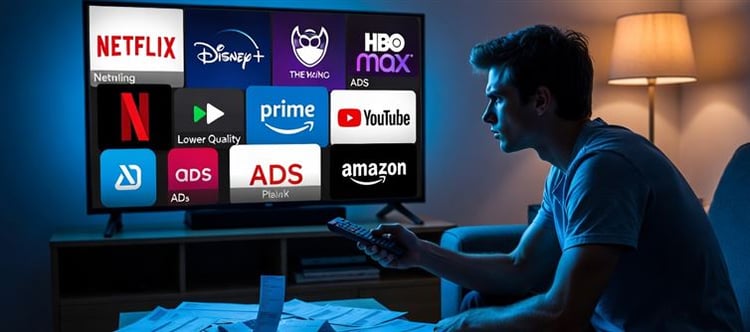

There was a time when streaming felt like a rebellion. No contracts, no ads, no bloated bills—just pure, on-demand freedom. It was supposed to kill cable. Instead, it quietly became cable… just dressed better.
Look at what’s happening now. One by one, the biggest platforms have started tightening the screws. Prices are climbing across the board—Netflix, Disney+, HBO Max—all inching upward without hesitation. YouTube Premium now costs a hefty $15.99 per month, and even “family plans” are no longer family-friendly, hitting nearly $27. What used to feel like affordable convenience is now turning into a recurring financial drain.
And it’s not just about paying more—it’s about getting less. amazon has started stripping 4K quality from its standard plan, pushing users to upgrade to maintain what was once basic. Meanwhile, ads—something streaming once proudly eliminated—are creeping back in. You’re paying a premium, yet still being interrupted. That’s not evolution. That’s regression.
The numbers tell the real story. The average American is now spending around $828 a year on streaming services. That’s not a side expense anymore—that’s a full-fledged bill. And the worst part? It’s fragmented. Multiple subscriptions, scattered content, endless add-ons—everything cable used to be criticized for.
The promise was simple: more control, less cost, better experience. But somewhere along the way, that promise got diluted. Streaming didn’t destroy cable—it studied it, adapted it, and rebuilt it in a more subtle, subscription-friendly form.
And now, we’re right back where we started—only this time, we’re paying monthly for the illusion of choice.
 click and follow Indiaherald WhatsApp channel