




When a country talks about national security, the expectation is simple—those in charge are accountable, and systems are built to prevent failure. But what happens when the conversation shifts from responsibility at the top to responsibility shared by everyone? A recent statement has triggered exactly that debate, blurring the line between collective vigilance and institutional accountability.
The Core Statement
The idea presented is that national security isn’t just the job of the armed forces, police, or intelligence agencies—it’s a responsibility shared by the entire nation.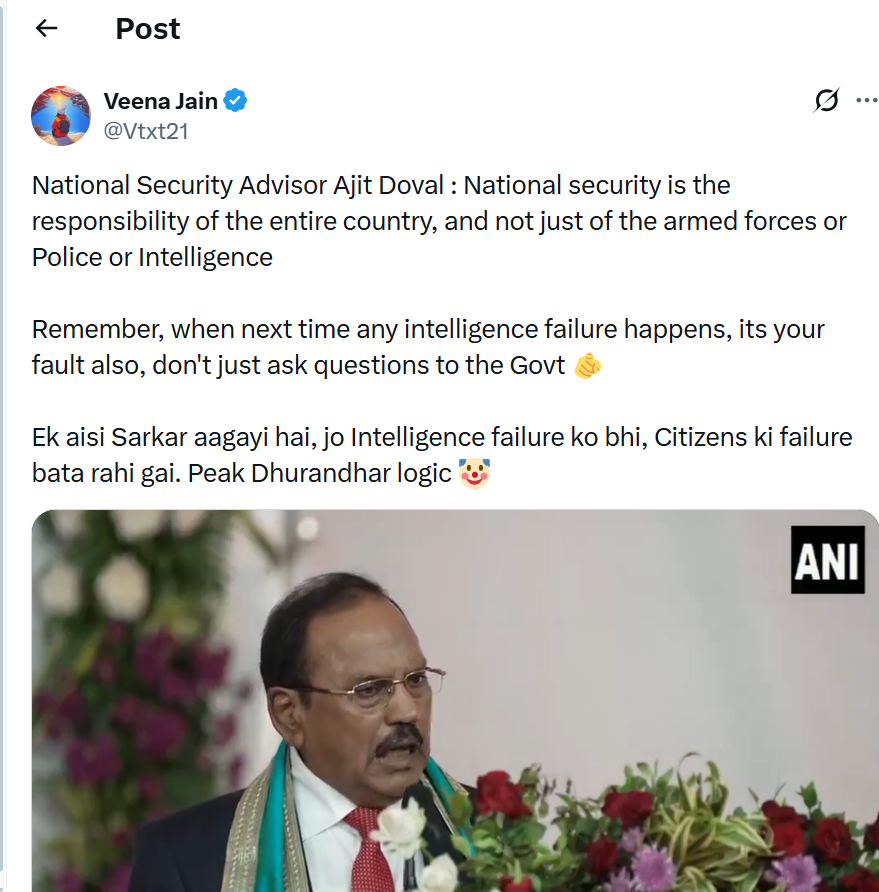
The Broader Interpretation
On the surface, it promotes civic awareness and public participation—encouraging citizens to stay alert and contribute to a safer environment.Where the Debate Begins
Critics argue that this framing can be interpreted as diluting accountability when failures occur. If everyone is responsible, then who is ultimately answerable?The Accountability Question
Intelligence failures are typically linked to systems, processes, and leadership. Expanding responsibility to citizens raises concerns about shifting the narrative.Citizens vs Institutions
While public vigilance is valuable, citizens don’t have access to classified intelligence, operational tools, or decision-making authority.The Risk of Mixed Messaging
When responsibility is broadly distributed without clear boundaries, it can create confusion about roles during crises.Public Reaction and Perception
For many, the statement feels less like empowerment and more like deflection—especially in the context of past security lapses.The Larger Concern
The real issue isn’t whether citizens play a role—they do. It’s whether that role is being used to complement institutional responsibility or blur it.
Bottom Line:
National security works best when responsibility is shared—but accountability is clear. Without that distinction, the conversation risks shifting from strengthening systems to diffusing blame.
 click and follow Indiaherald WhatsApp channel