

-

Air
-
Ayurveda
-
BEAUTY
-
Bihar
-
Buttermilk
-
Calcium
-
Chandni
-
Coriander.
-
Crash
-
cumin
-
Curry leaves
-
Cycle
-
Dargah Sharif
-
Dehydration
-
Dry Fruits
-
Fish
-
Friday
-
garlic
-
Gift
-
HEALTH
-
House
-
India
-
Indian
-
Indians
-
INTERNATIONAL
-
Jaggery
-
June
-
Karnataka
-
Millets
-
Onion
-
Pink
-
Population
-
protein
-
READ
-
Research and Analysis Wing
-
REVIEW
-
salt
-
SPORTS
-
Sugar
-
sun
-
Tamil
-
temple
-
Vaishno Devi
-
Vitamin C
-
Writer

The narrow window between peak June heat and the monsoon's first relief is when India's oldest cooling recipes — aam panna, jaljeera, raw mango rice, ragi ambli, bael sharbat, sattu sharbat, and solkadhi — do their most important work, lowering core body temperature through ingredients traditional Ayurvedic and Siddha systems have prescribed for centuries.
The 5W+H: Who, What, When, Where, Why, How
- Who: Home cooks across India, particularly in regions still awaiting monsoon relief — Rajasthan, Vidarbha, Telangana, coastal Karnataka, and the Gangetic plains.
- What: Seven traditional Indian cooling recipes specifically suited to the last days of June, each rooted in regional food wisdom and designed to counter dehydration and heat stress.
- When: The final week of June 2026, when most of India endures peak humidity and temperatures above 38°C before monsoon rains arrive.
- Where: Kitchens across India — from Rajasthani villages where sattu is ground fresh, to Konkan coastal homes where solkadhi is a lunch staple, to Tamil households where ragi ambli is fermented overnight.
- Why: According to the National Institute of Nutrition (NIN), Hyderabad, traditional Indian summer beverages contain natural electrolytes, organic acids, and cooling compounds that outperform many commercial rehydration drinks in bioavailability — yet most urban kitchens have abandoned them for bottled alternatives.
- How: Each recipe uses ingredients — raw mango, cumin, kokum, bael fruit, finger millet, sattu, curry leaves — that traditional Ayurvedic and Siddha food classification systems categorise as having a cooling post-digestive effect (vipaka), working to reduce internal body heat through digestion rather than mere temperature.
There is a particular cruelty to the last days of June. The calendar says monsoon. The Met department says monsoon. Your phone's weather app shows a hopeful little cloud icon. But the sky over your terrace is a blank white furnace, the air is thick enough to wring out like a towel, and the only thing arriving on schedule is another afternoon where the kitchen feels like an act of war.
This is the week your grandmother's recipes were actually built for — not the theatrical peak of May, when everyone remembers to buy watermelons, but this quieter, meaner stretch where the body has been hot for so long it has forgotten what cool feels like. The seven recipes below are not trendy. They will not photograph well for Instagram. They are, however, the reason your great-grandmother did not collapse from heat exhaustion in a house without air conditioning, and they work better than anything a plastic bottle has replaced them with.
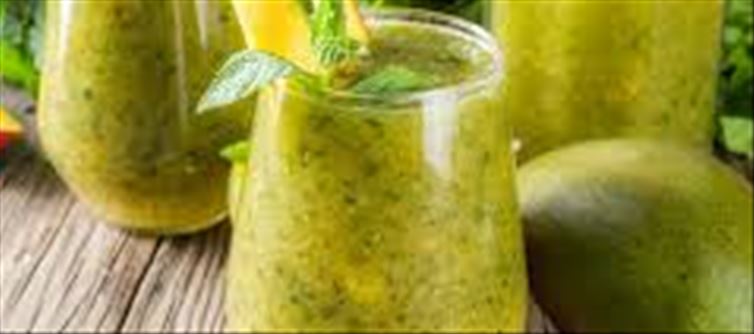
1. Aam Panna — The Raw Mango Cooler That Is Also a Rehydration Therapy
Start here, because this is the one most Indians half-remember but rarely make properly. According to the Indian Food Composition Tables published by the National Institute of Nutrition (NIN), Hyderabad, 100 grams of raw mango contains roughly 54 mg of Vitamin C — nearly as much as an orange — along with significant pectin and organic acids that aid electrolyte retention. The drink's genius is not sweetness; it is the roasted cumin and black salt that turn it into what nutritionist Rujuta Diwekar has described in her widely cited food guides as "India's original ORS."
The method is forgiving. Pressure-cook two medium raw mangoes until the skin peels away with a nudge. Mash the flesh, discard the seed. To each glass, mix two tablespoons of pulp with a teaspoon of roasted cumin powder, a quarter teaspoon of black salt, a pinch of black pepper, jaggery to taste, and cold water. The black pepper matters — according to traditional Ayurvedic food texts referenced by the AYUSH Ministry's dietary guidelines, piperine enhances the absorption of curcumin and other cooling compounds. Stir. Drink before noon. Feel, within twenty minutes, the particular relief that no lemonade provides: a cooling that seems to start behind the ribs rather than in the throat.
2. Jaljeera — The Street Drink That Belongs in Every Home Kitchen
Jaljeera has suffered the indignity of being reduced to a packet mix. The real thing, as served by roadside vendors from Chandni Chowk to Jodhpur's Sardar Market, is an entirely different animal. A proper jaljeera, according to food historian Pushpesh Pant's documentation in India: The Cookbook, is built on freshly pounded cumin, mint, raw mango powder (amchur), asafoetida, and — crucially — a small quantity of bhujna hua heeng (roasted asafoetida) that commercial mixes omit for shelf stability.
The difference is transformative. Roasted asafoetida is a carminative — it prevents the bloating that humid weather worsens — and fresh mint contains menthol, which according to research published in the Journal of the International Society of Sports Nutrition has been shown to reduce the perception of thermal discomfort. Pound the spices in a mortar. Add ice water, lemon juice, and a fistful of fresh coriander. What you get is not a "flavoured water" but a digestive intervention disguised as a street snack.
3. Raw Mango Rice (Mavinakayi Chitranna) — Karnataka's Answer to the Heat Lunch
When it is too hot to think about a proper meal, coastal and southern Karnataka kitchens turn to mavinakayi chitranna — a raw mango rice that is, as food writer and Mangalorean cuisine authority Saee Koranne-Khandekar has noted, essentially a complete one-bowl lunch engineered for the body's refusal to eat heavy in late June. Cold leftover rice. Grated raw mango. A tempering of mustard seeds, curry leaves, peanuts, green chillies, and turmeric. The sourness of the raw mango does the heavy lifting: according to NIN data, the tartaric and citric acids in unripe mango stimulate salivation and gastric secretion — the body's own mechanism for cooling down through digestion.
The beauty of this dish is that it asks almost nothing of the cook. Ten minutes, one pan for the tempering, no stove time for the rice. It travels well in a lunchbox and tastes better at room temperature than hot — a rarity in Indian cooking, and precisely the quality June's last week demands.
4. Ragi Ambli — The Fermented Finger Millet Porridge Tamil Nadu Will Not Let You Forget
Here is the recipe urban India has most aggressively forgotten, and should most urgently revive. Ragi ambli — known as keppai koozh in parts of Tamil Nadu, and as a close cousin of Telangana's ambali — is fermented finger millet porridge thinned to a drinkable consistency with buttermilk or water. According to research published by the Indian Institute of Millets Research (IIMR), Hyderabad, the fermentation process increases the bioavailability of calcium in ragi by up to 20%, while also generating beneficial lactobacillus cultures that support gut health during the season when food spoilage and digestive upset peak.
The preparation requires overnight planning, not skill. Soak ragi flour in water for eight hours. Cook it to a porridge, let it cool, then let it ferment in a clay pot for another six to eight hours. Thin it with buttermilk, add salt, a sliced green chilli, and chopped raw onion on the side. What you are drinking is not merely a cooler — it is a probiotic, a calcium supplement, and a full meal, and it costs less than fifteen rupees per serving.
5. Bael Sharbat — The Temple Fruit Drink That Modern Nutrition Is Rediscovering
Bael — the wood apple, Aegle marmelos, the fruit you see cracked open on temple steps and sold in papier-mâché cups at railway stations across UP and Bihar — makes one of the most effective cooling drinks in the Indian repertoire. According to a 2022 review in the Journal of Ethnopharmacology, bael pulp contains marmelosin and other coumarins with demonstrated anti-inflammatory and gastroprotective properties. The AYUSH Ministry's seasonal dietary advisories have consistently listed bael sharbat among recommended summer drinks.
Scoop the pulp from a ripe bael, soak it in water for an hour, then strain through a muslin cloth, pressing to extract every bit of sticky goodness. Sweeten with jaggery, add a pinch of cardamom, and serve cold. The texture is unusual — slightly mucilaginous, which is precisely the quality that coats and soothes a gut that has been battered by weeks of heat. This is not a pretty drink. It is a functional one, and in late June, function wins.
6. Sattu Sharbat — Bihar's Gift to Every Indian Summer
If there is a single underrated ingredient in the Indian pantry, it is sattu — roasted gram flour, ground fine, packed with roughly 20 grams of protein per 100 grams according to NIN food composition data, and capable of being turned into a cooling drink in under ninety seconds. The Bihari sattu sharbat is absurdly simple: two tablespoons of sattu, cold water, lemon juice, black salt, roasted cumin. Stir vigorously. Drink.
What happens next, according to Ayurvedic food classification as documented in Charaka Samhita commentaries and echoed by modern dietitians like Diwekar, is a slow, sustained release of energy without the blood-sugar spike of a sugary drink — sattu's low glycemic index means the body processes it steadily, avoiding the crash-and-sweat cycle that sweetened commercial coolers produce. The drink is also, not incidentally, a complete protein source for vegetarians, making it a working lunch in a glass. Bihar has known this for centuries. The rest of India is only now catching on. India Herald's read of the broader shift: the revival of sattu is not nostalgia — it is a correction, as urban India slowly discovers that its most sophisticated nutritional engineering was always in the cheapest ingredients.
[EMBED-SUGGESTION:tweet]
7. Solkadhi — The Konkan Coast's Kokum-Coconut Digestif
End the list where the monsoon will begin — on the Konkan coast, where solkadhi has been served alongside every fish thali for as long as anyone can remember. Solkadhi is kokum (Garcinia indica) soaked in thick coconut milk, tempered with garlic and green chilli, and served cold. According to research cited in the Indian Journal of Traditional Knowledge, kokum contains hydroxycitric acid (HCA), a compound with demonstrated anti-obesity and gastroprotective properties that has generated significant pharmaceutical interest.
But solkadhi does not need a research paper to justify itself. It needs you to taste it — the sharp, plum-like tang of kokum cutting through rich coconut cream, the garlic bite, the impossible pink colour. As Konkani food chronicler and author Saee Koranne-Khandekar has written, solkadhi is the Konkan's answer to every digestive question, and in the heavy, humid last days of June, when the stomach rebels against everything, this is the drink that coaxes it back to peace.
Make it the night before. Let the kokum petals steep in coconut milk in the fridge. By morning, the colour will have deepened to a dusky rose, and you will have, ready to pour, what is arguably the most elegant cooling drink in the subcontinent — and one that costs less than thirty rupees for a full jug.
The Larger Lesson These Seven Recipes Teach
Here is what connects the aam panna in a Rajasthani kitchen to the solkadhi on a Malvani table, separated by a thousand kilometres and entirely different culinary traditions: both were designed by people who did not have refrigerators, did not have air conditioning, and did not have the option of being comfortable. They had only ingredients — mango, cumin, kokum, ragi, bael, sattu, coconut — and the accumulated knowledge, passed through kitchens over centuries, of which ones made the body feel less besieged by the heat.
According to a 2023 report by the India Meteorological Department (IMD), the number of "heat wave days" across India has increased by roughly 25% over the past three decades. According to NIN dietary surveys, simultaneously, the consumption of traditional fermented and cooling foods has declined sharply in urban India, replaced by packaged beverages with higher sugar content and lower electrolyte density. The correlation is not a coincidence — it is a warning.
The last week of June, before the monsoon arrives to reset everything, is the perfect moment to listen to it. Not because tradition is inherently superior — but because these seven recipes, tested by millions of bodies across centuries, solve a problem that a two-rupee sachet of synthetic orange drink does not. They cool from the inside. They nourish while they cool. They cost almost nothing. And they taste, when made properly, like the particular genius of a civilisation that learned to live with its climate rather than merely endure it.
Make one tonight. The monsoon is coming — but it is not here yet, and your kitchen already knows what to do.



By the Numbers
- 100g raw mango contains ~54 mg Vitamin C — National Institute of Nutrition, Hyderabad
- Fermentation increases ragi calcium bioavailability by up to 20% — Indian Institute of Millets Research
- Sattu contains ~20g protein per 100g — NIN food composition data
- India's heat wave days increased ~25% over the past three decades — IMD 2023 report
- Ragi ambli costs under ₹15 per serving as a complete fermented cooling meal
Key Takeaways
- Raw mango contains 54 mg Vitamin C per 100g (NIN data), making aam panna a natural rehydration drink rivalling commercial ORS solutions.
- Fermentation increases calcium bioavailability in ragi by up to 20% (IIMR research), turning ambli into a probiotic-rich cooling meal costing under ₹15 per serving.
- Sattu delivers roughly 20g protein per 100g with a low glycemic index, providing sustained energy without the blood-sugar crash of sweetened commercial coolers.
- India's heat wave days have increased approximately 25% over three decades (IMD 2023), while urban consumption of traditional cooling foods has declined sharply (NIN surveys).
- Kokum's hydroxycitric acid (HCA) has demonstrated gastroprotective properties (Indian Journal of Traditional Knowledge), making solkadhi both a digestif and a functional food.
- All seven recipes use ingredients classified as having cooling post-digestive effects in Ayurvedic and Siddha systems, working through digestion rather than temperature alone.
Frequently Asked Questions
What is the best traditional Indian drink to cool the body in summer?
Aam panna (raw mango cooler) is widely regarded as one of the most effective traditional Indian cooling drinks. According to NIN data, raw mango is rich in Vitamin C and organic acids that aid electrolyte retention, while the roasted cumin and black salt create what nutritionists call 'India's original ORS' — a natural rehydration therapy.
How do you make ragi ambli at home?
Soak ragi flour in water for eight hours, cook it to a porridge, let it cool, then ferment it in a clay pot for six to eight hours. Thin with buttermilk, add salt and a sliced green chilli. According to IIMR research, fermentation increases calcium bioavailability by up to 20% and generates beneficial probiotic cultures.
Is sattu sharbat healthy for summer?
Yes — sattu contains approximately 20g of protein per 100g (NIN data) with a low glycemic index, providing sustained energy without blood-sugar spikes. Mix two tablespoons with cold water, lemon juice, black salt, and roasted cumin for a complete protein drink that doubles as a cooling summer beverage.
What is solkadhi and how is it made?
Solkadhi is a Konkani digestif made from kokum (Garcinia indica) soaked in thick coconut milk, tempered with garlic and green chilli, served cold. Kokum contains hydroxycitric acid with gastroprotective properties. Steep kokum petals in coconut milk overnight in the fridge for best results.
Why are traditional Indian cooling foods better than commercial drinks?
Traditional cooling foods like aam panna, sattu sharbat, and ragi ambli contain natural electrolytes, organic acids, and proteins with higher bioavailability than many commercial alternatives, according to NIN research. They cool through digestion (what Ayurveda calls cooling vipaka) rather than mere temperature, and typically contain no added refined sugar.
 click and follow Indiaherald WhatsApp channel