




However, given the lack of established infertility practices in public institutions, the gynecologists india Herald talked to advised against depending entirely on samples. However, they do accept a general rise in infertility across the nation, and the following are some potential causes.
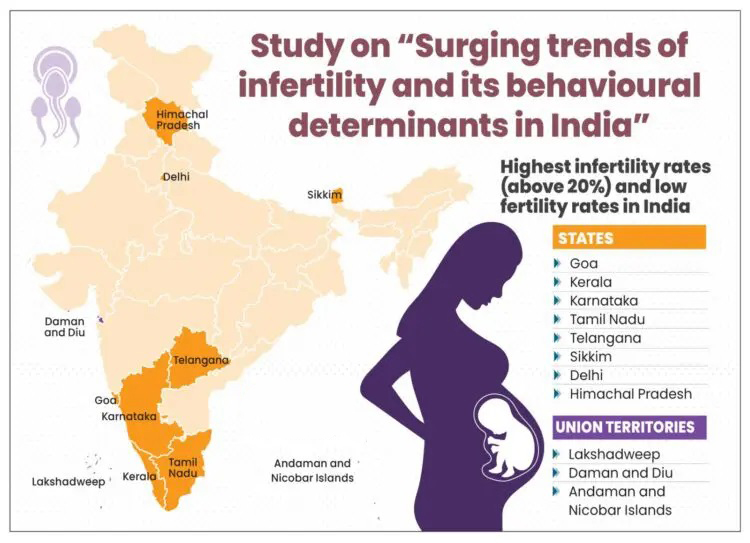
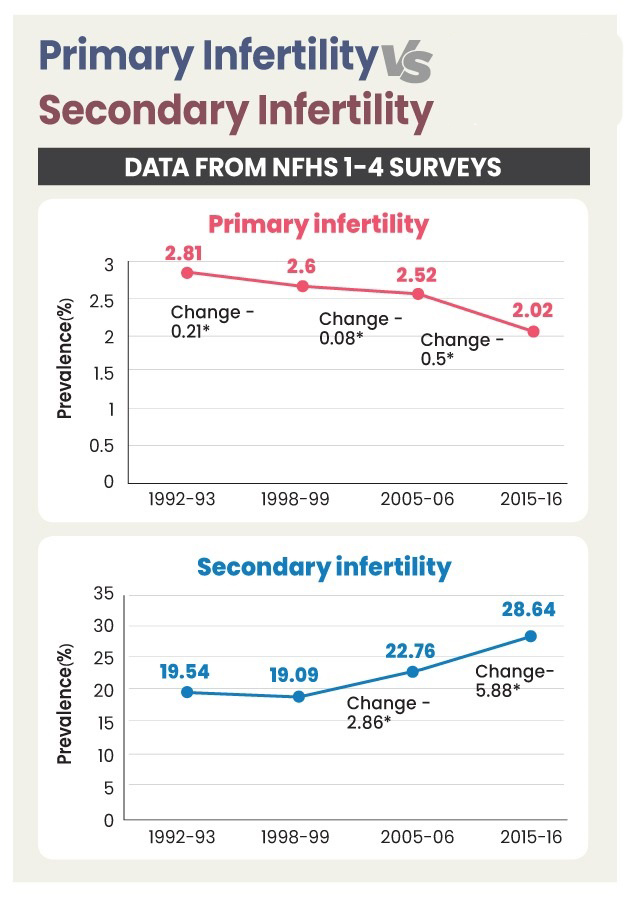
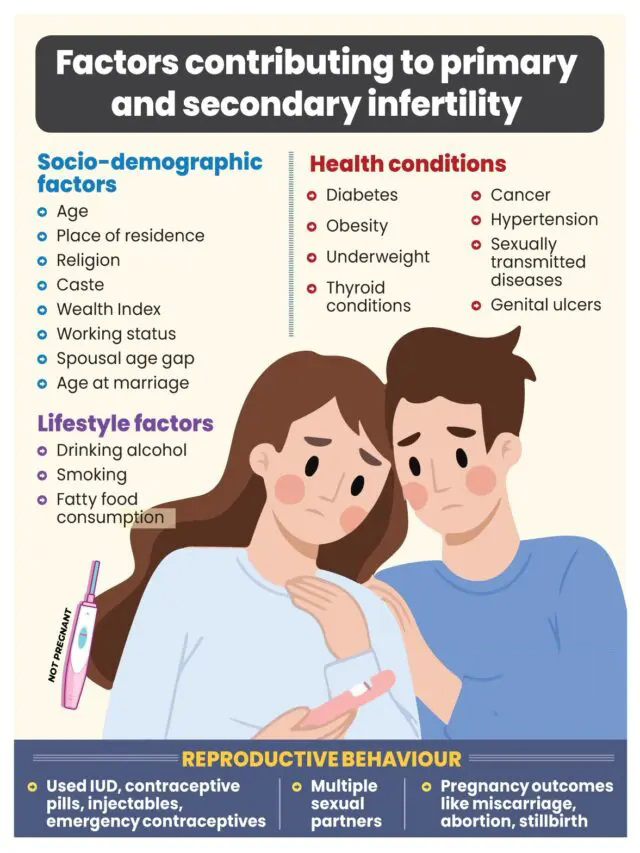
Declining birth rates, notably in the states of South india, are directly tied to this trend. Infertility was shown to be substantially correlated with age at marriage, biological variables, and lifestyle decisions. goa was found to have the highest rate of infertility, closely followed by the four southern states. It's interesting to note that these regions also had lower fertility rates, with Goa's Total Fertility Rate (TFR) just being 1.3 in 2019–20.
Factors Affecting Fertility
Male infertility on the rise
The findings, which were based on semen analysis done after 100 days, suggested that COVID-19 did harm the male reproductive system, the researchers said. Men create fresh sperm every two to three months. Dr. swati Shree, an obstetrician, and gynecologist at the Apollo Clinic in Bengaluru, concurs with this. "Research has shown that COVID-19 may lead to alterations in semen parameters, such as decreased sperm concentration, reduced sperm motility, and changes in sperm morphology," the author notes.
She argues that increasing cases of infertility are being caused by male factor infertility in the post-Covid era. "It has been shown that males visiting an IVF clinic with a history of Covid-19 infection are more likely to have aberrant sperm parameters, with lower sperm morphology, motility, and count being the most common. The fact that the majority of these individuals got Covid-19 around six months earlier suggests that it is affecting male fertility. To support this, though, specific research is required, she continues.
 click and follow Indiaherald WhatsApp channel